
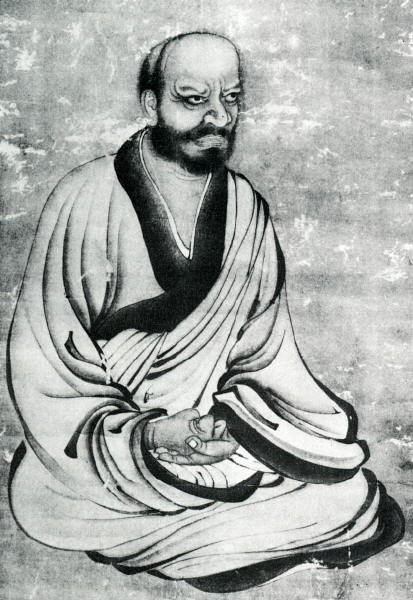
Rinzai Zen: The Sharp Sword of Japanese Buddhism
When travelers imagine Zen in Japan, they often picture the serene silence of a moss garden or the gentle rhythm of breathing. However, there is a side of Zen that is sharp, dynamic, and intellectually jarring. This is Rinzai Zen (臨済宗), one of the prominent schools of Japanese Buddhism. Unlike its counterpart, the Soto school, which focuses on quiet sitting (shikantaza), Rinzai Zen emphasizes the sudden breakthrough of enlightenment (satori) achieved through rigorous discipline and the contemplation of paradoxical riddles known as koans.
For the cultural traveler, understanding Rinzai Zen is the key to unlocking the secrets of Japan’s most famous rock gardens, the tea ceremony, and the warrior code of the samurai.
Origins: From China to the Samurai Courts
The roots of Rinzai Zen lie in the Linji school of Tang Dynasty China. It was brought to Japan in 1191 by the monk Myoan Eisai. Eisai’s return marked a pivotal shift in Japanese religious history. At the time, Buddhism in Japan was dominated by the esoteric rituals of the Heian court aristocrats.
Rinzai Zen, however, found a different audience: the rising warrior class in Kamakura. The samurai were drawn to Rinzai for its pragmatic approach to death, its emphasis on self-reliance, and its fierce discipline. The Kamakura Shogunate heavily patronized Rinzai temples, establishing the famous “Five Mountain System” (Gozan) in Kyoto and Kamakura. These temples became centers not just of religion, but of art, literature, and diplomacy, fundamentally shaping the culture of medieval Japan.
The Legend: The Flower and the Smile
While Rinzai has a defined historical timeline, its spiritual authority rests on a legendary transmission that predates written history. The foundational legend of Zen is the Flower Sermon.
According to tradition, the Buddha held up a white flower before a gathering of disciples on Vulture Peak and remained silent. None of the monks understood the gesture, except for Mahakashyapa, who smiled slightly. The Buddha announced that he had transmitted the “True Dharma Eye,” a wisdom beyond words and scriptures, to Mahakashyapa.
This lineage of “mind-to-mind transmission” passed through 28 patriarchs in India to Bodhidharma, who brought it to China, and eventually to the Rinzai masters of Japan. This legend underscores the Rinzai stance that truth cannot be found in books (sutras) alone but must be realized through direct experience and the guidance of a master.
Modern Culture: Koans, Tea, and Aesthetics
The influence of Rinzai Zen on modern Japanese culture is immeasurable. The most distinctive feature of Rinzai practice today is the use of the Koan. These are riddles used during meditation that defy logic to exhaust the analytical mind. The most famous example is, “What is the sound of one hand clapping?” By struggling with the koan, the student pushes their mind to a breaking point, creating space for intuitive insight.
Beyond the meditation hall, Rinzai Zen gave birth to the Japanese Tea Ceremony (Chadō). Eisai is credited with bringing tea seeds from China to Japan, initially for medicinal use to keep monks awake during meditation. This eventually evolved into the highly ritualized ceremony we see today, which embodies the Zen concepts of wabi-sabi (imperfection and transience).
Furthermore, the stark, dry landscape gardens (karesansui) found at temples like Ryoan-ji are expressions of Rinzai philosophy—eliminating the unnecessary to reveal the essence of nature.
Traveler’s Tips: Experiencing Rinzai Zen
If you are visiting Japan, experiencing Rinzai Zen is a must for a deeper cultural connection.
1. Visit the Head Temples
Kyoto is the heart of Rinzai Zen. Myoshin-ji is a vast complex of sub-temples that offers a city-within-a-city atmosphere. Nanzen-ji, with its massive wooden gate and aqueduct, is another essential stop. In Kamakura, Kencho-ji stands as the oldest Zen training monastery in Japan.
2. Try Zazen Meditation
Many Rinzai temples offer Zazen (seated meditation) sessions for beginners. In a Rinzai hall, monks sit facing the center (unlike the wall-facing Soto style). Be prepared for strict discipline; if you doze off, a monk may tap your shoulder with a wooden stick (keisaku) to wake you up—a gesture of compassion, not punishment.
3. Eat Shojin Ryori
Try Shojin Ryori, the traditional Buddhist vegetarian cuisine. Developed in Zen temples, it focuses on seasonal ingredients and subtle flavors, serving as a form of meditation on gratitude.
Sources & Further Reading
To deepen your understanding of Japanese history and the context in which Rinzai Zen flourished, the following texts are recommended:
- The Gateless Gate (Mumonkan): A classic collection of 48 Zen koans compiled in the 13th century, essential for understanding Rinzai practice.
- The Azuma Kagami: A historical chronicle of the Kamakura Shogunate, detailing the rise of the samurai class that adopted Rinzai Zen.
- Nihon Shoki & Kojiki: While these ancient 8th-century texts describe the Shinto origins of Japan prior to the arrival of Zen, they provide the necessary cultural backdrop to understand the religious landscape Eisai entered in the 12th century.
- An Introduction to Zen Buddhism by D.T. Suzuki: An accessible entry point for Western readers.