
Mysterious Onibi: Tracking Japan’s Legendary Ghost Lights
When the sun sets over the ancient cedars of Kyoto or the misty marshes of rural Tohoku, the Japanese landscape transforms. For centuries, travelers and locals alike have whispered tales of ethereal, blue-white orbs drifting silently through the darkness. These are not merely fireflies or lanterns; they are Onibi (鬼火), the dreaded “Demon Fires” of Japanese folklore.
As a travel blogger fascinated by the supernatural side of culture, I’ve found that understanding Onibi offers a unique window into how Japan views the afterlife, nature, and the thin veil between the living and the dead. Join me as we venture into the shadows to uncover the secrets of these legendary ghost lights.
Origins: The Science and the Supernatural
The term Onibi is derived from two Japanese characters: Oni (鬼), meaning demon or ogre, and Bi (火), meaning fire. Historically, these lights were most frequently sighted in damp forests, graveyards, and marshes—places where the line between the human world and the spirit world feels particularly fragile.
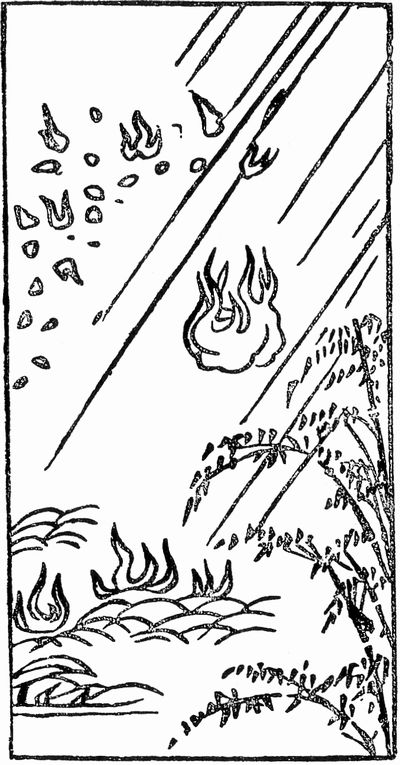
According to the Wakan Sansai Zue, a famous illustrated encyclopedia from the Edo period (1712), Onibi was described as a blue flame that floats in the air, often clustering together before dispersing. While modern science explains many of these phenomena as the combustion of methane gas produced by decaying organic matter (similar to the Western concept of the Will-o’-the-wisp), the cultural interpretation is far more sinister.
In folklore, Onibi are not just gases; they are the resentment of the dead manifest, or vital energy stolen from living humans. Unlike the Hitodama (which are specifically human souls taking the form of fire), Onibi often implies a malicious intent or a connection to demonic entities.
Legend: The Lure of the Demon Fire
Tales of Onibi vary from prefecture to prefecture, but they share a common thread: danger awaits those who follow the light. One pervasive legend warns travelers not to approach these floating orbs. It is said that Onibi have the ability to drain the life force of those who get too close, leaving the victim weak or feverish—a condition historically known as being “spirit-struck.”
The Hierarchy of Fire
Not all ghost lights are created equal. In Japanese mythology, Onibi is often an umbrella term that includes specific manifestations:
- Kitsunebi (Fox Fire): Created by magical kitsune (foxes) to lead travelers astray. In legends, if you see a line of lights in the mountains, it is a “Fox Wedding” (Kitsune no Yomeiri).
- Shiranui: Known as “unknown fire,” these occur over the sea, particularly in Kyushu. Historically, fishermen believed these were the lights of the Dragon God, Ryujin.
One famous tale involves a samurai who foolishly slashed at an Onibi with his katana, only to find the fire multiply into hundreds of distinct flames, surrounding him until he prayed for dawn.
Onibi in Modern Culture
Even if you are new to Japanese folklore, you have likely encountered Onibi in pop culture without realizing it. The imagery of floating blue flames is iconic in anime, manga, and video games.
- Anime & Manga: In series like Blue Exorcist (Ao no Exorcist), blue flames are the direct mark of Satan. In Demon Slayer, the aesthetic of breathing techniques often mirrors these elemental spiritual arts.
- Video Games: The Pokémon franchise features “Chandelure” and “Litwick,” ghost-fire types clearly inspired by Onibi and Hitodama. In The Legend of Zelda and Nioh, floating skulls or spirits surrounded by fire are staple enemies.
These modern adaptations keep the legend alive, transforming a feared omen of the Edo period into a beloved aesthetic of the dark fantasy genre.
Traveler’s Tips: Experiencing the Supernatural
While I don’t recommend hunting for actual demons, you can experience the atmosphere and aesthetic of Onibi through specific cultural events and locations in Japan.
1. Visit during Obon (August)
Obon is the festival of the dead, where spirits are believed to return to the earthly realm. The culmination of the festival often involves Okuribi (ceremonial bonfires) and Tooro Nagashi (floating lanterns). The sight of thousands of lanterns floating down a river in places like Hiroshima or Asakusa mimics the visual of wandering spirit lights.
2. The Kyoto Higashiyama Hanatouro
While technically illumination events, the lantern-lit pathways of Kyoto’s Higashiyama district in March create an ethereal, other-worldly atmosphere that lets you walk safely through the “spirit world.”
3. Mysterious Marshes
For the brave, visiting the Fushimi Inari Shrine at night offers a spooky, atmospheric trek. The endless torii gates lit by dim lanterns can easily trick the eye. Alternatively, the haunting Aokigahara Forest is famous for its silence and legends, though visitors must stick to the official trails and show absolute respect.
Sources & Further Reading
For those wishing to delve deeper into the historical texts that defined these legends, consider exploring the following:
- Wakan Sansai Zue (1712): For the Edo-period classification of supernatural fires.
- Konjaku Gazu Zoku Hyakki (1779): The famous bestiary by Toriyama Sekien, which provides the visual standard for many yokai, including Onibi.
- Nihon Shoki (Chronicles of Japan): While focused on history and mythology, it lays the groundwork for the animistic belief that nature and elements (like fire) possess spirits.
Whether a trick of the eye, a natural gas phenomenon, or a wandering soul, the Onibi remains a captivating part of Japan’s spiritual landscape. Keep your eyes peeled on your next night walk—you never know what might be glowing in the dark.