
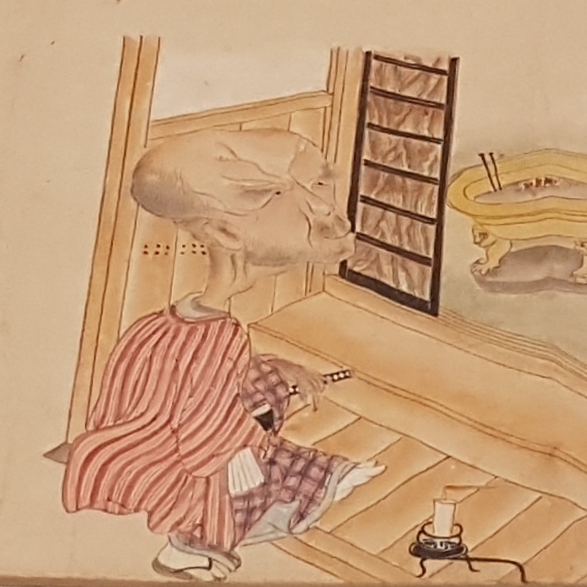
Bakemono Zukushi: Unrolling Japan’s Scroll of Monsters
When travelers think of Japanese art, images of serene cherry blossoms or the Great Wave off Kanagawa often come to mind. However, hidden within the archives of Japanese history lies a darker, more whimsical artistic tradition: the Bakemono Zukushi, or “The Illustrated Scroll of Monsters.” For culture enthusiasts and folklore hunters, unrolling the history of this masterpiece offers a fascinating glimpse into the Edo period’s imagination, where the frightening and the funny often walked hand in hand.
The Origins of the Scroll
The Bakemono Zukushi is not a single artifact but represents a genre of emakimono (picture scrolls) that gained immense popularity during the Edo period (1603–1867). Unlike earlier religious texts that depicted hell scrolls to instill moral fear, the Bakemono Zukushi emerged during a time of relative peace and cultural flourishing. As the merchant class grew wealthier and literacy rates rose, the terrifying monsters of ancient folklore—known collectively as yokai—began to transform into sources of entertainment rather than purely objects of dread.
While the exact artist of the most famous versions of the Bakemono Zukushi remains a subject of debate among art historians, the style is heavily influenced by the works of Toriyama Sekien, the master encyclopedist of monsters. These scrolls functioned less like storybooks and more like illustrated bestiaries, cataloging the supernatural entities that were believed to inhabit the shadows of feudal Japan.
Legend: The Monsters Within
The scroll serves as a rogue’s gallery of the supernatural. Unrolling a Bakemono Zukushi reveals a parade of grotesque, yet oddly charismatic creatures. Unlike the Western concept of demons which are almost exclusively evil, the entities in these scrolls range from malevolent to mischievous, and sometimes, simply pathetic.
Among the ink-washed figures, one might find the Rokurokubi, a woman who looks normal by day but whose neck stretches endlessly at night to spy on neighbors or lick up lamp oil. You might encounter the Hitotsume-kozo, a one-eyed goblin resembling a young monk, whose primary purpose is to startle people rather than harm them.
The legends captured in the scroll often bridge the gap between the inexplicable and the mundane. The Bakemono Zukushi categorizes these beings, giving form to the sounds in the attic or the sudden chill in the air. By naming and painting these fears, the artists of the Edo period stripped them of their power, turning the terrifying into the collectible.
Modern Culture: From Scrolls to Anime
The cultural footprint of the Bakemono Zukushi is massive in modern Japan. The visual language established in these scrolls directly influences the character design seen in today’s global pop culture phenomena. If you have ever played Pokémon or watched Yokai Watch, you have engaged with the descendants of the Bakemono Zukushi.
The scroll’s aesthetic—characterized by bold lines and exaggerated features—laid the groundwork for manga. Even the beloved Studio Ghibli film Spirited Away draws heavy inspiration from the yokai parade aesthetics found in these historical documents. The concept of distinct, collectible monsters with specific traits and weaknesses is not a modern invention of video games; it is a direct legacy of these Edo-period encyclopedias.
Traveler’s Tips: Hunting Yokai Today
For the traveler looking to experience the legacy of the Bakemono Zukushi, Japan offers several unique destinations:
- Tokyo National Museum (Ueno, Tokyo): This museum houses one of the most extensive collections of Japanese art in the world. While scrolls are rotated to preserve them, they often feature yokai exhibits during the summer, which is traditionally the season for telling ghost stories in Japan.
- International Research Center for Japanese Studies (Kyoto): Known as “Nichibunken,” this center has a massive digital and physical archive of strange and mysterious phenomenon imagery.
- Yōkai Street (Kyoto): Located on Ichijo-dori, this shopping street is decorated with homemade monster statues, celebrating the legend that the “Night Parade of One Hundred Demons” once marched through this very path.
- Jimbocho Book Town (Tokyo): For those wanting to take a piece of history home, the antiquarian bookstores in Jimbocho often sell woodblock prints and reproductions of famous yokai art.
Sources & Further Reading
To truly understand the depth of Japanese folklore, one must look back to the foundational texts that birthed the myths depicted in the Bakemono Zukushi.
- The Kojiki (Records of Ancient Matters): The oldest extant chronicle in Japan, detailing the creation myths and early spirits that evolved into later yokai.
- The Nihon Shoki (The Chronicles of Japan): A classical history book that, alongside the Kojiki, provides the historical and mythological context for the supernatural worldview of pre-modern Japan.
- Gazu Hyakki Yagyō (The Illustrated Night Parade of a Hundred Demons): While a book rather than a scroll, this work by Toriyama Sekien is the closest companion piece to understanding the taxonomy of monsters found in the Bakemono Zukushi.