
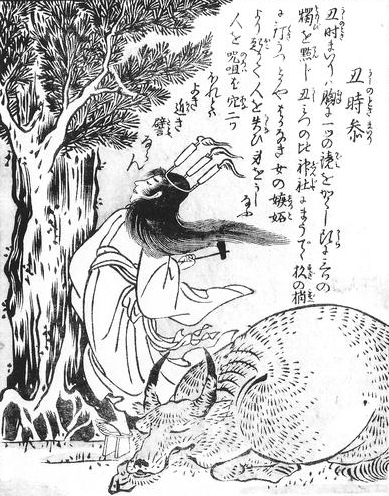
Ushi no Toki Mairi: Understanding Japan’s Hour of the Ox Curse
When travelers think of Japanese shrines, images of vermillion torii gates, peaceful gardens, and omamori (good luck charms) usually come to mind. However, beneath the serene surface of Shinto spirituality lies a darker, more obscure aspect of folklore that has captivated imaginations for centuries. This is the world of Ushi no Toki Mairi (丑三つ時参り), or “Shrine Visit at the Hour of the Ox.”
This specific curse ritual is perhaps the most famous in Japanese history, involving straw dolls, jealousy, and the dead of night. For culture enthusiasts and horror fans alike, understanding this ritual offers a fascinating glimpse into the historical psyche of Japan regarding vengeance and the supernatural.
The Origins of the Curse
The term Ushi no Toki refers to the “Hour of the Ox” in the traditional Chinese zodiac time system, which corresponds to the period between 1:00 AM and 3:00 AM. This is traditionally considered the time when the barrier between the world of the living and the world of spirits is at its thinnest.
While curse rituals existed in ancient Japan, the specific iconography of Ushi no Toki Mairi—a woman dressed in white nailing a doll to a tree—solidified during the Edo period (1603–1867). However, the roots of the practice trace back much further to the Heian period. It evolved from esoteric Buddhist rituals and ancient Shinto beliefs regarding localized spirits and the power of hatred.
The ritual is iconic: the practitioner must dress in white (resembling burial clothes), wear high single-toothed wooden sandals (geta), paint their face red, and carry a mirror against their chest. Most famously, they wear an iron trivet (a three-legged stand for cooking pots) inverted on their head, holding three burning candles. This transforms the human practitioner into a living demon.
The Legend of Hashihime
The most enduring legend associated with this ritual is that of Hashihime, or the “Princess of the Bridge.” As told in variations found in the Heike Monogatari (The Tale of the Heike) and later adapted into Noh theater, Hashihime was a woman consumed by jealousy after her husband left her for another.
Desperate for revenge, she prayed to the deity of Kifune Shrine for seven days, begging to be transformed into a powerful demon so she could kill her rival. The deity took pity—or perhaps malice—on her, instructing her to submerge herself in the Uji River for twenty-one days. She emerged as a terrifying oni (demon) and wreaked havoc on those who wronged her.
Hashihime became the archetype for the ritual. The act of visiting a shrine at the Hour of the Ox is essentially a reenactment of her descent into madness and demonhood, invoking her power to bring ruin upon an enemy.
The Ritual in Practice
According to folklore, the curse requires strict adherence to rules. The practitioner must visit a shrine (traditionally Kifune Shrine in Kyoto) at the Hour of the Ox for seven consecutive nights. On each night, they select a sacred tree (shinboku) and nail a straw doll (wara ningyo) representing the victim to the trunk using long iron spikes.
The doll often contains a part of the victim, such as hair, fingernails, or a piece of clothing. The belief is that by the seventh night, the curse is completed, and the victim will suffer illness, misfortune, or death. However, there is a catch: if the practitioner is witnessed by anyone during the act, the curse rebounds, and the practitioner must kill the witness or perish themselves.
Modern Culture and Media
Despite being a centuries-old tradition, Ushi no Toki Mairi remains a potent symbol in modern Japanese pop culture. It appears frequently in anime, manga, and J-Horror films as a shorthand for obsession and vengeance.
- Anime & Manga: Series like Jujutsu Kaisen feature characters explicitly using straw doll techniques, bringing the folklore to a global audience.
- Video Games: Many survival horror games set in Japan utilize the imagery of the nailed doll to create an atmosphere of dread.
- Contemporary Occurrences: Surprisingly, this is not just fiction. Shrine priests in Japan still occasionally discover straw dolls nailed to trees in the secluded corners of shrine grounds, indicating that even in the digital age, some people still turn to ancient methods to vent their grievances.
Traveler’s Tips: Visiting Kifune Shrine
If you are a traveler interested in the darker side of history, a visit to Kifune Shrine in the northern mountains of Kyoto is essential. It is the legendary birthplace of this ritual.
What to Know Before You Go:
- The Atmosphere: By day, Kifune is breathtakingly beautiful, famous for its stone steps lined with red lanterns and its connection to the deity of water. It is a popular power spot for matchmaking (en-musubi).
- Respect the Space: While the history is fascinating, remember that this is an active religious site. Do not search for nail marks on trees or disturb the sacred cedar trees. The shrine focuses on blessings and water, not curses, in its official capacity.
- Timing: The shrine is located in a forested valley and gets dark quickly. While the “Hour of the Ox” is 2:00 AM, visitors should stick to daylight hours or early evening illumination events to ensure safety.
Other Locations
While Kifune is the most famous, evidence of the ritual has been found at shrines across Japan, including the Jishu Shrine within the Kiyomizu-dera complex (though Jishu Shrine is currently undergoing renovation).
Sources & Further Reading
For those wishing to delve deeper into the historical texts that shaped these legends, the following works are recommended:
- The Tale of the Heike (Heike Monogatari): Contains the source material for the Hashihime legend and the Sword Chapter.
- Konjaku Monogatari (Anthology of Tales from the Past): A collection of Heian period stories that detail the supernatural beliefs of the era.
- Noh Plays: Specifically the play Kanawa (The Iron Crown), which dramatizes the story of the jealous woman wearing the iron trivet.
Ushi no Toki Mairi serves as a chilling reminder of the intensity of human emotion. While the red lanterns of Kyoto offer beauty, the shadows of the ancient cedars hold stories of a different, more haunting nature.