
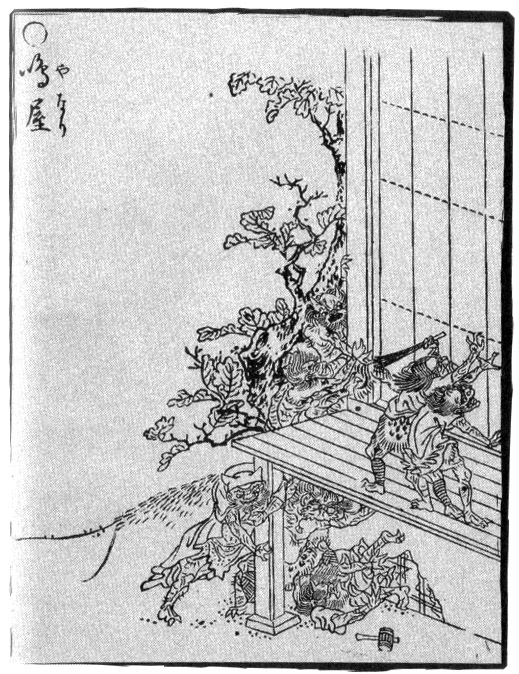
Yanari: The Mischievous Spirits of the Creaking House
Introduction
Imagine spending a night in a centuries-old wooden inn (ryokan) in the heart of Kyoto. The air is still, the tatami mats smell of fresh straw, and the paper sliding doors are shut tight against the night. Just as you drift off to sleep, a loud creak echoes through the timber frame. Then a rattle. Then a shake.
In the West, we might dismiss this as the house settling or the wind rattling the panes. However, in traditional Japanese folklore, these specific sounds are often attributed not to physics, but to a mischievous presence known as the Yanari (鳴屋). Literally translating to “Sounding House” or “House Squeaker,” the Yanari is a fascinating entry in the vast encyclopedia of Japanese yokai (spirits and monsters). For the cultural traveler, understanding the Yanari adds a layer of mystical depth to the experience of staying in Japan’s historic architecture.
Origins of the Sounding House
The concept of the Yanari is deeply rooted in the Edo period, a time when the classification and illustration of supernatural beings flourished. The most definitive depiction of the Yanari comes from Toriyama Sekien, the legendary ukiyo-e artist and folklorist. In his 1776 masterpiece, Gazu Hyakki Yagyō (The Illustrated Night Parade of a Hundred Demons), Sekien gave form to the noises that plagued old Japanese homes.
Before Sekien, the phenomenon was merely an auditory mystery. The Japanese language is rich with onomatopoeia, and the groans of timber structures needed an explanation. Sekien visualized these sounds as small, oni-like (ogre-like) creatures. In his illustrations, they are depicted as diminutive demons wielding iron clubs or mallets, furiously banging on the floors, ceilings, and support beams of houses to create the unsettling noises that keep residents awake.
The Legend: Pranksters of the Night
The Nature of the Noise
According to folklore, Yanari are not typically malevolent spirits in the way a vengeful ghost (onryō) might be. Instead, they are classified closer to poltergeists. Their primary goal is mischief. They emerge late at night when the household is silent, using their tools to shake the foundation and rattle the shoji screens.
Legends say that if a house shakes without an earthquake, or if the beams groan without wind, the Yanari are active. In some variations of the myth, the Yanari are associated with the arrival of other, more powerful yokai, acting as a noisy herald. In others, they are simply the manifestations of the house’s own spirit, expressing its age and weariness.
Psychological Interpretations
Interestingly, some historical interpretations link the Yanari to the psychological state of the homeowner. In feudal Japan, hearing the house shake when no one else did was sometimes considered a symptom of anxiety or neurosis. Therefore, the “banishing” of a Yanari could sometimes be seen as a metaphor for calming one’s own mind.
Yanari in Modern Culture
While modern architecture using steel and concrete has largely silenced the Yanari in urban Tokyo, the spirit lives on in pop culture and rural traditions.
In the realm of anime and manga, particularly in series like GeGeGe no Kitaro which focuses heavily on yokai, Yanari appear as nuisance spirits. They are often portrayed as a group of small, goblin-like creatures working in unison to cause chaos. They also appear in video games such as the Nioh series, where they are enemies that surprise the player.
Culturally, the term is still occasionally used by the older generation to jokingly explain away the creaks of a floorboard, keeping the whimsical spirit of the past alive in daily conversation.
Traveler’s Tips: Where to “Hear” the Yanari
For the traveler seeking to connect with this aspect of Japanese folklore, you must step away from the modern hotels and seek out traditional wooden architecture. Here is how you can immerse yourself in the world of the Yanari:
- Stay in a Machiya: Rent a restored machiya (traditional wooden townhouse) in Kyoto or Kanazawa. These long, narrow wooden homes are beautiful but notoriously noisy at night due to the temperature changes affecting the wood. It is the perfect setting to imagine small demons banging on the beams.
- Visit Shirakawa-go: The Gassho-zukuri farmhouses in this UNESCO World Heritage site are massive wooden structures held together with ropes and timber joinery. During the winter, the weight of the snow causes the wood to groan—a prime habitat for folklore enthusiasts to listen for Yanari.
- Experience a Kominka: Many rural areas offer stays in kominka (old folk houses). The silence of the Japanese countryside amplifies every sound, making the presence of the “house squeaker” feel incredibly real.
Pro Tip: If you hear a creak in the night, don’t be alarmed. Just smile and acknowledge the Yanari; they are just part of the charm of old Japan.
Sources & Further Reading
To deepen your understanding of Japanese supernatural history, consider exploring the following texts:
- Gazu Hyakki Yagyō (The Illustrated Night Parade of a Hundred Demons) by Toriyama Sekien – The visual origin of the Yanari.
- The Kojiki and Nihon Shoki – While these ancient texts focus on gods and the creation of Japan, they set the animistic foundation (Shinto) that allows spirits like Yanari to exist in the cultural consciousness.
- Yokai Attack! The Japanese Monster Survival Guide by Hiroko Yoda and Matt Alt – A modern, accessible guide to understanding these creatures.