
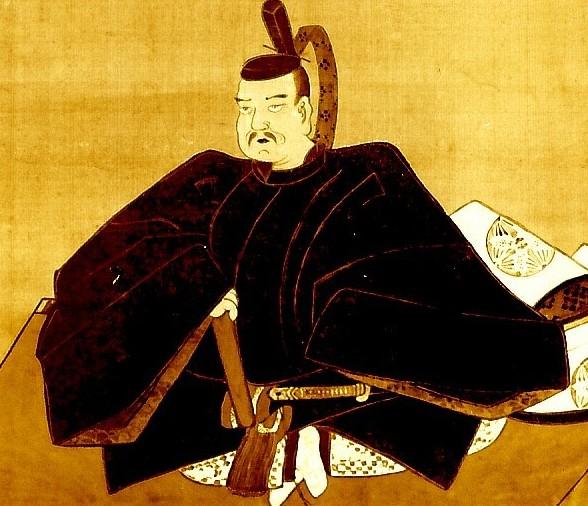
Taira no Masakado: The Samurai Rebel Who Became a God
In the ultra-modern financial district of Otemachi, Tokyo, surrounded by gleaming glass skyscrapers and the headquarters of global corporations, there sits a small, unassuming plot of land covered by trees and stone markers. This is the Masakado Kubizuka (The Mound of Masakado’s Head). Despite the incredibly high value of real estate in this area, no developer dares to build over it. Why? Because it belongs to Taira no Masakado, Japan’s first samurai rebel and one of the country’s most powerful vengeful spirits.
For travelers interested in the intersection of Japanese history, folklore, and the supernatural, the story of Taira no Masakado is an essential chapter in understanding the spiritual undercurrents of Tokyo.
Origins: The First Samurai King
Taira no Masakado was born in the early 10th century during the Heian period. He was a member of the Kanmu Taira clan, a lineage that traced its blood back to Emperor Kanmu. While the imperial court in Kyoto was obsessed with poetry and aristocracy, the Kanto region (modern-day Tokyo and surrounding areas) was a wild frontier.
Masakado was a charismatic and skilled warrior who became embroiled in provincial disputes over land and marriage politics. Unlike the courtiers in Kyoto, Masakado lived by the sword. His local skirmishes eventually escalated into a full-scale rebellion against the central government. In a brazen act of defiance that shocked the nation, he captured several provincial capitals and, in 939 AD, declared himself the Shinno (New Emperor). This was the first time in Japanese history that someone outside the direct imperial line claimed the divine right to rule, marking a pivotal moment in the rise of the samurai class.
The Legend of the Flying Head
Masakado’s reign as the “New Emperor” was short-lived. The central government in Kyoto quickly dispatched forces, led by Fujiwara no Hidesato and Taira no Sadamori, to quell the rebellion. In 940 AD, Masakado was killed in the Battle of Kojima. To prove his death, his head was severed and transported to Kyoto, where it was displayed on the riverbank as a warning to rebels.
According to legend, Masakado’s head did not decompose. Instead, it gnashed its teeth and shouted for its body for months. Finally, fueled by rage and a desire to return home, the head lifted into the air and flew hundreds of miles from Kyoto toward the Kanto region. Exhausted, it fell in a village called Shibazaki—which is now Otemachi, Tokyo.
Villagers, terrified of his angry spirit, built a mound to appease him. This marked the beginning of his transformation from a traitor into a local deity.
Modern Culture: The Curse of Otemachi
The legend of Masakado is not just ancient history; it is a very real part of modern Tokyo culture. He is considered one of Japan’s Three Great Vengeful Spirits (Nihon San Dai Onryo).
In the 20th century, several incidents cemented the belief in Masakado’s curse:
- The Great Kanto Earthquake (1923): After the city was leveled, the Ministry of Finance attempted to clear the mound to build a temporary office. Within years, the Minister of Finance and several other officials associated with the project died unexpectedly. The building was demolished, and the mound was restored.
- The US Occupation (1945): After World War II, American occupation forces tried to level the land for a parking lot. A bulldozer reportedly flipped over, killing the driver. Local officials pleaded with the US military to leave the site alone, explaining the grave’s significance.
Today, Masakado is revered as a guardian of Tokyo at the nearby Kanda Myojin Shrine. He is seen as a protector of the people against the corrupt central government, making him a folk hero. During the Kanda Matsuri, one of Tokyo’s three major festivals, his spirit is paraded through the streets to bless the city.
Traveler’s Tips
If you wish to pay your respects to this legendary figure, here is how to do so respectfully:
- The Masakado Kubizuka: Located right outside the C5 exit of Otemachi Station. It is a small, quiet sanctuary. When visiting, bow deeply. It is common to see businessmen in suits praying here for financial success or protection before big deals.
- Kanda Myojin Shrine: After visiting the grave, walk to Kanda Myojin (about 15 minutes away). This is where his spirit is enshrined as a deity. It is a vibrant shrine popular with tech enthusiasts and anime fans.
- Etiquette: Do not treat the grave as a mere photo op. Maintain silence and never turn your back directly on the monument in a disrespectful manner immediately after praying.
Sources & Further Reading
For those wishing to delve deeper into the historical accounts of the Heian period and the rise of the samurai, the following texts are recommended:
- Shōmonki (The Chronicle of Masakado): The primary historical source detailing his rebellion, written shortly after his death in the mid-10th century. It offers a vivid, quasi-fictionalized account of his life.
- Konjaku Monogatarishu: A collection of tales from the late Heian period that includes supernatural accounts of Masakado.
- Nihon Shoki & Kojiki: While these ancient texts predate Masakado, they establish the imperial lineage of Emperor Kanmu, from whom Masakado claimed his descent.