
The Legend of Kotoshironushi: Japan’s Patron of the Sea
When travelers explore the vibrant streets of Osaka or the quiet coastlines of Shimane, they frequently encounter the smiling visage of Ebisu, the god of fishermen and luck. However, behind this popular folk deity lies an ancient and powerful figure from classical Shinto mythology: Kotoshironushi-no-Kami (事代主神).
Known as the “Master of Words” or the “Lord of Oracles,” Kotoshironushi plays a pivotal role in the founding myths of Japan. For culture enthusiasts and spiritual travelers, understanding this deity unlocks a deeper appreciation of Japanese history, bridging the gap between ancient chronicles and modern-day shrine rituals.
Origins: The Son of the Great Land Master
In the genealogy of the Shinto pantheon, Kotoshironushi is the son of Okuninushi, the “Great Land Master” and the primary deity of the Izumo region. While his father is associated with nation-building and relationships, Kotoshironushi is revered for his wisdom, his role as an oracle, and his deep connection to the ocean.
He is perhaps most famous in modern times for his syncretism with Ebisu, one of the Seven Lucky Gods. While Ebisu has complex origins, in many Shinto traditions, he is identified directly as Kotoshironushi. This connection explains why he is almost always depicted holding a fishing rod and a large sea bream (tai), symbolizing the bounty of the sea and prosperity in commerce.
The Legend: The Transfer of the Land
The most significant myth involving Kotoshironushi is recorded in Japan’s oldest historical chronicles, the Kojiki (712 AD) and the Nihon Shoki (720 AD). This event is known as the Kuni-yuzuri, or the “Transfer of the Land.”
According to the legend, the sun goddess Amaterasu sent heavenly envoys to the earthly realm (Izumo) to demand that Okuninushi yield control of the land to her descendants (the Imperial line). Okuninushi, unsure of how to respond, deferred the decision to his son, Kotoshironushi.
At the time, Kotoshironushi was not in the palace; he was away at Cape Miho, enjoying fishing and bird hunting. When the envoys found him and delivered the heavenly ultimatum, Kotoshironushi accepted their demand without resistance. He replied, “My father should respectfully withdraw. I will not disobey.”
To signify his total withdrawal and peaceful acceptance, he performed a unique ritual. He stepped onto his boat, clapped his hands in prayer, and capsized the boat, transforming it into a green brushwood fence (or disappearing into the waves, depending on the translation) to retire into the unseen world.
This act is culturally significant for two reasons:
- Peaceful Transition: It legitimized the Imperial rule through diplomacy rather than war.
- Kashiwade (Hand Clapping): Legend suggests that his hand-clapping during this event is the origin of the kashiwade—the ritual clapping performed by worshipers at Shinto shrines today to attract the attention of the gods.
Modern Culture: Business and Blessings
Today, Kotoshironushi remains a central figure in Japanese daily life, primarily through his identity as Ebisu. He is the patron of:
- Fishermen: Guardianship over safety at sea and bountiful catches.
- Merchants: As the god of fair dealings and prosperity, his likeness is found in shops and restaurants across Japan.
- Oracles: True to his name (“Master of Words”), he is historically associated with divination and truth-telling.
One of the most energetic festivals in Japan, Toka Ebisu, held annually around January 10th, is dedicated to him. During this time, massive crowds gather at shrines (especially in the Kansai region) to buy lucky bamboo branches decorated with charms, shouting “Shobai hanjo de sasa motte koi!” (“Bring the bamboo and business will prosper!”).
Traveler’s Tips: Where to Worship
To truly connect with the spirit of Kotoshironushi, travelers should visit the shrines deeply connected to his myth.
1. Miho Shrine (Shimane Prefecture)
This is the head shrine of all deities worshipped as Ebisu across Japan. Located on the Shimane Peninsula, it sits near the very spot where the Kuni-yuzuri legend claims Kotoshironushi was fishing. The atmosphere here is ancient and serene, contrasting with the bustle of city shrines. Morning prayers often involve traditional music and dance.
2. Nagata Shrine (Hyogo Prefecture)
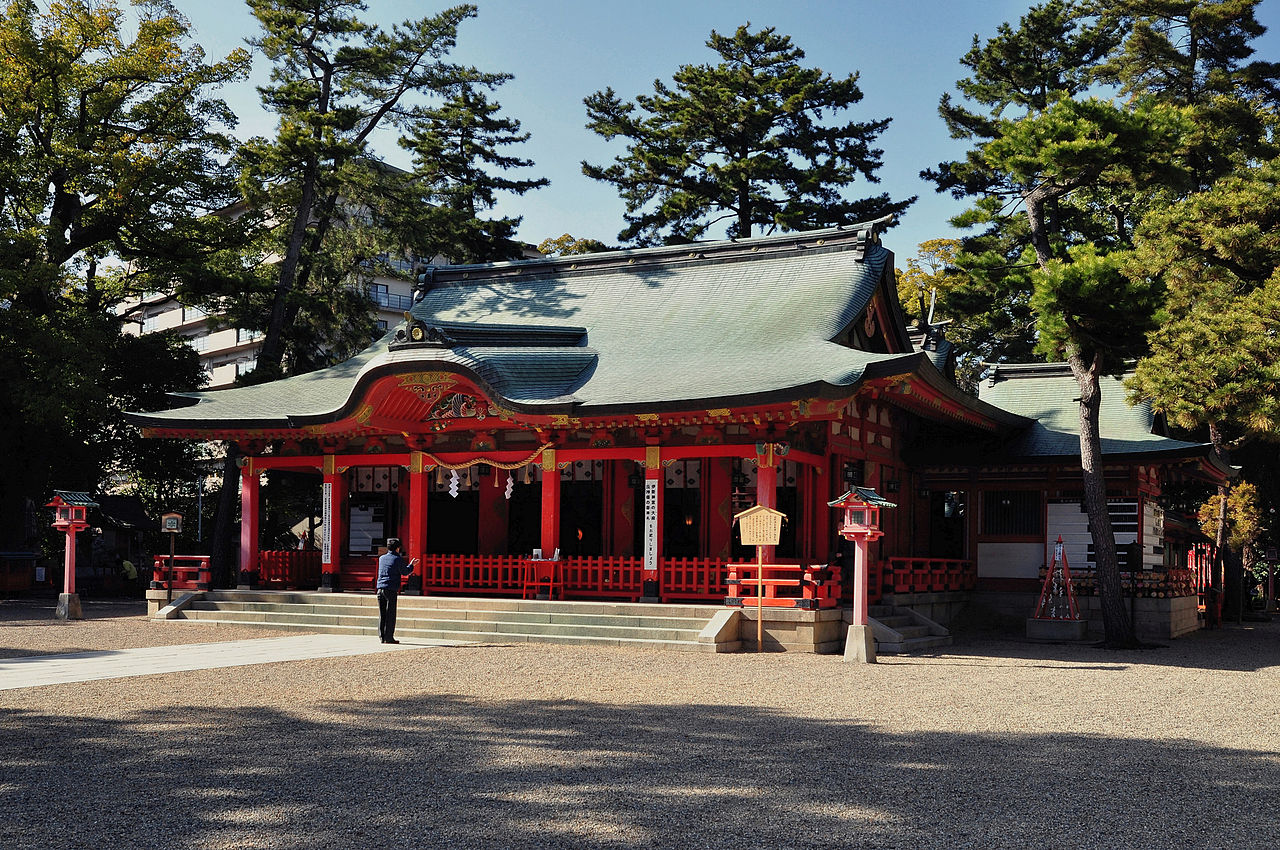
Located in Kobe, this shrine is intimately linked with Kotoshironushi. It is said that the Empress Jingu established this shrine upon returning from her travels, following an oracle given by the god himself. It is famous for its Tsuina (exorcism) rituals.
3. Imamiya Ebisu Shrine (Osaka)
For a look at the modern, commercial worship of the deity, visit during the Toka Ebisu festival. The energy here epitomizes Osaka’s merchant spirit, blending reverence with a lively economic drive.
Sources & Further Reading
For those wishing to delve deeper into the mythology and history of Kotoshironushi, the following texts are essential:
- The Kojiki (Records of Ancient Matters): Translated by Basil Hall Chamberlain or Donald L. Philippi. Refer to the chapters on the “Transfer of the Land.”
- The Nihon Shoki (The Chronicles of Japan): Translated by W.G. Aston. Look for the sections detailing the age of the gods.
- Guide to Shinto Shrines: Various academic resources on the Izumo Taisha and Miho Jinja lineage.