
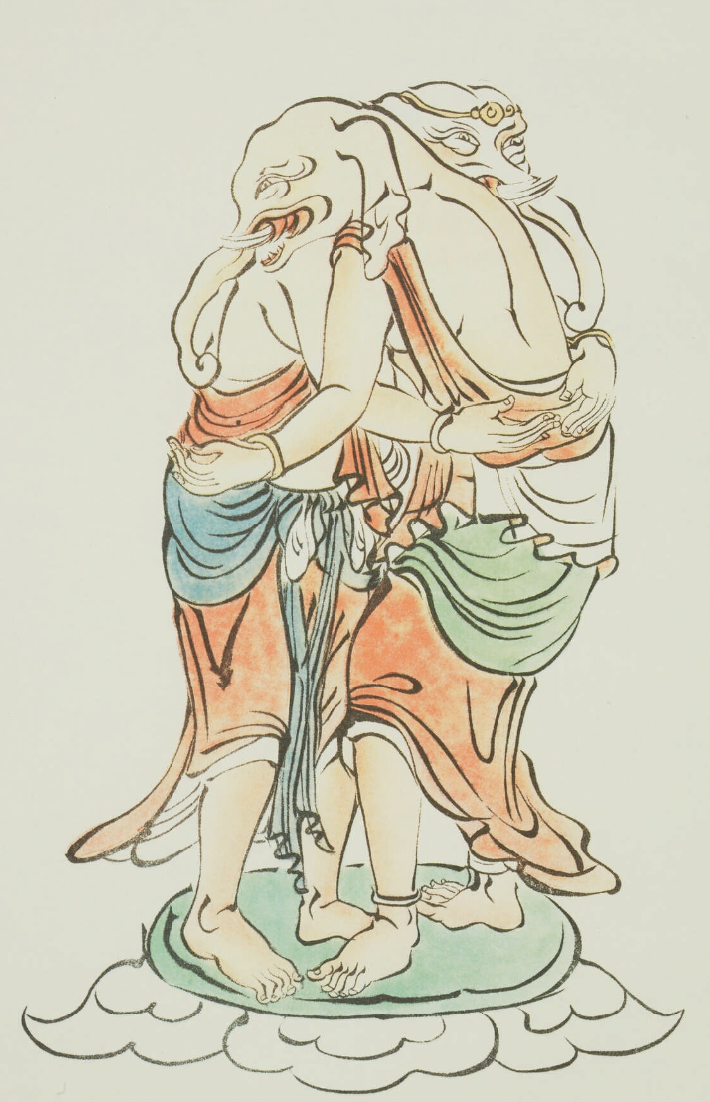
Unveiling Kangiten: The Secret God of Bliss in Japan
When travelers visit Japan, they often encounter the familiar faces of Buddha or the guardians of Shinto shrines. However, hidden behind closed doors in specific temples lies a deity wrapped in secrecy, power, and profound symbolism. This is Kangiten (歓喜天), also known as Shoten (聖天).
Often identified as the Japanese Buddhist version of the Hindu god Ganesha, Kangiten is not merely a remover of obstacles but a complex figure representing the union of opposites, worldly success, and spiritual bliss. Because his statues are rarely shown to the public due to their immense spiritual potency, Kangiten remains one of Japan’s most fascinating cultural mysteries.
Origins: From Vinayaka to Kangiten
The roots of Kangiten stretch back to ancient India. He is derived from Ganesha, the elephant-headed son of Shiva and Parvati. In the transmission of Buddhism from India to China and finally to Japan (specifically within the esoteric Shingon and Tendai schools), the deity underwent a transformation.
In early scriptures, the figure was known as Vinayaka, often viewed as a creator of obstacles or a demon who hindered practice. However, through the lens of Esoteric Buddhism (Mikkyo), this powerful force was converted into a protector of the Dharma. By the time the worship of Kangiten was popularized in Japan—largely credited to the monk Kukai (Kobo Daishi) in the 9th century—he had evolved into a benevolent, albeit strictly guarded, deity of wealth, harmony, and joy.
The Legend of the Dual Embrace
What makes Kangiten visually and theologically unique is his depiction. While sometimes shown as a solitary male figure, his most esoteric and celebrated form is the Soshin Kangiten (Dual-bodied Kangiten). This statue depicts two elephant-headed figures embracing each other in a standing position.
According to legend, the male figure was originally a wild, obstacle-creating demon (Vinayaka). To tame him, the Bodhisattva Kannon (Avalokiteshvara) transformed herself into a female elephant-headed being. Overcome by her beauty, the demon sought to embrace her. She agreed only on the condition that he cease his evil ways and become a protector of Buddhism.
Their embrace symbolizes the union of wisdom and skillful means, the conversion of negative energy into positive power, and the non-duality of the physical and spiritual worlds. This union generates the “Bliss” (Kangi) inherent in his name.
Modern Culture and Worship
Today, Kangiten is worshiped primarily for practical, worldly benefits. Devotees pray to him for success in business, marital harmony, and fertility.
The Symbol of the Radish
If you visit a temple dedicated to Kangiten, you will notice an unusual motif: the Daikon Radish. The bifurcated root of the daikon is said to represent the physical union of the dual deities. Furthermore, the radish is thought to flush out toxins from the body, symbolizing the removal of spiritual “toxins” or obstacles.
Another common symbol is the Kinchaku, a traditional money pouch, representing the wealth and prosperity Kangiten bestows upon faithful believers.
Note on Secrecy: Unlike the open statues of the Great Buddha in Kamakura, statues of Kangiten are almost never displayed. They are kept inside a Zushi (shrine cabinet) and are often doused in oil during secret rituals known as Yokuyu (oil bath rituals) performed by priests to appease and strengthen the deity.
Traveler’s Tips: Where to Find Kangiten
While you likely won’t see the statue itself, the atmosphere of Kangiten temples is distinct—often feeling more intense and mystical than typical tourist spots. Here are two prime locations:
1. Matsuchiyama Shoden (Tokyo)
Located in the Asakusa district, just a short walk from the famous Senso-ji, this temple is a hidden gem.
- What to look for: Lanterns and carvings adorning the temple feature crossed daikon radishes. You can actually purchase fresh radishes at the temple office to offer to the deity.
- Vibe: It is quieter and more local than Senso-ji, offering a serene garden and a view of the Tokyo Skytree.
2. Hozan-ji (Nara)
Located on Mount Ikoma, this temple has a palpable, ancient atmosphere.
- The Experience: The approach is lined with stone lanterns and traditional inns. It is a center for serious prayer regarding commerce and business.
Etiquette
- Be Respectful: These are sites of active, intense worship. Avoid loud conversations.
- Offerings: If you wish to offer a radish (usually available for purchase on-site), follow the locals or ask the temple staff for the procedure.
Sources & Further Reading
For those interested in the deep theological roots of Japanese deities, the following texts and concepts are essential:
- The Vinayaka Sutras: Various esoteric texts detailing the rituals of the Elephant-faced deity.
- Kojiki and Nihon Shoki: While these 8th-century texts primarily chronicle the native Shinto Kami (like Amaterasu), reading them provides context on how distinct the imported Buddhist deities like Kangiten are compared to the indigenous gods of Japan.
- Esoteric Buddhism Studies: Works regarding Kobo Daishi and the Shingon lineage provide the historical context for how Hindu deities were integrated into the Japanese pantheon.
Kangiten remains a testament to Japan’s ability to absorb, transform, and preserve ancient traditions. Standing before his temple, you are standing before centuries of secret rituals and the enduring human hope for bliss and harmony.