
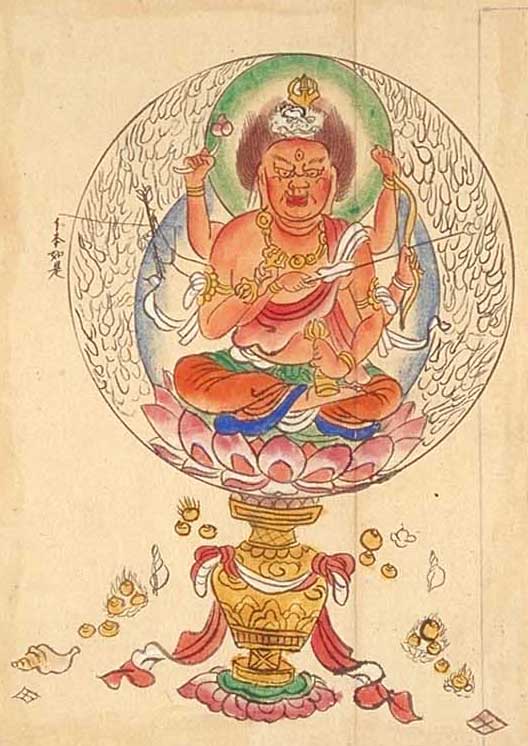
Aizen Myōō: Japan’s Fierce Buddhist God of Love
When travelers imagine a deity of love, they often visualize the cherubic Cupid or the beautiful Aphrodite. However, in the realm of Japanese Esoteric Buddhism, the patron of passion and affection cuts a much more formidable figure. Enter Aizen Myōō, the Wisdom King with crimson skin, blazing hair, and a scowl that could stop a samurai in his tracks. Despite his terrifying appearance, he is one of Japan’s most benevolent figures, revered for converting earthly desires into spiritual enlightenment.
Origins: The Red Wisdom King
Known in Sanskrit as Ragaraja, Aizen Myōō (愛染明王) occupies a unique niche in the Buddhist pantheon. He was introduced to Japan primarily during the Heian period (794–1185) through the teachings of Kūkai, the founder of the Shingon sect, and Saichō of the Tendai sect. Unlike the serene Buddhas who represent the attainment of peace, Myōō (Wisdom Kings) are the fierce defenders of the faith.
Iconography and Symbolism
Visually, Aizen Myōō is unmistakable. He is almost always depicted with a deep red body, symbolizing the burning intensity of human passion and lust. He possesses three eyes and six arms, often wielding weapons such as a bow and arrow. While these armaments might suggest war, in Aizen’s hands, they serve a cupid-like function—shooting arrows of love and wisdom into the hearts of sentient beings to awaken their Buddha-nature.
He sits atop a red lotus, often contained within a burning sun disk. This fire represents purification, burning away the impurities of the ego to leave only the pure energy of devotion.
Legend: Transforming Lust into Enlightenment
The central philosophy surrounding Aizen Myōō is the Esoteric concept of Bonno Soku Bodai, which translates roughly to “earthly desires are enlightenment.” In orthodox Buddhism, desire is often seen as the root of suffering. However, the legends of Aizen teach that the energy used for lust and passion is the same energy required for spiritual awakening. Rather than suppressing desire, one should channel that intense energy toward a higher purpose.
The Historical Protector
Historically, Aizen Myōō was not only a god of romance but also a protector of the state. During the Mongol invasions of Japan in the 13th century, rituals dedicated to Aizen were performed to summon the “Kamikaze” (divine winds) to repel the enemy fleets. Legend holds that his arrow, shot into the sky, could turn back invading forces, protecting the nation just as he protects the devotee’s heart from spiritual corruption.
Modern Culture: Romance and Indigo
In contemporary Japan, Aizen Myōō has evolved into a popular figure for those seeking en-musubi (marriage ties or matchmaking). You will often find young couples or singles praying at his temples for luck in romance.
Interestingly, Aizen Myōō is also the patron deity of the dyeing and textile industries. This association is largely linguistic; the Japanese word for indigo dye is ai (藍), which shares the same sound as the first character of Aizen’s name (愛, meaning love). Consequently, dyers and kimono makers have historically worshipped him for business prosperity.
Pop Culture Appearances
Aizen’s fierce visage has made him a popular reference in modern media. Characters and attacks in anime and video games, such as Persona or Bleach, often draw inspiration from his name and iconography, keeping the deity relevant to younger generations who may not be practicing Buddhists.
Traveler’s Tips: Where to Find Aizen Myōō
If you are visiting Japan and wish to pay your respects—or perhaps ask for a little assistance in your love life—there are several key locations to visit.
Aizen-do (Shoman-in), Osaka
Located in the Tennoji district, this temple is perhaps the most famous site dedicated to the deity. It hosts the Aizen Matsuri every year around June 30th. It is one of Osaka’s three major summer festivals. The highlight is the parade of “Hoekago” (palanquins) featuring women dressed in traditional yukata. Visitors often leave heart-shaped votive plaques (ema) here.
Saidai-ji, Nara
This ancient temple houses a magnificent statue of Aizen Myōō created by the master sculptor Zen’en in 1247. It is considered a National Treasure and offers a glimpse into the intense artistic devotion of the Kamakura period.
Worship Etiquette
When visiting an Aizen temple:
- Bow at the gate before entering.
- Cleanse your hands at the water pavilion (chozuya).
- Offer a coin (traditionally 5 yen) into the saisen box.
- Put your hands together in prayer, state your name and your romantic wish clearly, and bow deeply.
Sources & Further Reading
For those interested in the textual and historical foundations of Aizen Myōō, the following sources provide deeper context:
- The Yugi-kyō (Yogin Sutra): The primary Esoteric scripture that details the rituals and iconography of Aizen Myōō.
- Kūkai’s Writings: As the founder of Shingon Buddhism, Kūkai’s collected works provide the theological basis for why fierce deities are venerated.
- Note on Historical Texts: While the Kojiki and Nihon Shoki cover Shinto creation myths, Aizen Myōō is a Buddhist import. Therefore, one should look to the Heike Monogatari for references to prayer rituals during times of war, or the Vajrasekhara Sutra for the origins of the Wisdom Kings.
By understanding Aizen Myōō, travelers gain a deeper appreciation for the complex interplay between human desire and spiritual discipline that defines much of Japanese culture.