
Unveiling Shiryo: The Haunting Spirits of Japan’s Folklore
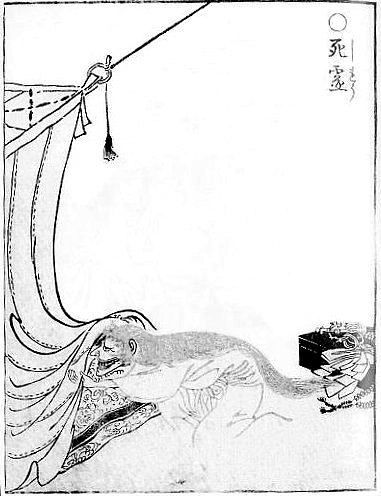
When travelers visit Japan, they are often enchanted by the serene beauty of Shinto shrines and the quiet majesty of Buddhist temples. However, beneath the surface of this tranquil aesthetic lies a spiritual world teeming with entities that are both revered and feared. Among these, the Shiryo (死霊)—literally translating to “dead spirit”—holds a pivotal place in the Japanese consciousness. Unlike the playful monsters often found in anime, Shiryo represent the solemn, and sometimes terrifying, journey of the human soul after death.
Introduction: The Thin Veil Between Worlds
In Japanese culture, the boundary between the living and the dead is porous. While Western ghost stories are often reserved for Halloween, in Japan, the peak season for the supernatural is mid-summer. This is when the heat becomes oppressive, and chilling tales of kaidan (ghost stories) are told to induce shivers that cool the body.
At the center of many of these tales is the Shiryo. It is essential to distinguish the Shiryo from other supernatural entities. While Yokai are monsters or goblins, and Ikiryo are the wandering spirits of living persons (usually born of intense jealousy), a Shiryo is specifically the spirit of a deceased person. They are the manifestation of a soul that has left the physical vessel, caught in the delicate transition between this world and the next.
Origins: Beliefs of Soul and Spirit
To understand the Shiryo, one must look at the syncretic blend of Shinto and Buddhism that defines Japanese spirituality. According to traditional belief, every human possesses a spirit or soul known as Reikon. upon death, the Reikon leaves the body. It exists in a state of limbo, a form of purgatory, for forty-nine days.
The Importance of Rites
During this critical period, the family must perform specific funeral rites and offerings. If these rituals are performed correctly, the Shiryo transforms into a benevolent ancestor spirit (Sosen), watching over the family from the other side. They return annually during the Obon festival to be welcomed by their descendants.
The Birth of the Vengeful Spirit
However, the origin of the terrifying Shiryo legends lies in failure. If a person dies in a state of intense rage, sorrow, or jealousy, or if they are not given proper funeral rites, the spirit cannot pass on. They become earthbound, transforming from a neutral Shiryo into an Onryo (vengeful spirit). These entities linger in the physical world, driven by a singular purpose: to seek redress for the wrongs done to them in life.
Legend: The Tale of Oiwa
Perhaps the most famous example of a Shiryo in Japanese history is the story of Oiwa from the tale Yotsuya Kaidan. Dating back to the Edo period, this story remains the gold standard for Japanese ghost legends.
Oiwa was the devoted wife of a masterless samurai named Iemon. Cruel and ambitious, Iemon desired to marry a wealthy neighbor’s granddaughter to elevate his status. To do so, he needed Oiwa out of the picture. He poisoned her, causing her face to become horribly disfigured before she died in agony. To cover his tracks, he accused her of adultery and crucified her body on a wooden door.
Oiwa returned as a terrifying Shiryo. She did not simply scream or attack; she dismantled Iemon’s life psychologically. She appeared in lanterns, on the faces of his new bride, and in the shadows of his home. Driven to madness by her haunting visage, Iemon was eventually killed. To this day, actors performing Yotsuya Kaidan visit Oiwa’s grave in Tokyo to pay respects, fearing that her Shiryo still lingers, ready to curse those who do not honor her suffering.
Modern Culture: From Scrolls to Screens
The concept of the Shiryo has seamlessly transitioned from ancient woodblock prints to modern pop culture, specifically birthing the genre of J-Horror.
If you have seen The Ring (Ringu) or The Grudge (Ju-On), you have witnessed the modern interpretation of the Shiryo. Sadako and Kayako are classic examples of the “wronged woman” trope found in folklore. They are depicted in white burial kimonos with long, unkempt black hair—a visual shorthand for a ghost that dates back to the Edo period. In anime and manga, Shiryo appear frequently, sometimes as antagonists like in Bleach, or as misunderstood entities needing guidance to the afterlife in series like Natsume’s Book of Friends.
Traveler’s Tips: Experiencing the Spiritual Side
For the culturally curious traveler, exploring the world of Shiryo can be a fascinating addition to a Japanese itinerary. Here is how to do it respectfully:
- Visit During Obon: Traveling in mid-August allows you to witness Obon. You can see the Toro Nagashi (floating lanterns) ceremonies, where lights are sent down rivers to guide Shiryo back to the spirit world. It is a beautiful, somber, and photogenic event.
- Haunted Locations (With Caution): Japan has many “power spots” and haunted locations. The Old Inunaki Tunnel in Fukuoka and Aokigahara Forest are famous, though local etiquette suggests avoiding these places out of respect for the dead. Instead, consider visiting Aoyama Cemetery in Tokyo during cherry blossom season for a peaceful walk among history.
- Temple Stays: Engaging in a Shukubo (temple stay), such as on Mount Koya, offers a chance to participate in morning prayers for the spirits of the deceased, providing a safe and immersive spiritual experience.
Sources & Further Reading
To delve deeper into the lore of Japanese spirits, the following texts and collections are essential:
- The Kojiki (Records of Ancient Matters): Contains the primal myths of Japan, including Izanami’s descent into Yomi (the land of the dead).
- Nihon Shoki (The Chronicles of Japan): Offers historical context to the spiritual beliefs of the 8th century.
- Kwaidan: Stories and Studies of Strange Things by Lafcadio Hearn: A classic collection of Japanese ghost stories written by one of the first Westerners to document them comprehensively.