
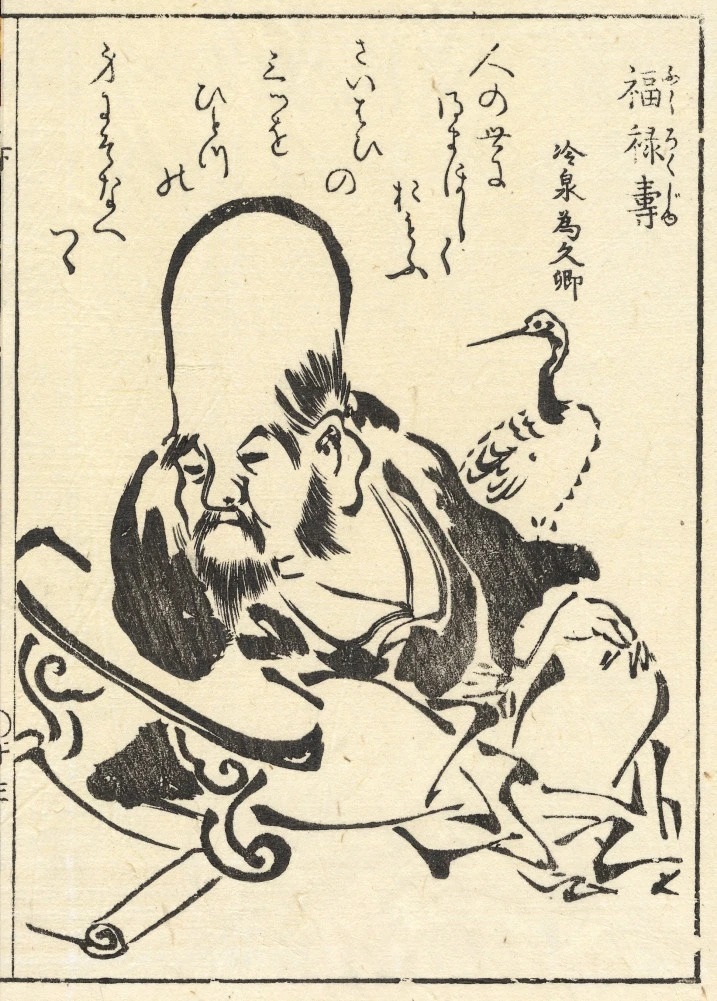
Fukurokuju: The Divine Sage of Wisdom and Longevity
When traveling through Japan, particularly around the New Year, you are likely to encounter images of seven distinct deities sailing on a treasure ship. These are the Shichifukujin, or the Seven Lucky Gods. Among this eclectic group stands a figure unmistakably recognized by his elongated forehead and benevolent smile: Fukurokuju.
While he may look whimsical to the uninitiated eye, Fukurokuju is a powerhouse of spiritual virtue. Representing the three desires of Chinese Taoism—Happiness, Wealth, and Longevity—he offers a fascinating glimpse into how Japan absorbed and transformed continental philosophy into beloved local folklore.
The Origins: A Taoist Hermit
Unlike deities native to Shintoism, Fukurokuju’s roots are firmly planted in Chinese soil. His name is a compound of three kanji characters that form the core of his divinity:
- Fuku (福): Happiness and luck.
- Roku (禄): Wealth and prosperity.
- Ju (寿): Longevity.
Scholars trace his origins to the Chinese Sanxing (Three Star Gods), specifically the anthropomorphic representation of the Star of the South Pole. In Taoist tradition, he is often identified as a hermit-sage who lived during the Song Dynasty, renowned for performing miracles and living without food.
Interestingly, Fukurokuju is often confused with Jurojin, another member of the Seven Lucky Gods. Both originate from similar Chinese Taoist sources and share attributes like the elderly appearance and the stag companion. However, Fukurokuju is distinctively identified by his unnaturally high forehead, which is said to house his immense wisdom and accumulated virtues.
Legend and Iconography
Fukurokuju is depicted as an elderly man, short in stature but with a forehead that accounts for nearly half his height. He typically wears the robes of a Chinese scholar and holds a staff.
The Sacred Scroll
One of his most powerful attributes is the scroll tied to his staff. According to legend, this scroll contains the lifespan of every person on Earth. While this might sound ominous, in the context of the Lucky Gods, it represents his power to bestow longevity upon those who live virtuously.
Animal Companions
He is rarely seen alone. Fukurokuju is usually accompanied by animals that symbolize long life in Japanese culture:
- The Crane: Believed to live for a thousand years.
- The Turtle: Believed to live for ten thousand years.
- The Stag: A symbol of endurance and nature.
There is a humorous legend that Fukurokuju is the only deity among the seven who can revive the dead, though he is also known to be quite fond of chess. Legend says he once told a farmer that if the farmer could beat him at a game, he would grant him a fortune. The farmer lost, but the interaction highlighted Fukurokuju’s approachable, albeit competitive, nature.
Modern Culture and Worship
Today, Fukurokuju remains a central figure in the Shichifukujin Meguri (Pilgrimage of the Seven Lucky Gods), a tradition undertaken by thousands of Japanese people during the first week of January to ensure luck for the coming year.
In modern pop culture and art, he is often caricatured for his head shape, appearing in anime and manga as a grandfatherly figure of wisdom. However, in the business world, he is taken quite seriously; shop owners often display statues of him to invite the “Roku” (wealth) aspect of his divinity into their establishments.
Traveler’s Tips: Finding Fukurokuju
If you are visiting Japan and wish to pay respects to the god of longevity, here are the best places to look:
- Yanaka, Tokyo: The Yanaka Shichifukujin is the oldest pilgrimage route in Tokyo. You can find Fukurokuju enshrined at Togakuji Temple. It makes for a wonderful walking tour through Tokyo’s preserved “Old Town” (Shitamachi).
- Asakusa Shrine: Located right next to the famous Senso-ji Temple, this shrine is a hotspot for spotting Seven Lucky Gods imagery.
- Souvenirs: Look for Omamori (amulets) specifically designed for health and longevity (Kenko-Kigan) at temples dedicated to him. Small ceramic figurines of Fukurokuju make excellent gifts for elderly relatives back home, symbolizing a wish for their long life.
Sources & Further Reading
To understand the broader context of Japanese mythology and how imported deities like Fukurokuju fit alongside native gods, the following texts are essential:
- The Kojiki (Records of Ancient Matters): While Fukurokuju is not present in this 8th-century text (as he is of later Chinese origin), reading the Kojiki provides the foundation for understanding the native Shinto Kami he interacts with in the modern pantheon.
- The Nihon Shoki (Chronicles of Japan): Similar to the Kojiki, this text establishes the imperial lineage and native mythology.
- Japanese Taoism: For specific details on the transition of the Three Star Gods from China to Japan, research the influence of Taoism during the Muromachi period, when the concept of the Seven Lucky Gods solidified.