
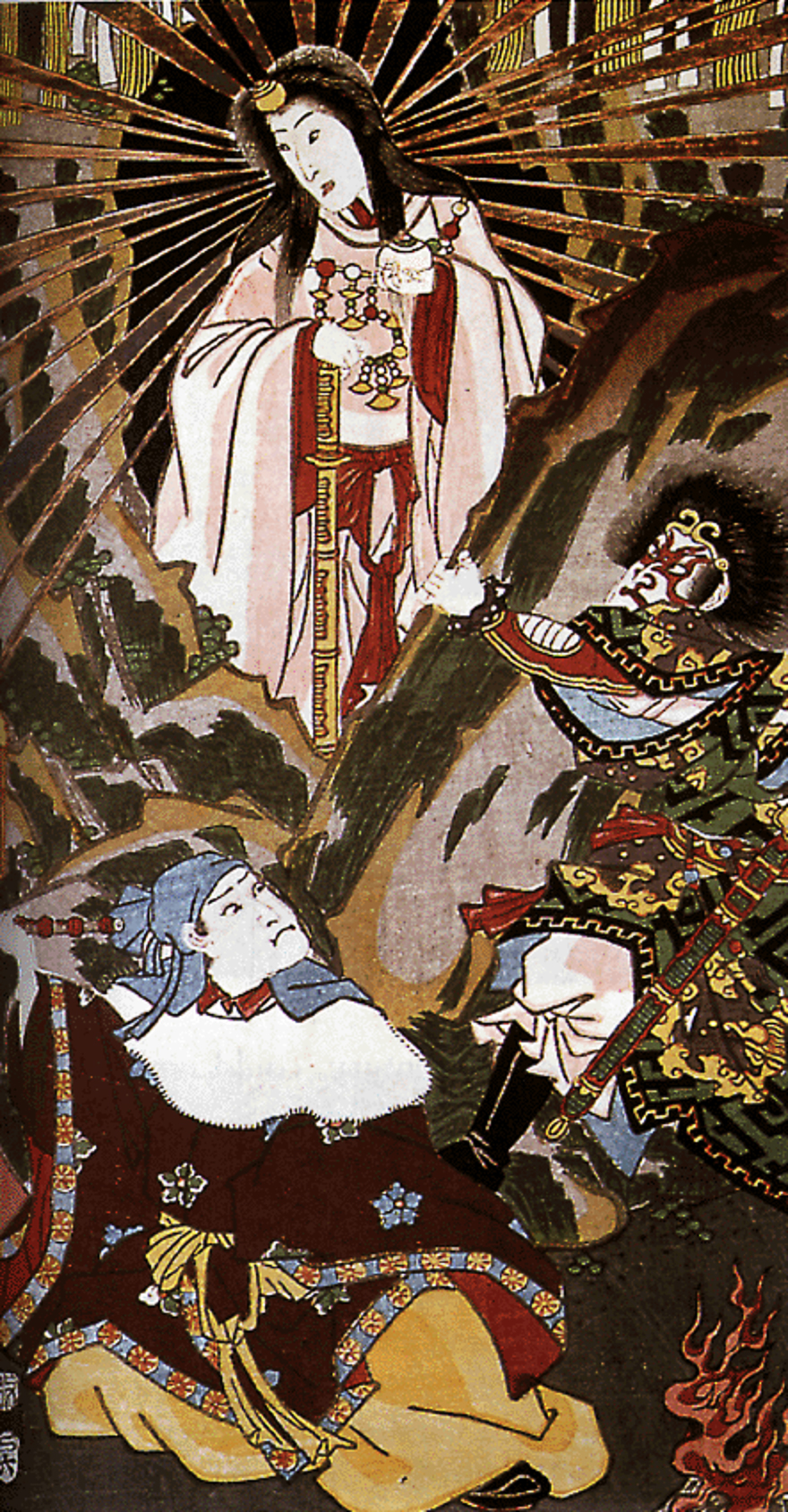
Amaterasu Omikami: The Shining Heart of Japanese Mythology
In the Land of the Rising Sun, no deity shines brighter than Amaterasu Omikami. As the supreme goddess of the Shinto pantheon, she is not merely a mythological figure but the spiritual ancestor of the Japanese Imperial Family and the very embodiment of the sun itself. For travelers and culture enthusiasts exploring Japan, understanding Amaterasu is essential to interpreting the shrines, festivals, and cultural nuances of this ancient island nation.
Origins: Born from the Divine Eye
According to the ancient chronicles of Japan, the universe began with chaos before heaven and earth separated. Among the creation deities were the primal couple, Izanagi and Izanami. The story of Amaterasu’s birth is one of purification and celestial wonder.
After a harrowing journey to the Underworld to retrieve his deceased wife, Izanagi returned to the surface world to cleanse himself of the impurities of death. As he washed his face in a river, divine beings sprang into existence. When he washed his left eye, the most brilliant of all deities emerged: Amaterasu Omikami. Her name translates to “Great Divinity Illuminating Heaven.”
Izanagi was so pleased with her radiance that he bestowed upon her the necklace of jewels and charged her with ruling Takamagahara, the High Celestial Plain. This established her primacy over her brothers: Tsukuyomi (the Moon God) and Susanoo (the Storm God).
The Legend: The Heavenly Rock Cave
The most famous myth involving Amaterasu—and perhaps the most significant story in Shinto—is the tale of the Ama-no-Iwato (Heavenly Rock Cave).
Amaterasu ruled with benevolence, but her brother Susanoo was tempestuous and cruel. After he went on a rampage, destroying rice fields and defiling her weaving hall, Amaterasu was overcome with grief and fear. She fled into a cave and sealed the entrance with a massive rock.
With the Sun Goddess hidden, the world was plunged into eternal night. Crops died, and evil spirits swarmed the earth. The other eight million gods gathered outside the cave to devise a plan to lure her out, realizing that force would not work.
The Divine Distraction
The goddess Ame-no-Uzume overturned a tub and began a comical, erotic dance atop it. The assembled gods roared with laughter and applause. Curious about the commotion during such a dark time, Amaterasu cracked the stone entrance open and asked why they were celebrating.
Ame-no-Uzume replied, “We rejoice because there is a deity more illustrious than you.” At that moment, a mirror (the Yata-no-Kagami) was held up. Amaterasu, intrigued by her own brilliant reflection, stepped further out. A strong god immediately grabbed her hand and pulled her from the cave, sealing the entrance behind her with a sacred rope. Light returned to the world, restoring order and life.
Amaterasu in Modern Culture
While she is an ancient deity, Amaterasu’s presence permeates modern Japanese culture. She appears frequently in pop culture, most notably in the acclaimed video game Ōkami, where the player takes on the form of the goddess incarnated as a white wolf.
More solemnly, she remains the central figure of the Japanese monarchy. The Imperial Regalia of Japan—the Mirror, the Jewel, and the Sword—are said to have been handed down by Amaterasu to her grandson, Ninigi, when he descended to rule Earth. These treasures are still kept today as symbols of the Emperor’s legitimacy, linking the modern state to the age of myths.
Traveler’s Tips: Visiting the Grand Shrine of Ise
For travelers seeking a spiritual connection to Amaterasu, there is one destination that stands above all others: Ise Jingu (The Grand Shrine of Ise) in Mie Prefecture.
Where to Go
Ise Jingu consists of 125 shrines, but the most important is the Naiku (Inner Shrine), which is dedicated specifically to Amaterasu. It is said to house the Sacred Mirror from the cave legend.
Cultural Etiquette
- Purification: Before entering, wash your hands and mouth at the temizuya water pavilion.
- The Approach: Cross the Uji Bridge, which separates the profane world from the sacred. Walk on the sides of the path; the center is reserved for the deity.
- Worship: When you reach the main hall, bow twice, clap your hands twice to alert the spirit, make your prayer, and bow once more.
Best Time to Visit
Try to visit early in the morning. The sunlight filtering through the ancient cypress trees creates a mystical atmosphere that perfectly befits the Sun Goddess. Note that the main buildings are hidden behind fences; the public cannot enter the innermost sanctums, maintaining the mystery and sanctity of the site.
Alternatively, travelers interested in the mythology should visit Takachiho in Miyazaki Prefecture, the legendary location of the Heavenly Rock Cave, where traditional Kagura dances reenacting the myth are performed nightly.
Sources & Further Reading
To deepen your understanding of Amaterasu and Japanese mythology, consider exploring these primary historical texts:
- The Kojiki (Records of Ancient Matters): The oldest extant chronicle in Japan (dating to 711-712 AD), detailing the creation myths.
- The Nihon Shoki (The Chronicles of Japan): Completed in 720 AD, this text provides a slightly more historical and detailed account of the lineages of the gods and emperors.