
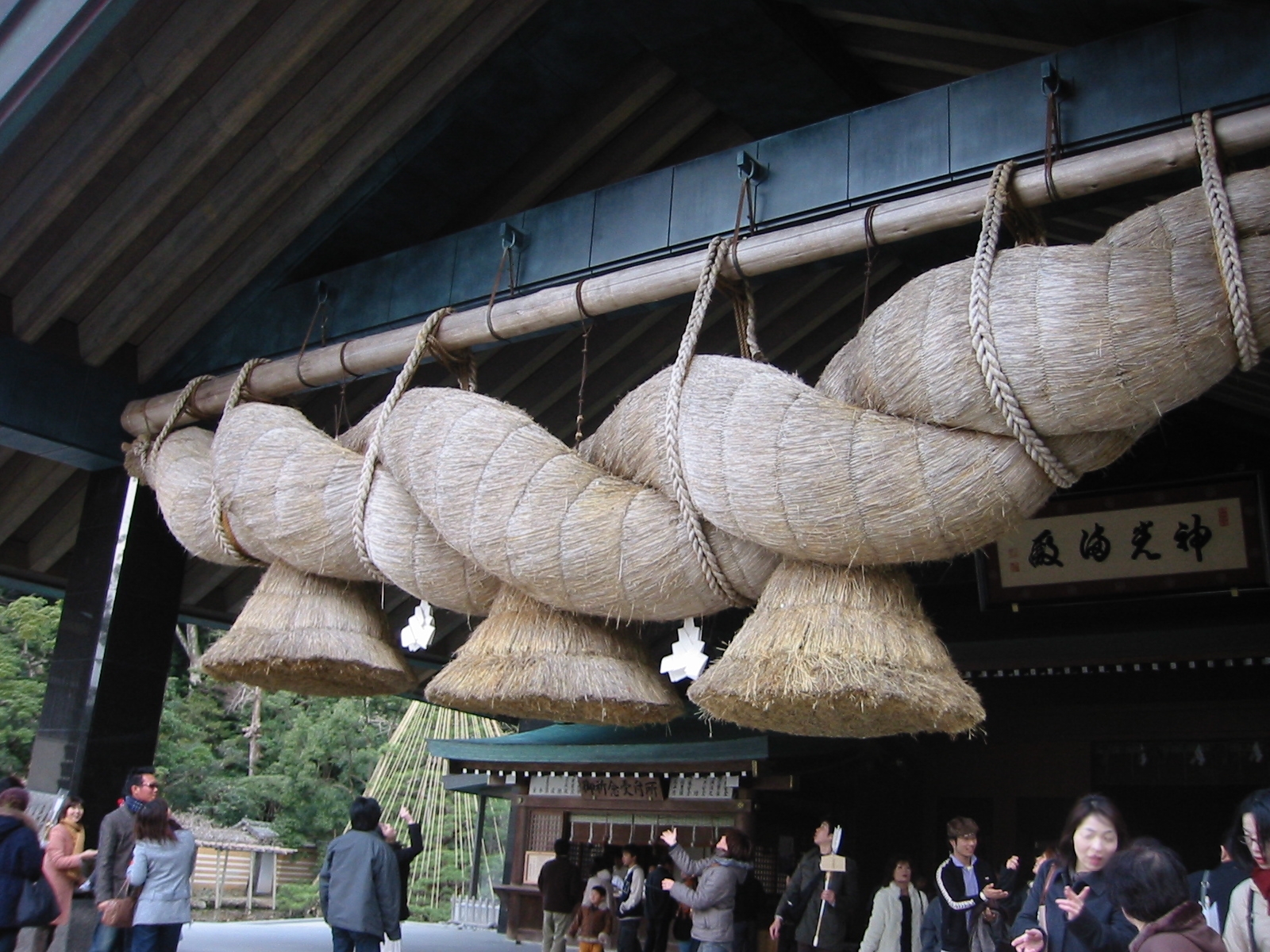
Izumo Taisha’s Shimenawa: The Sacred Bond Between Gods and Men
When travelers think of Japanese Shinto shrines, they often picture vermilion torii gates or serene zen gardens. However, in the Shimane Prefecture, stands a structure that defies scale and expectation: Izumo Taisha (Izumo Grand Shrine). While the shrine itself is one of the oldest and most important in Japan, it is the massive straw rope, or Shimenawa, adorning the Kagura Hall that truly captures the imagination of visitors. Weighing over five tons, it is not just a rope; it is a monumental symbol of the connection between the human realm and the divine.
Introduction
A Shimenawa (enclosing rope) acts as a spiritual boundary in Shinto belief, marking the line between the profane everyday world and the sacred space of the Kami (gods). While you will see these rice straw ropes hanging at shrines across Japan, none compare to the giant version found at Izumo Taisha.
The Kaguraden (Kagura Hall) features a rope that is 13.6 meters long and weighs approximately 5.2 tons. Standing beneath it, one feels a profound sense of smallness and reverence. This article explores the history, mythology, and cultural significance of this colossal woven artifact.
Origins and Construction
The sheer logistics of creating the Izumo Taisha Shimenawa are a testament to community dedication. Unlike the synthetic materials sometimes used in modern construction, this rope is crafted entirely from rice straw.
The creation of the rope involves a specialized volunteer group from the town of Iinan in Shimane Prefecture. Every few years (typically every 6 to 8 years), the rope is replaced in a grand ceremony. The process takes over a year of preparation, involving the harvesting of specialized rice straw that must be dried and treated to ensure durability. Hundreds of people are involved in twisting the massive strands together.
What makes the Shimenawa at Izumo Taisha distinct from those at other shrines is not just its size, but its orientation. In standard Shinto practice, ropes are usually twisted from right to left (the thin end is on the left). However, at Izumo Taisha, the rope is twisted from left to right. This unique Daikoku-jime style is believed to reflect the shrine’s distinct cosmology, prioritizing the spiritual realm over the physical one.
Legend and Mythology
To understand the rope, one must understand the deity enshrined here: Okuninushi no Okami. He is known as the creator of the land of Japan and, more famously, the god of En-musubi (marriage and good relationships).
The concept of the Shimenawa itself traces back to one of the most famous myths in the Kojiki (Records of Ancient Matters). When the Sun Goddess, Amaterasu, hid in a cave (Amano-Iwato) and plunged the world into darkness, the other gods lured her out. To prevent her from retreating back into the cave, a straw rope was strung across the entrance. Thus, the Shimenawa became a symbol of protection against evil and a marker of sanctity.
At Izumo, the rope takes on an added layer of meaning during Kamiarizuki (The Month of the Gods). By the old lunar calendar (usually November), it is said that all eight million gods of Japan leave their local shrines to gather at Izumo Taisha to discuss the destiny of humanity for the coming year. The massive rope serves as the grand welcoming gate for this divine congregation.
Modern Culture and Beliefs
In contemporary culture, Izumo Taisha has become a pilgrimage site for those seeking love and strong relationships. The