
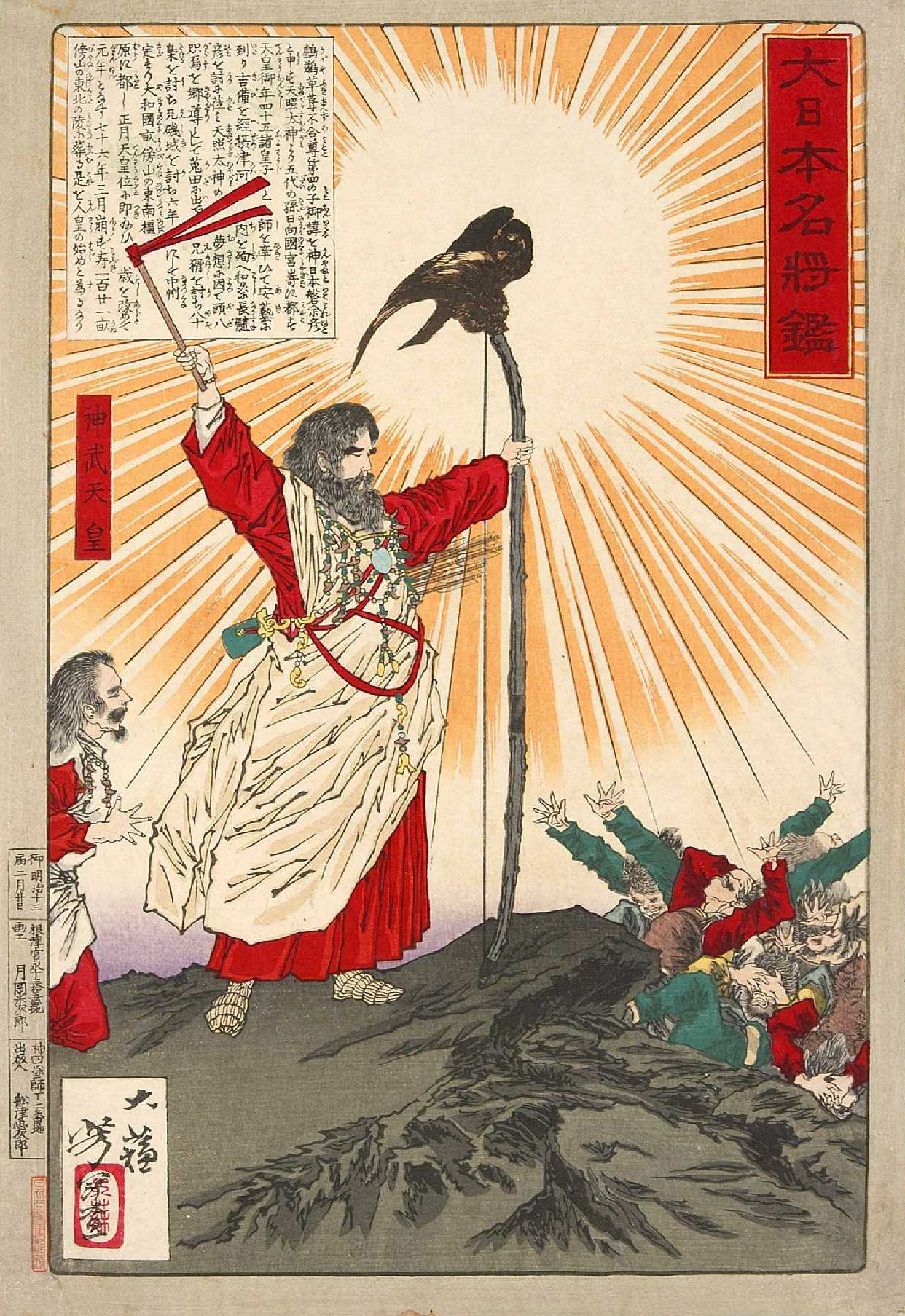
Emperor Jimmu’s Bow: The Weapon That Founded Japan
Japan is a land where history and mythology are inextricably woven together, creating a tapestry of legends that define the nation’s identity. Among the most enduring of these tales is that of Emperor Jimmu, the legendary first Emperor of Japan. While his existence straddles the line between historical fact and folklore, the imagery associated with him—specifically his bow and the miraculous “Golden Kite”—remains a potent symbol in Japanese culture. For travelers fascinated by the spiritual roots of the Land of the Rising Sun, understanding the story of Jimmu’s bow is key to unlocking the secrets of Japan’s ancient shrines.
Origins of the First Emperor
To understand the significance of the bow, one must first look at the man wielding it. According to Japan’s oldest historical chronicles, Emperor Jimmu was a direct descendant of the Sun Goddess, Amaterasu. He is credited with launching the Jinmu Tosei (Eastern Expedition), a military campaign moving from Kyushu in the south toward the Yamato region (modern-day Nara Prefecture) to establish the seat of imperial power.
This expedition was not merely a conquest for land; it is depicted in ancient texts as a divine mission to unite the country. The transition from the Age of Gods to the Age of Human Sovereigns hinges on this journey, making the weapons and symbols involved in the campaign sacred relics in the Shinto tradition.
The Legend of the Golden Kite
The most famous episode involving Emperor Jimmu’s bow occurred during the final, decisive battle for the Yamato region. Jimmu’s forces were locked in a stalemate against the local chieftain, Nagasunehiko. The fighting was fierce, the weather turned against them, and hail began to fall, dampening the morale of the imperial troops.
Suddenly, the sky broke open. A magnificent bird, known as the Kinshi (Golden Kite), descended from the heavens. It did not land on the ground, but rather perched delicately on the tip of Emperor Jimmu’s upright bow.
According to the legend, the bird emitted a dazzling, supernatural golden light, comparable to a lightning bolt. The brilliance was so intense that it blinded Nagasunehiko’s soldiers, throwing them into disarray and allowing Jimmu’s forces to secure victory. This moment cemented the bow not just as a tool of war, but as a lightning rod for divine intervention, symbolizing that the Emperor ruled with the blessing of the heavens.
Modern Culture and Symbolism
While the battle took place millennia ago in mythology, the imagery of the bow and the Golden Kite permeates modern Japanese culture.
For decades, the “Order of the Golden Kite” was one of the highest military honors in Japan, depicting the kite perched on two crossed ancient shields. Although the award was abolished after World War II, the symbol remains recognizable to history buffs and collectors.
Culturally, the bow represents precision, spiritual focus, and the expulsion of evil. In popular culture, you will often see references to this myth in manga, anime, and video games (such as the Persona or Shin Megami Tensei series), where high-level items or skills are named after the Kinshi or Jimmu’s weaponry. It serves as a shorthand for ultimate victory against overwhelming odds.
Traveler’s Tips: Where to Experience the Legend
If you want to walk in the footsteps of this legend, your destination is the Kansai region, specifically Nara Prefecture. Here is how to best experience the history of Emperor Jimmu:
1. Kashihara Jingu (Nara)
This is the most important site dedicated to Emperor Jimmu. Built on the spot where he is said to have ascended to the throne, this shrine is massive and majestic.
- What to see: Look for the amulets and ema (wooden prayer plaques) that often feature the Golden Kite and the bow. The atmosphere here is distinctively stoic and grand compared to other shrines.
- Best Time to Visit: February 11th is National Foundation Day (Kenkoku Kinen no Hi). The shrine hosts the Kigensai festival, drawing large crowds and featuring traditional martial arts demonstrations.
2. Miyazaki Jingu (Miyazaki)
Before his expedition, Jimmu lived in Kyushu. Miyazaki Jingu is dedicated to him and his parents. It offers a look at the “pre-expedition” history and features unique architectural styles using cedar wood.
3. Statue Hunting
Keep an eye out for statues of Emperor Jimmu in public parks in these regions. He is almost invariably depicted holding his long bow, with the Golden Kite often perched upon it, gazing sternly toward the east.
Sources & Further Reading
For those who wish to delve deeper into the primary texts that detail the Eastern Expedition and the miracle of the bow, the following historical classics are essential:
- The Kojiki (Records of Ancient Matters): Japan’s oldest extant chronicle (dating to 712 AD), providing the mythological basis for the imperial line.
- The Nihon Shoki (The Chronicles of Japan): Finished in 720 AD, this text provides a more detailed, historical account of the battles and the lineage of Emperor Jimmu.