
The Waira Yōkai: Unveiling Japan’s Mysterious Beast
When travelers think of Japanese folklore, images of red-faced Tengu, mischievous Kappa, or the shapeshifting Kitsune often come to mind. These creatures populate the shrines, souvenirs, and stories of Japan. However, digging deeper into the vast encyclopedias of the supernatural reveals creatures that are far more enigmatic. One such entity is the Waira (わいら), a hulking, grotesque beast that has puzzled folklorists and captivated artists for centuries.
For the cultural traveler fascinated by the eerie and the unexplained, the Waira represents the deep, shadowed corners of Japanese imagination. Join us as we explore the origins, theories, and modern footprint of this mysterious yōkai.
Origins: The Art of Toriyama Sekien
Unlike many yōkai that were born from oral campfire tales or ancient religious texts, the Waira is widely believed to be a visual creation of the Edo period. It first crawled into the public consciousness in 1776, within the pages of Gazu Hyakki Yagyō (The Illustrated Night Parade of One Hundred Demons), a seminal work by the master ukiyo-e artist Toriyama Sekien.
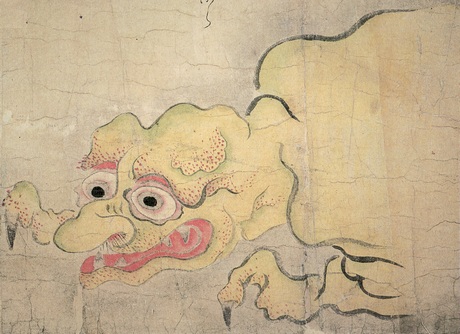
Sekien’s depiction of the Waira is unsettling. It is drawn as a massive, brutish creature with a rough, speckled body that resembles a toad or a cow, yet lacks a distinct skeletal structure. It possesses large, singular claws on its forelimbs—a distinct feature that makes it look unsuited for dexterity but terrifying for combat. In the original illustration, the Waira is shown sitting on the ground, seemingly lurking in the shadows, perhaps waiting to pounce.
Because Sekien did not provide a backstory or explanatory text for the Waira—only the name and the image—it has remained a blank canvas for imagination, allowing later generations to project their own fears onto its mottled hide.
Legend and Lore: The Monster Without a Past
The Waira is unique because it is a “orphan” of folklore; it has almost no narrative history prior to the late 18th century. However, folklore abhors a vacuum, and over the centuries, scholars and storytellers have developed theories to explain its existence.
The Mole Eater Theory
One popular theory regarding the Waira’s behavior comes from linguistic wordplay, a common tool in Japanese humor and folklore. Some scholars suggest the name “Waira” is a corruption or derivative related to words for fear or awe (wai). However, a more specific legend popularized in the Showa period by yōkai manga artist Shigeru Mizuki suggests that the Waira lives deep in the mountains and uses its long, single claws to dig up and eat moles (mogura). While there is no ancient text confirming this, the image of the beast digging for prey fits its physical description.
The Guardian of Fear
Another interpretation links the Waira to the Otoroshi, another yōkai often depicted alongside it in art scrolls. While the Otoroshi guards shrines, the Waira is often seen as a manifestation of the ugly, shapeless fears that inhabit the wilderness. It represents the “unknown beast”—the sound you hear in the bamboo grove that you cannot identify.
The Waira in Modern Culture
Despite its obscure origins, the Waira has found a permanent home in modern Japanese pop culture. The country’s embrace of “Cool Japan” often recycles these Edo-period designs into contemporary media.
- Anime and Manga: The Waira appears in GeGeGe no Kitaro, the series responsible for reviving yōkai culture in the 20th century. It is usually depicted as a formidable, if somewhat clumsy, antagonist.
- Video Games: Fans of the Shin Megami Tensei and Persona RPG series may recognize the Waira as a recruitable demon, often retaining its classic, hunchbacked design. It also appears in the Yokai Watch franchise, introduced to a younger generation as a collectible spirit.
- Art and Tattoos: The Waira’s unique, textured skin and terrifying claws make it a popular, albeit niche, subject for traditional Japanese irezumi (tattoos), symbolizing raw power and primal mystery.
Traveler’s Tips: Experiencing Yōkai Culture
If you are planning a trip to Japan and want to hunt for the Waira and its supernatural kin, here are the best places to visit:
1. Mizuki Shigeru Road (Sakaiminato, Tottori)
This is the ultimate pilgrimage site for yōkai lovers. The hometown of Shigeru Mizuki features over 170 bronze statues of spirits lining the streets. You can find a statue of the Waira here, allowing you to examine its strange single claw up close.
2. Yokai Street (Kyoto)
Located on Ichijo-dori in Kyoto, this shopping street celebrates the legend of the Night Parade of One Hundred Demons. The shopkeepers create their own “living” yōkai mascots, and you can often find merchandise or artwork depicting classic monsters like the Waira during their annual yōkai costume parades.
3. The Miyoshi Mononoke Museum (Hiroshima)
Based on the Inō Mononoke Roku, this museum is dedicated to supernatural history. It houses an impressive collection of scrolls and artifacts where you can see how Edo-period artists interpreted creatures of the night.
Sources & Further Reading
For those wishing to delve deeper into the textual and visual history of Japanese spirits, the following works are essential:
- Gazu Hyakki Yagyō (The Illustrated Night Parade of One Hundred Demons) by Toriyama Sekien (1776) – The primary source for the Waira’s visual design.
- Nihon Shoki (The Chronicles of Japan) – While it does not mention the Waira specifically, this classical text (c. 720 AD) establishes the foundation of Japanese mythology and the animistic worldview that allows yōkai to exist.
- Yōkai: The Mysterious Creatures of Japanese Folklore by Shigeru Mizuki – Modern encyclopedias that flesh out the behaviors of these creatures.