
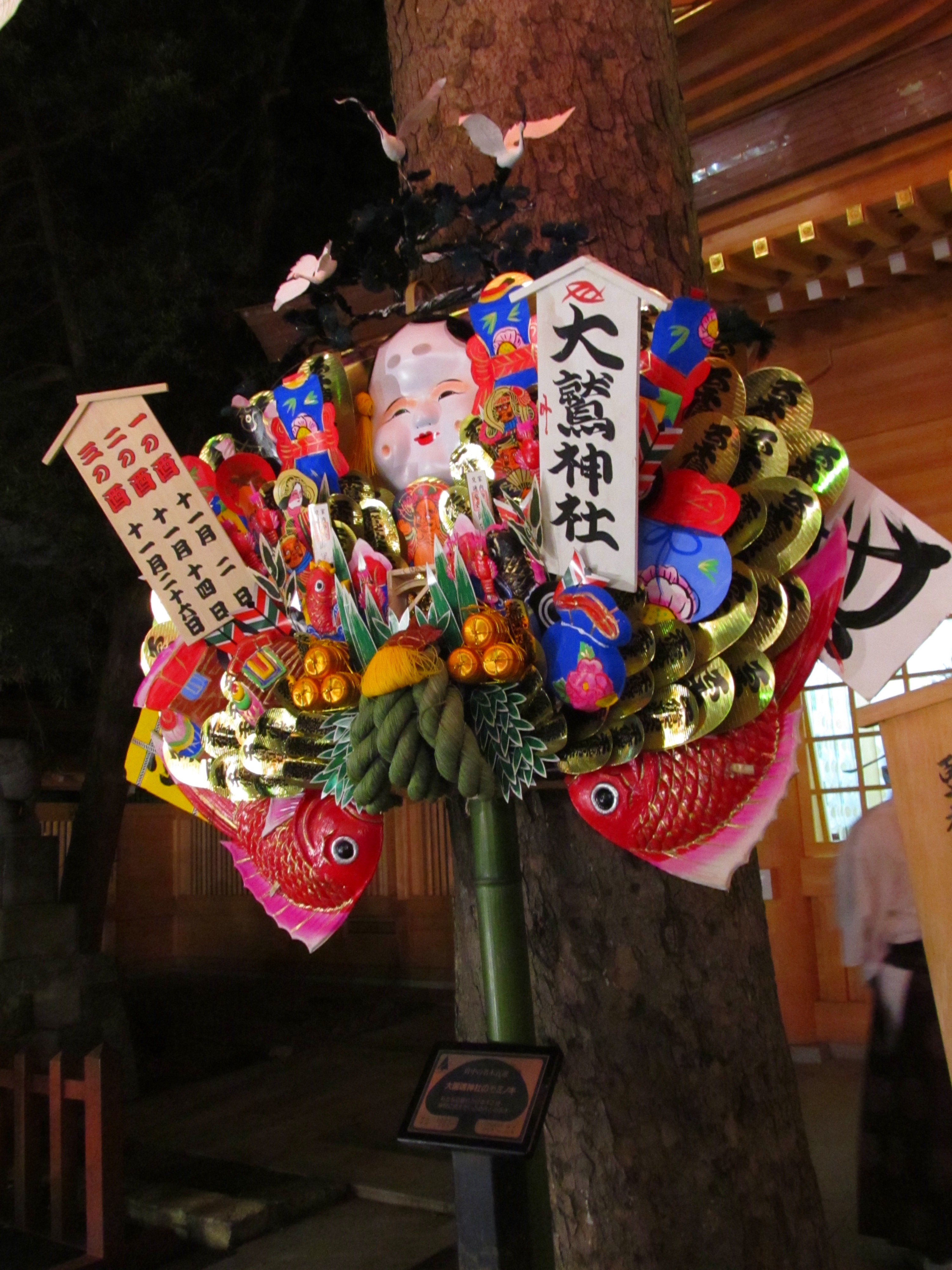
The Magic of Kumade: Raking in Luck at Tori-no-Ichi
If you find yourself wandering the streets of Tokyo in November, you might hear a rhythmic, thunderous clapping echoing from local shrines. Follow the sound, and you will likely stumble upon one of Japan’s most energetic and commercially significant traditions: Tori-no-Ichi (The Rooster Fair). At the heart of this festival lies a peculiar yet ornate object known as the Kumade—a decorated bamboo rake designed not for leaves, but for raking in good fortune.
For cultural travelers and folklore enthusiasts, understanding the Kumade is key to understanding the Japanese approach to business, luck, and the cyclical nature of prosperity.
Origins: From Farm Tools to Lucky Charms
The history of the Kumade is deeply intertwined with the Edo period (1603–1867). Originally, Tori-no-Ichi was a harvest festival held in the suburbs of Edo (modern-day Tokyo). Farmers would gather at shrines dedicated to the eagle deity to give thanks for the harvest and purchase practical tools for the coming winter.
Among these tools was the humble bamboo rake. Over time, the festival began to attract merchants and samurai, shifting the focus from agriculture to commerce. A playful linguistic evolution occurred; the action of raking leaves was metaphorically likened to “raking in” (kaki-atsumeru) wealth and customers. Consequently, the plain farming tool evolved into an Engimono (lucky charm), adorned with increasingly elaborate decorations to symbolize overflowing wealth.
The Legend of Yamato Takeru
To understand why this festival happens on the “Days of the Rooster” (based on the Chinese zodiac calendar), we must look to Japanese mythology. The festival is closely associated with Yamato Takeru no Mikoto, a legendary prince and hero of the Yamato dynasty.
According to legend, Yamato Takeru stopped at a shrine in massive province (modern-day Saitama/Tokyo area) to pray for victory before a difficult military campaign. He achieved a decisive win and returned to the shrine to offer thanks. He hung his war weapon—a rake-like halberd—against a pine tree to celebrate. This event is said to have occurred on the Day of the Rooster in November.
Today, the Otori Shrine in Asakusa, Tokyo, is considered the spiritual home of this tradition, honoring the deity of the eagle and the spirit of the warrior prince who secured victory.
Modern Culture: The Art of the Deal
In modern Japan, the purchase of a Kumade is not a simple transaction; it is a ritualistic performance. Walking through a Tori-no-Ichi market is a sensory overload. Stalls are stacked high with rakes ranging from palm-sized souvenirs to massive, wall-sized structures costing thousands of dollars.
The Decorations
The rakes are heavily decorated with symbols of longevity and wealth, including:
- Otafuku: The mask of the goddess of mirth.
- Koban: Gold coins from the Edo period.
- Tai: Red sea bream (symbolizing celebration).
- Cranes and Turtles: Symbols of long life.
The Tejima Ritual
The most exciting aspect of buying a Kumade is the Tejima. When a customer decides to buy a large, expensive rake, the shopkeepers surround the buyer. They engage in a rhythmic hand-clapping chant (usually a 3-3-3-1 beat) to pray for the buyer’s business prosperity in the coming year. This public display of energy serves to bless the purchase and announce the buyer’s success to the crowd.
The Rule of Upgrading
Tradition dictates that you should start with a small Kumade. Each year, if your business grows, you return the old rake to the shrine to be burned and purchase a slightly larger one. This symbolizes the gradual, steady growth of success. However, if you have a bad year, you should buy a rake of the same size to stabilize your fortunes.
Traveler’s Tips for Tori-no-Ichi
If you plan to attend a Rooster Fair, keep these tips in mind to navigate the chaos like a local:
- Check the Dates: The festival is held on the Days of the Rooster in November. Depending on the year, there may be two or three market days. It is said that years with three Rooster days are more prone to fires, leading to increased caution.
- Bring Cash: While modern Japan is adopting digital payments, traditional stalls are cash-only. Large Kumade can be expensive, so come prepared.
- Visit at Night: The atmosphere is best after sunset when the lanterns are lit and the crowds are at their peak. The energy is infectious.
- Where to Go: The most famous spots are Otori Shrine in Asakusa and Hanazono Shrine in Shinjuku.
Sources & Further Reading
- The Kojiki (Records of Ancient Matters): For early accounts of Prince Yamato Takeru and the mythological foundations of Japan.
- The Nihon Shoki (The Chronicles of Japan): Provides historical context on the Yamato lineage and the campaigns of Yamato Takeru.
- Japan National Tourism Organization (JNTO): Archives on the history of Edo-period festivals and seasonal traditions.