
The Cleansing Flames of Dondo-yaki
Introduction
As the bitter winds of mid-January sweep across the Japanese archipelago, communities gather in open fields, shrine precincts, and dry riverbeds to partake in a dramatic and warming tradition: Dondo-yaki (どんど焼き). Marking the end of the New Year season, this fire festival is a spectacle of towering flames, crackling bamboo, and communal prayer.
The ritual involves burning the lucky ornaments used to decorate homes during the New Year, such as kadomatsu (pine gate decorations), shimekazari (sacred rope wreaths), and kakizome (first calligraphy). Watching the smoke rise into the winter sky is not merely a method of disposal; it is a profound spiritual act believed to cleanse the community and send the deities of the year back to the heavens.
Origins: From Court to Countryside
The roots of Dondo-yaki run deep into Japanese history, intertwining Shinto rituals with local agrarian customs. While the specific name “Dondo-yaki” is a folk term—likely an onomatopoeia for the sound of drumming or the crackling of fire—the ritual itself is formally known as Sagicho (左義長).
Historians trace the practice back to the Heian period (794–1185), where it began as a court ritual to exorcise evil spirits. Over centuries, the custom filtered down from the aristocracy to the warrior class, and eventually to the common farmers. By the Edo period, it had become a widespread folk event associated with Koshogatsu (Little New Year), traditionally celebrated around January 15th to pray for a bountiful harvest.
Legend and Spiritual Significance
The central legend of Dondo-yaki revolves around Toshigami-sama, the deity of the incoming year who brings blessings of harvest and ancestral protection. Japanese folklore dictates that Toshigami visits homes during the Oshogatsu (New Year) period, residing in the pine decorations and sacred ropes.
When these decorations are burned during Dondo-yaki, the rising smoke serves as a vehicle for Toshigami to return to the celestial realm. It is a farewell ceremony for the god. The fire is considered sacred, possessing the power of purification. It is believed that the fire burns away the misfortunes of the past year and ensures Mubyo-sokusai—a state of perfect health and safety—for the year to come.
Another charming superstition involves kakizome (calligraphy). Children throw their first handwriting of the year into the pyre. If the paper is caught by the heat and soars high into the sky, legend says their handwriting and academic skills will improve significantly.
Modern Culture and the Roast of Mochi
Today, Dondo-yaki remains a vital community bonding event in both rural and urban Japan, though strict fire codes have moved some urban celebrations to school grounds or larger shrines.
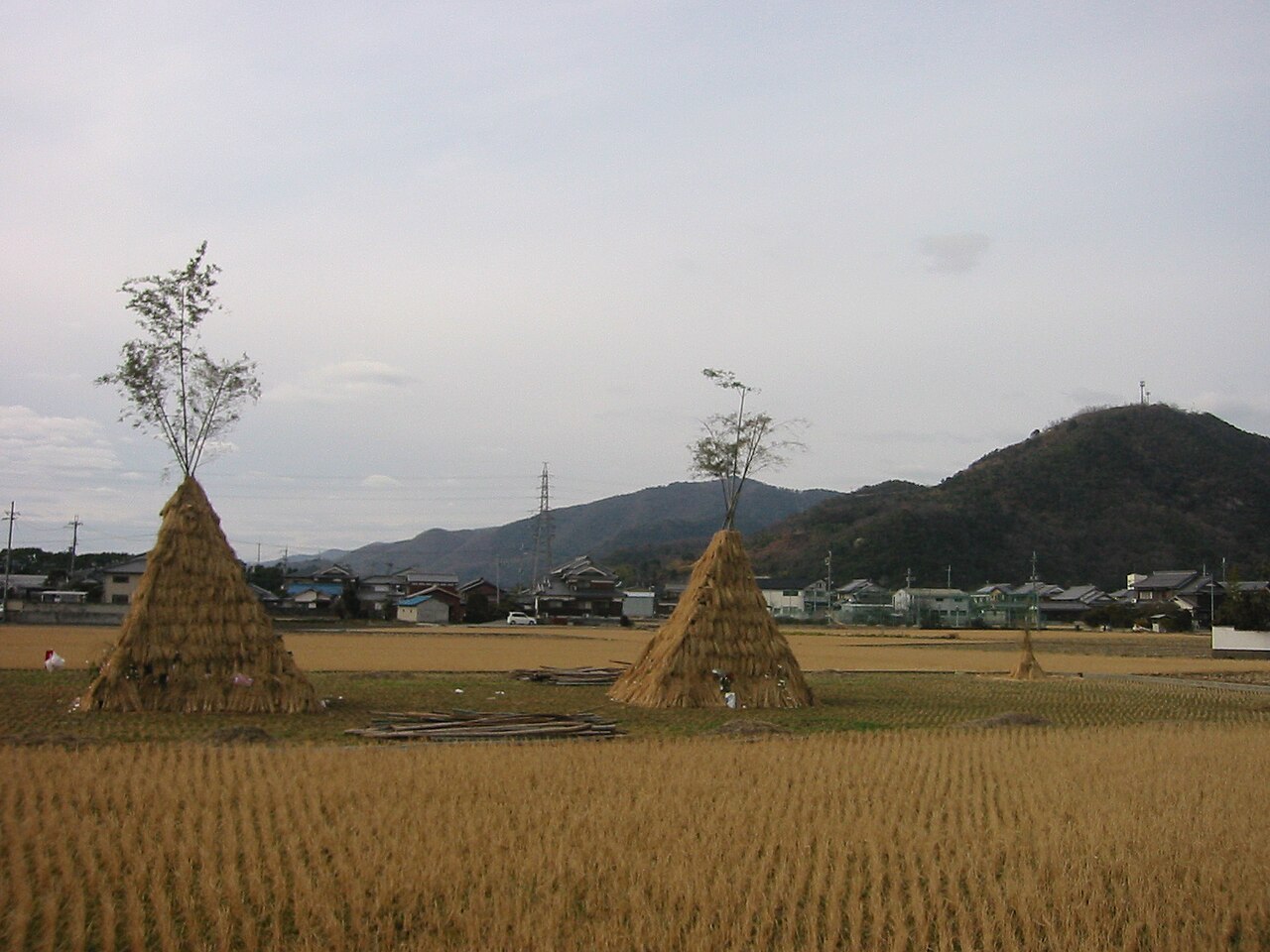
The atmosphere is festive rather than solemn. A massive tower of green bamboo, straw, and cedar branches is constructed, often reaching 10 to 15 meters in height. Once lit, the sound of exploding bamboo echoes like firecrackers—a sonic method of scaring away malevolent spirits.
Perhaps the most beloved aspect of modern Dondo-yaki is the culinary ritual. Once the massive flames die down to glowing embers, participants approach the fire with Mayudama—small balls of mochi (rice cake) or dango skewered on long willow branches. Roasting these rice cakes over the sacred fire is said to imbue them with divine power. Eating the smoky, toasted mochi is believed to prevent the common cold and ensure good health throughout the year. It is a moment where the spiritual and the communal merge, as neighbors share food and warmth against the winter chill.
Traveler’s Tips for Attending
If you find yourself in Japan during mid-January, witnessing a Dondo-yaki is a unique cultural experience. Here is how to navigate the event:
- Timing: Most festivals occur on or around January 15th, or the nearest weekend. Check local schedules for shrines or municipal notices.
- Etiquette: This is a religious disposal ceremony. If you have purchased a Japanese New Year charm (omamori) or decoration that you wish to dispose of, this is the place. However, do not throw plastic, vinyl, or metal into the fire. Only burnable, natural materials are permitted.
- Attire: Dress warmly. You will be standing outside in freezing temperatures. Also, be aware that falling ash is common; wear clothes that you don’t mind smelling like a campfire.
- Location: While major shrines like Hikawa Shrine in Saitama host famous events, smaller neighborhood gatherings on riverbanks (like the Tama River in Tokyo) offer a more intimate look at local life.
Sources & Further Reading
For those interested in the historical and theological underpinnings of Japanese fire festivals, the following texts and concepts provide deeper insight:
- The Nihon Shoki (Chronicles of Japan): While Dondo-yaki is a later folk evolution, the concept of fire as a purifying agent (Hi-matsuri) is established in these ancient imperial chronicles.
- Yanagita Kunio’s Folklore Studies: The works of the father of Japanese folklore provide extensive analysis on the transition of Koshogatsu rites and the worship of Toshigami.
- Local Shrine Records: Each region calls this festival by different names—Tondo, Saito-yaki, or Onibi. Regional shrine records often detail the specific local variations of the practice.