
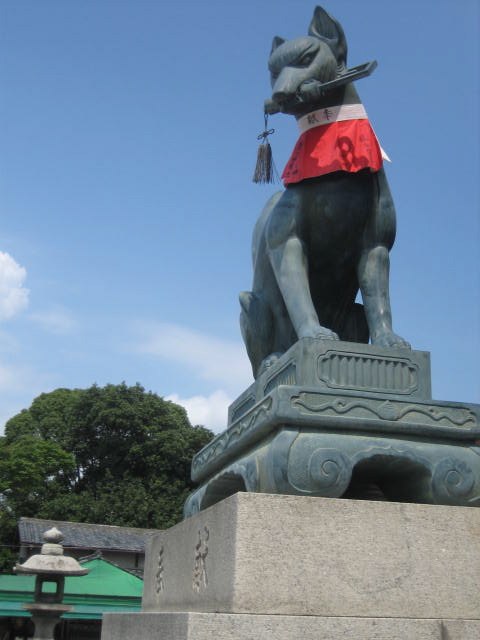
Unlocking the Mystery: The Key in the Inari Fox Statue’s Mouth
If you have ever wandered through the mesmerizing vermilion tunnel of torii gates at Fushimi Inari Taisha in Kyoto, or stumbled upon a small, red-bannered shrine in the backstreets of Tokyo, you have likely encountered the Kitsune (fox). These stone sentinels stand guard at over 30,000 Inari shrines across Japan. Unlike the terrifying monsters of Western folklore, these foxes are revered messengers of the gods.
However, observant travelers often notice something peculiar: the foxes are rarely empty-handed. They clamp various objects in their jaws—a scroll, a jewel, a sheaf of rice, or perhaps most intriguingly, a key. While the rice sheaf’s meaning is obvious in an agricultural society, the key (Kagi) remains a source of fascination and mystery for many visitors. What does it unlock? Is it physical or spiritual? To understand the key, one must delve into the roots of Japanese spirituality and the evolution of the Inari faith.
The Origins of Inari and the Fox Messenger
To decipher the symbolism of the key, we must first look at the deity the fox serves. Inari Okami is the Japanese kami (spirit/god) of foxes, fertility, rice, tea, and sake; of agriculture and industry; of general prosperity and worldly success. Worship of Inari dates back to at least 711 AD, traditionally established at Fushimi Inari Taisha.
In ancient Japan, rice was not just food; it was currency and life itself. The granaries where rice was stored were the banks of the ancient world. The fox, naturally preying on the rodents that would destroy these precious stockpiles, became associated with the protection of the grain. Over centuries, this biological relationship evolved into a spiritual one, where the white fox (Byakko) became viewed as the divine messenger of Inari.
Legend: The Key to the Granary
The most direct interpretation of the key in the fox’s mouth is rooted in this agricultural history. Historically, the key represents the tool needed to unlock the rice granary (storehouse).
In feudal Japan, the granary held the wealth of the village. A fox holding the key was a powerful symbol of trust and guardianship. It suggested that the deity Inari had granted access to abundant harvest and wealth. Without the blessing of the weather and the protection of the fox against pests, the granary would remain empty. Therefore, the key is a symbol of potentiality—it is the promise that the hard work of the harvest will be secured and accessible.
The Connection to the Jewel
Often, you will see a pair of foxes: one holding a key, and the other holding a spherical jewel (Tama). This pairing is sometimes referred to as Tamakagi (Jewel and Key).
While the key represents the opening of the storehouse (the physical realm), the jewel often represents the spirit of the gods or the soul of the earth. Together, they symbolize the union of heaven and earth, or the balance between spiritual virtue and material wealth. Some esoteric Buddhist interpretations suggest that the key opens the door to wisdom or enlightenment, unlocking the “heart” of the worshiper to receive the blessings of the jewel.
Modern Culture and Business Prosperity
As Japan modernized during the Meiji period and into the 20th century, the economy shifted from agriculture to commerce and industry. The Inari faith adapted seamlessly to this change. The “rice” became “money,” and the “granary” became the “corporate bank account.”
In modern culture, the key in the fox’s mouth is heavily associated with business prosperity (Shobai Hanjo). Business owners, from tech CEOs to local izakaya owners, visit Inari shrines to pray for the “key” to success. You will often see business cards left at these shrines.
In pop culture, anime and manga such as Blue Exorcist or Naruto often feature kitsune lore. While they frequently focus on the shapeshifting or magical combat aspects of fox legends, the imagery of keys and seals draws directly from this Shinto iconography—representing the unlocking of hidden power or forbidden techniques.
Traveler’s Tips: Spotting the Symbols
When visiting Japan, engaging with Inari shrines can be a scavenger hunt for symbols. Here is how to get the most out of your visit:
- Identify the Four Items: Try to find all four common items held by foxes: the Key (wealth/access), the Jewel (spirit/wisdom), the Scroll (knowledge/culture), and the Rice Sheaf (abundance).
- Visit Fushimi Inari Taisha: Located in Kyoto, this is the head shrine. The massive statues at the Romon Gate are iconic. Look closely at their mouths.
- Respect the Bibs: You will often see the foxes wearing red bibs. These are votive offerings from worshipers. Do not touch or remove them.
- Photography: It is generally acceptable to photograph the statues, but avoid climbing on them or blocking the path of worshipers. A respectful bow before taking a close-up is a nice gesture.
Sources & Further Reading
For those wishing to deepen their understanding of Japanese mythology and the Inari faith, the following texts and locations are recommended:
- The Kojiki (Records of Ancient Matters): While Inari is not heavily featured in the earliest creation myths compared to Amaterasu, this text provides the foundation for understanding the Kami system.
- The Nihon Shoki (The Chronicles of Japan): Provides historical context on the establishment of shrines and agricultural rites.
- Fushimi Inari Taisha Records: The head shrine offers English pamphlets that explain the specific iconography of their statues.
- Smyers, Karen A. “The Fox and the Jewel: Shared and Private Meanings in Contemporary Japanese Inari Worship.” University of Hawaii Press. (A definitive academic text on this specific subject).