
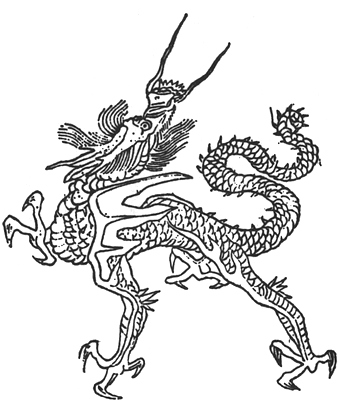
The Legend of Oryu: Japan’s Supreme Winged Dragon
When travelers imagine dragons in East Asian culture, the image that usually springs to mind is a serpentine creature—long, scaly, and wingless, using magic to fly through the clouds. However, hidden within the depths of Japanese mythology and the rafters of ancient temples lies a rarer, more powerful beast: the Oryu (or Yinglong in its original Chinese context). Known as the Responding Dragon or the Winged Dragon, the Oryu represents the pinnacle of dragon evolution.
For culture seekers and history buffs exploring Japan, understanding the Oryu adds a layer of depth to the dragon motifs seen in shrines, art, and festivals. This is not just a monster; it is a rain deity and a symbol of imperial authority that has guarded the East for millennia.
The Origins of the Winged Beast
The concept of the Oryu did not originate in Japan but traveled across the sea from ancient China, rooted in texts like the Classic of Mountains and Seas (Shanhaijing). In the complex hierarchy of Eastern dragons, the Oryu occupies the highest tier.
According to ancient lore, the life cycle of a dragon is a journey of transformation spanning thousands of years:
- Snake: The journey begins as a lowly serpent.
- Jiao: After 500 years, the snake transforms into a Jiao (a flood dragon).
- Ryu (Long): After another 1,000 years, it becomes a true dragon (Ryu).
- Oryu: Finally, after another 500 to 1,000 years of cultivation, the dragon grows wings and becomes an Oryu.
This specific evolutionary path signifies that the Oryu is the oldest, wisest, and most powerful of its kin. In Japanese art, while the standard Ryu is ubiquitous, the Oryu is distinguished by the feathery or bat-like wings sprouting from its shoulders, symbolizing its mastery over the heavens.
Legends of Rain and War
The myths surrounding the Oryu are dramatic and elemental. The creature is intrinsically linked to rain and storms. Unlike Western dragons often depicted as hoarders of gold or breathe fire, the Oryu is a benevolent, albeit terrifying, force of nature.
The Servant of Emperors
One of the most enduring legends involves the Yellow Emperor (Huangdi). It is said that the Oryu served the Emperor during the great mythical wars against the warlord Chiyou. The Oryu used its control over water to unleash torrential rains upon the enemy, turning the tide of battle.
The Shaper of Rivers
In other legends concerning the Great Flood, the Oryu is depicted as an earth-shaper. It is said to have used its massive tail to carve channels in the mud, guiding the floodwaters into the sea and creating the rivers that sustain civilization today. This association makes the Oryu a guardian of agriculture and a protector against drought.
Modern Culture and Symbolism
While the Oryu is an ancient symbol, it remains vibrant in modern Japanese culture. Because it represents the final stage of maturity and power, it is a popular motif in Irezumi (traditional Japanese tattooing). A tattoo of an Oryu typically symbolizes that the wearer has overcome great obstacles and reached a state of supreme capability.
In pop culture, the Oryu appears in various forms in anime and video games, often localized as “Yinglong” or simply “Winged Dragon.” Franchises like Shin Megami Tensei and Persona feature the creature as a high-level entity, preserving its reputation as a being of immense power.
Traveler’s Tips: Where to Find the Oryu
If you are planning a trip to Japan, you can hunt for the Oryu in the architecture of Zen Buddhism. The dragon is frequently painted on the ceilings of Dharma halls to protect the teachings (and the wooden structures) from fire—a fitting job for a water deity.
Kyoto’s Dragon Ceilings
Kyoto is the best place to witness these masterpieces. While many depict the standard Ryu, look closely for the winged variations or the “Rain Dragon” motifs.
- Kennin-ji Temple: The oldest Zen temple in Kyoto features the famous “Twin Dragons” painting on its ceiling. While modern (painted in 2002), it captures the scale and majesty of these mythical beasts.
- Nanzen-ji Temple: Explore the Hatto (Dharma Hall) to see the dragon glaring down from the ceiling.
- Myoshin-ji Temple: The “Dragon that Glares in Eight Directions” is a must-see optical illusion, where the dragon’s eyes seem to follow you wherever you stand.
Pro Tip: Bring binoculars when visiting these temples. The ceilings are high and often dimly lit; binoculars will help you spot the intricate details, such as the number of claws or the presence of wings that might distinguish an Oryu representation.
Sources & Further Reading
For those wishing to dive deeper into the mythology of the Oryu and Eastern dragons, the following historical texts and resources are essential:
- The Classic of Mountains and Seas (Shanhaijing): An ancient Chinese compilation of mythic geography and beasts.
- Records of the Grand Historian (Shiji): For accounts of the Yellow Emperor and the dragon’s role in dynastic legends.
- Nihon Shoki (The Chronicles of Japan): While focused on Japanese deities, it provides the context for how continental myths were integrated into Japanese folklore.
The Oryu remains a testament to the cultural exchange between China and Japan, standing as a winged sentinel over history, rain, and the spiritual life of the East.