
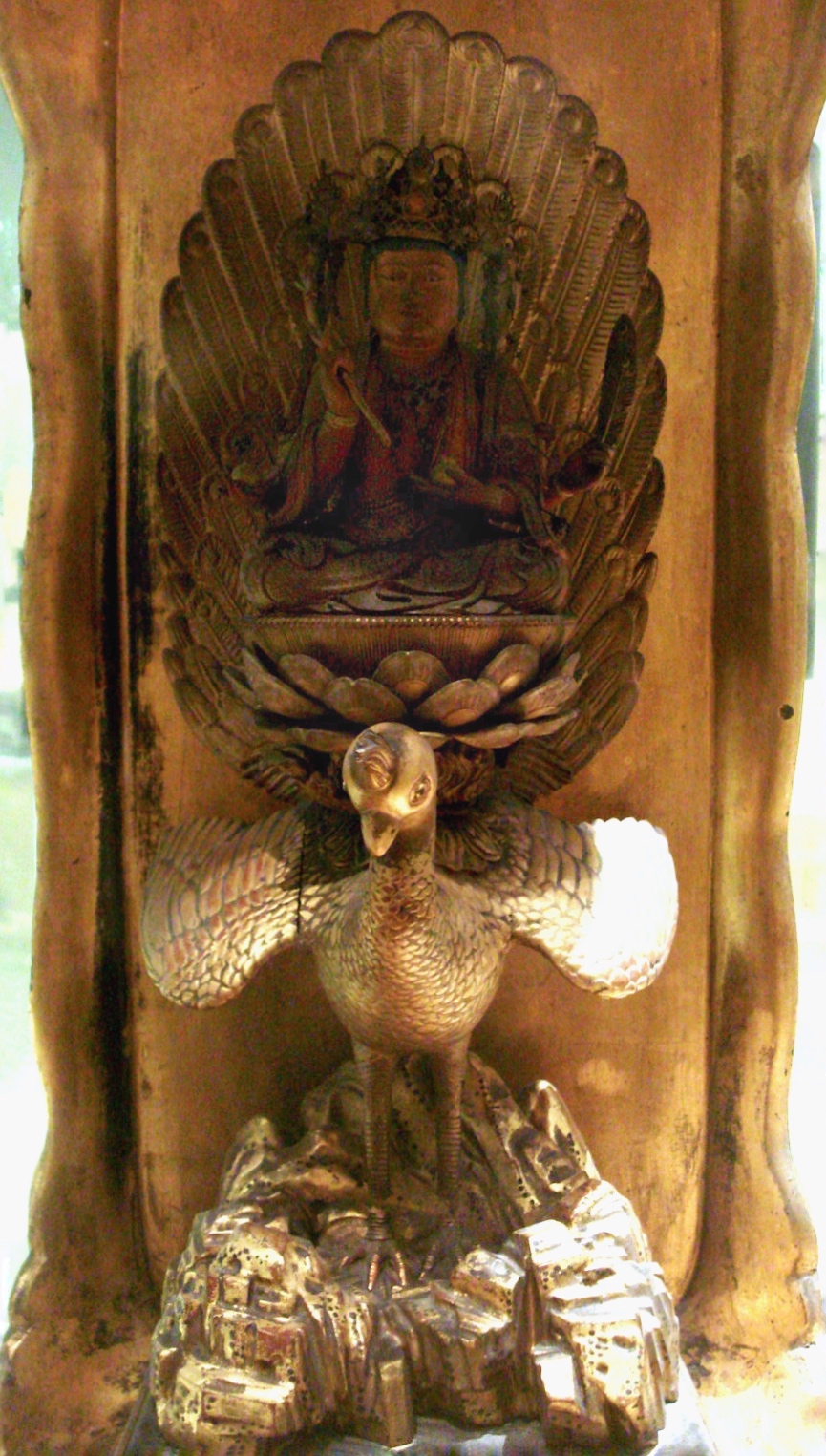
Kujaku Myoo: The Peaceful Peacock Deity of Japan
When exploring the historic temples of Japan, travelers often encounter the Myoo, or Wisdom Kings. These deities usually present a terrifying visage—bulging eyes, fangs, and flaming halos—designed to frighten non-believers into faith and subdue evil spirits. However, there is a striking exception to this fierce lineup: Kujaku Myoo (The Peacock Wisdom King).
Unlike the wrathful Fudo Myoo, Kujaku Myoo is depicted with a serene, compassionate expression, seated elegantly atop a golden peacock. For cultural enthusiasts and spiritual travelers alike, understanding this unique deity opens a fascinating window into the softer, protective side of Esoteric Buddhism in Japan.
Origins and History
Kujaku Myoo finds their roots in ancient India as Mahamayuri, one of the earliest female deities introduced into the Buddhist pantheon. Originally associated with the protection against snakebites and poisons, Mahamayuri was later incorporated into Mahayana and Esoteric Buddhism.
The deity arrived in Japan via China during the Nara period (710–794 AD). Unlike other Wisdom Kings who represent the power to crush evil through force, Kujaku Myoo represents the power to neutralize evil through transformation. While the deity is often depicted as male in Japanese sculpture, the origins are distinctly feminine or androgynous, reflecting the nurturing aspect of the “Mother of Buddhas.”
Legend and Symbolism
The Eater of Poison
The most defining symbol of Kujaku Myoo is the peacock mount. In ancient Indian folklore, peacocks were believed to be immune to snake venom. In fact, it was said that peacocks consumed poisonous snakes and plants, and rather than dying, their feathers grew more brilliant and colorful.
This biological myth became a powerful spiritual metaphor. Kujaku Myoo does not simply destroy negative energy (symbolized by poison, greed, anger, or ignorance); the deity consumes it and transmutes it into purity and enlightenment. This makes Kujaku Myoo a potent figure for those seeking to overcome addiction, illness, or spiritual stagnation.
The Rain Bringer
Historically, Kujaku Myoo held significant political importance in Japan. The Kujaku-kyo (Mahamayuri Sutra) was recited in grand rituals to pray for rain during droughts, protect the state, and ward off calamities. Many ancient emperors commissioned rituals dedicated to this deity to ensure the prosperity of the harvest.
Kujaku Myoo in Modern Culture
While rooted in ancient tradition, the Peacock King has found a place in modern Japanese media. The deity appears in various forms in pop culture, most notably in the manga and anime series Kujaku O (Peacock King), which reimagines the deity’s power in a supernatural battle against demons. Additionally, the figure appears in the Shin Megami Tensei and Persona video game series, introducing the lore to a global generation of gamers.
In the world of irezumi (Japanese traditional tattooing), Kujaku Myoo is a favored design, symbolizing protection against bad luck and the ability to turn adversity into strength.
Traveler’s Tips: Where to Find Kujaku Myoo
If you are planning a cultural pilgrimage to Japan, there are specific sites where you can view magnificent representations of this deity.
1. Tokyo National Museum (Ueno, Tokyo)
The museum houses a National Treasure: a painting of Kujaku Myoo from the 12th century. It is an exquisite example of Heian period art, showing the deity in full color. Note: Check exhibition schedules as National Treasures are not always on display.
2. Kongobuji Temple (Koyasan, Wakayama)
Located in the headquarters of Shingon Buddhism, Koyasan is a must-visit for Esoteric Buddhist art. The Reihokan Museum on the mountain often displays statues of the Wisdom Kings, including Kujaku Myoo.
3. Ninna-ji Temple (Kyoto)
This UNESCO World Heritage site holds a deep connection to the rituals of Kujaku Myoo. The temple possesses a famous statue and paintings used in historic rites for rain and protection.
Etiquette Note
When visiting these temples, remember that Kujaku Myoo is a figure of protection. It is customary to bow slightly and offer a silent prayer for health or the removal of “poisons” (negative habits) from your life. Photography is generally prohibited inside temple halls, so bring a notebook to record your impressions.
Sources & Further Reading
For those interested in the textual history of Kujaku Myoo and the Wisdom Kings, the following historical and religious texts provide deeper context:
- The Mahamayuri Vidyarajni Sutra (Kujaku-kyo): The primary text detailing the spells and dharanis associated with the deity.
- Nihon Shoki (The Chronicles of Japan): While primarily Shinto, this text provides the context of early Buddhist introduction to the Imperial court.
- The Heike Monogatari: Contains references to Esoteric rituals performed for the protection of the state.