
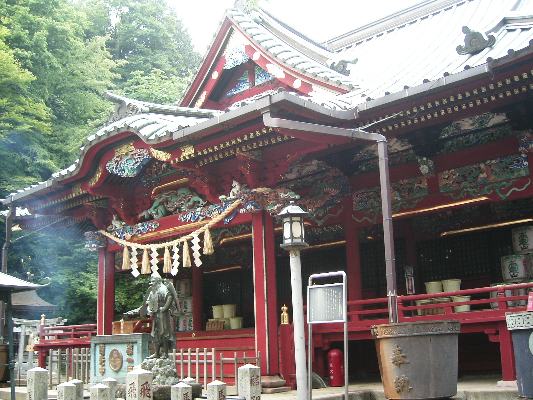
Honji-suijaku: The Divine Fusion of Shinto and Buddhism
When travelers first arrive in Japan, they are often struck by a confusing spiritual landscape. You might see a Shinto Torii gate standing at the entrance of a Buddhist temple, or a shrine containing imagery that looks suspiciously like a Bodhisattva. This architectural and spiritual overlap is not accidental; it is the physical legacy of Honji-suijaku, a theological theory that defined Japanese religion for over a millennium.
Understanding this concept is the key to unlocking the depth of Japan’s cultural heritage. It explains how an imported religion like Buddhism managed to coexist—and eventually merge—with the indigenous worship of nature spirits known as Kami.
The Origins of Syncretism
The term Honji-suijaku (本地垂迹) literally translates to “Original Substance, Manifest Traces.” Originating in the Heian period (794–1185), this theory was developed by Buddhist monks to reconcile the foreign teachings of the Buddha with the native Shinto traditions that had existed in Japan for centuries.
When Buddhism arrived in Japan via China and Korea in the 6th century, it initially clashed with local clans who feared the wrath of their native gods. However, rather than displacing the Kami, Buddhist theologians proposed a brilliant compromise: The Kami were not separate entities, but rather local avatars (manifest traces) of universal Buddhist deities (original substance).
Under this system, the Buddha was the absolute truth, but he appeared in Japan as Shinto gods to save the Japanese people in a form they could understand and relate to. This allowed the two faiths to become inseparable, leading to the creation of Jingu-ji (shrine-temples) where monks performed rites for Kami.
Legend and Lore: When Amaterasu Met Dainichi
To see Honji-suijaku in action, one need only look at the most famous mythological pairing in Japanese history. Amaterasu Omikami, the Sun Goddess and mythical ancestor of the Imperial Family, is the supreme deity in Shinto. Under the Honji-suijaku theory, she was identified as the manifestation of Dainichi Nyorai (Mahavairocana), the Cosmic Buddha of Esoteric Buddhism.
This association changed the political landscape. By equating the ancestor of the Emperor with the supreme Buddha, the theory legitimized Imperial rule through a Buddhist lens. Another famous example involves Hachiman, the Shinto god of war. He became so thoroughly integrated into Buddhism that he was granted the title of “Great Bodhisattva” and became the guardian deity of the great Todai-ji Temple in Nara.
These legends solidified a worldview where the boundaries between the human, the divine, and the enlightened were fluid, creating a rich tapestry of mythology that survives in art and literature today.
Honji-suijaku in Modern Culture
If this system was so successful, why do we distinguish between Shinto and Buddhism today? In 1868, during the Meiji Restoration, the government enforced the Shinbutsu Bunri (Separation of Kami and Buddhas) policy. They attempted to purge Buddhism to create a “pure” State Shinto for nationalist purposes. Statues were removed from shrines, and monks were forced to laicize.
However, the separation was only institutional, not spiritual. The legacy of Honji-suijaku remains deeply embedded in the Japanese psyche. Today, it is common for a Japanese person to have a Shinto wedding and a Buddhist funeral. This “division of labor”—Shinto for life celebrations and Buddhism for the afterlife—is a direct descendant of the syncretic harmony established centuries ago.
Culturally, this acceptance of multiple truths allows for a society that is remarkably tolerant of different spiritual practices, absorbing Christmas and Halloween with the same ease that it once absorbed the Buddha.
Traveler’s Tips: Spotting the Fusion
For the culturally curious traveler, traces of Honji-suijaku are everywhere if you know where to look. Here is how to experience this history:
- Visit the Kumano Kodo: This ancient pilgrimage route is the epitome of syncretism. The “Kumano Gongen” deities worshipped here are specific fusions of Kami and Buddhas.
- Nikko Toshogu Shrine: The mausoleum of Tokugawa Ieyasu is a Shinto shrine, yet it is visually exploding with Buddhist art and motifs, including the famous “Three Wise Monkeys.”
- Look for the “Gongen” Style: Architectural styles like Gongen-zukuri (complex roof structures connecting worship halls) are named after these syncretic deities.
- Observe the Rituals: Watch visitors. If you see someone bowing and clapping at a site that smells of incense, you are likely standing in a place where the “Traces” and the “Essence” still mingle.
Sources & Further Reading
To deepen your understanding of the foundational myths and the subsequent integration of these religions, consider exploring the following texts:
- The Kojiki (Records of Ancient Matters): For the original Shinto myths before Buddhist influence.
- The Nihon Shoki (The Chronicles of Japan): Historical records detailing the early arrival of Buddhism.
- The Tale of the Heike: A classic epic that frequently references syncretic worship and the interplay of karma and divine will.
By understanding Honji-suijaku, you see Japan not as a land of two religions, but as a singular, complex spiritual world where the universal and the local dance together.