
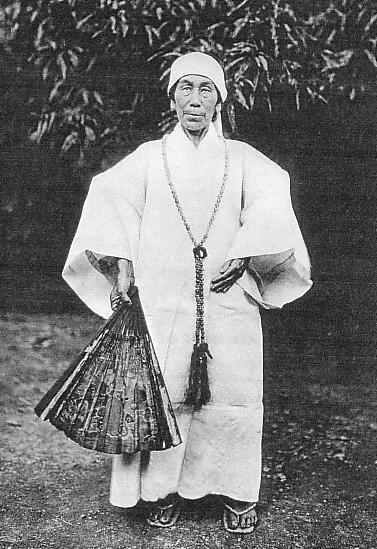
The Noro Priestess: Guardians of Okinawa’s Ancient Spirit
When travelers imagine Okinawa, images of turquoise waters, white sandy beaches, and vibrant coral reefs often come to mind. However, beneath the tropical veneer of the “Hawaii of Japan” lies a profound spiritual depth that distinguishes these islands from mainland Japan. At the heart of this spiritual world stands the Noro—the high priestess of the Ryukyuan religion. Unlike the male-dominated hierarchies found in many world religions, Okinawa’s indigenous faith places women at the absolute center of the spiritual realm.
Origins: The Theocracy of the Ryukyu Kingdom
To understand the Noro, one must look back to the era of the Ryukyu Kingdom (1429–1879). During this period, religion and politics were inseparable, functioning as a dual structure known as Saisei Itchi (the unity of church and state).
While the King handled secular and political affairs, the spiritual protection of the kingdom was the domain of women. The hierarchy was formalized during the reign of King Sho Shin in the late 15th century. At the top sat the Kikoe-ogimi, the High Priestess, who was often a sister or close female relative of the King.
Beneath her were the local Noro. These were not shamans or mediums who spoke to ghosts (a role reserved for the Yuta); rather, the Noro were official public servants. They were responsible for conducting rituals to ensure bountiful harvests, the safety of sailors, and the prosperity of the village. They governed the Utaki—sacred groves and prayer sites found throughout the islands—and their authority was recognized by the state.
Legend: The Power of Onarigami
The authority of the Noro is rooted in the ancient Ryukyuan belief of Onarigami, or “Sister God.” In this spiritual worldview, women possess a natural spiritual power (seji) that allows them to protect their brothers. Consequently, sisters were seen as the spiritual guardians of their brothers, and by extension, the women of the kingdom were the guardians of the men who ran the government.
This belief traces back to the creation myths of the Ryukyus. Legends speak of Amamikiyo, the creation goddess who descended from the heavens (Nirai Kanai) to build the islands of Okinawa. Because the islands were forged by a female deity, the conduit between the divine and the human has traditionally been female.
Unlike the mainland Japanese myths recorded in the Kojiki, where the sun goddess Amaterasu is central but the priesthood eventually became male-dominated, the Ryukyuan tradition maintained a strict female lineage for its spiritual leaders, preserving a rare form of matriarchal spirituality.
Modern Culture: A Fading Yet Resilient Flame
Following the annexation of the Ryukyu Kingdom by Japan in 1879, the institutional power of the Noro system was dismantled. The stipend they received from the government ceased, and Shinto practices from the mainland were introduced. However, the culture did not disappear; it simply returned to the village level.
Today, the presence of the Noro has diminished significantly, but they still exist in certain communities, particularly on sacred islands like Kudaka Island (the Island of the Gods). Here, festivals such as the Izaiho (a ritual performed once every 12 years to initiate new priestesses) were historically significant, though the lack of successors has made preserving these rituals difficult in the 21st century.
Despite the decline in numbers, the Noro remains a symbol of Okinawan identity. Modern locals still visit Utaki to pray for health and fortune, often under the guidance of women who preserve the ancient chants and rites passed down through generations.
Traveler’s Tips: Respecting the Sacred
For travelers interested in the spiritual side of Okinawa, visiting an Utaki is a moving experience. However, it is vital to remember that these are not mere tourist attractions; they are active places of worship.
- Visit Sefa Utaki: This is the most sacred site in Okinawa, a UNESCO World Heritage site where the Kikoe-ogimi was once inaugurated. It is located in Nanjo City.
- Mind Your Manners: Do not shout, run, or climb on rocks. The atmosphere is one of quiet reverence.
- Sacred Spaces: Some areas within an Utaki or on islands like Kudaka remain forbidden to men or outsiders. Always obey signage and local warnings.
- No Souvenirs: It is strictly forbidden to take stones, shells, or plants from sacred sites. It is believed to bring bad luck to disturb the spirits of the place.
Sources & Further Reading
To deepen your understanding of Ryukyuan history and the role of the Noro, consider exploring the following:
- Omoro Soshi: Often compared to mainland Japan’s Manyoshu, this is a compilation of ancient Ryukyuan poems and songs (16th-17th century) that document the rituals and divine perception of the Noro and royalty.
- Ryukyu Shinto-ki: A historical record providing insights into the indigenous religion of the islands.
- Comparative Texts: For a broader understanding of Japanese animism, the Kojiki and Nihon Shoki provide context on mainland Shinto, offering a fascinating contrast to the unique development of the Ryukyuan faith.
By understanding the Noro, you connect not just with the history of Okinawa, but with the spiritual soul that continues to protect these islands today.