
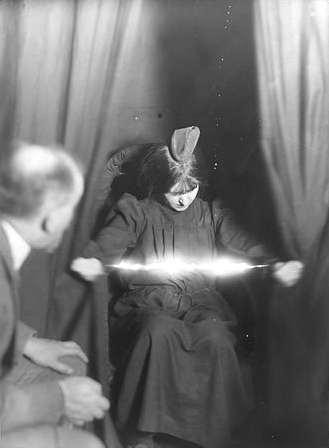
Kuchiyose Channeling: Bridging Worlds in Northern Japan
Japan is often celebrated for its neon-lit cities and high-speed trains, but beneath the modern veneer lies a deep, spiritual bedrock of shamanism and animism. One of the most haunting and enduring practices is Kuchiyose (口寄せ), a ritual of spirit channeling. Performed primarily by blind female mediums known as Itako, this ancient tradition offers a bridge between the living and the dead, thriving most vividly in the desolate, sulfuric landscapes of Mount Osore (Osorezan) in Aomori Prefecture.
Introduction to Kuchiyose
Kuchiyose translates literally to “drawing in with the mouth” or “calling down.” It is a necromantic ritual where a spirit medium summons a soul—whether it be a deity (kami) or an ancestral ghost—to speak through them. While the concept of spirit possession exists in many cultures, the Japanese variation is deeply tied to the syncretism of Shinto and Buddhism.
The ritual is not a theatrical performance but a somber service for the bereaved. Those who have lost loved ones seek out the Itako to hear one last message, receive advice, or simply find closure. In the misty, volcanic terrain of northern Japan, where the smell of sulfur hangs heavy in the air, the chanting of the Itako creates an atmosphere that is truly otherworldly.
Origins of the Blind Mediums
The history of Kuchiyose is inextricably linked to the Itako of the Tohoku region. Historically, in a time when social welfare was non-existent, young girls in rural Japan who were born blind or lost their sight due to illness were often trained as spirit mediums. This was one of the few vocations available that ensured their survival and community status.
Training was rigorous, involving severe ascetic practices such as standing under freezing waterfalls and memorizing extensive sutras and distinct liturgical chants. The practice is rooted in ancient Shinto shamanism, similar to the role of the Miko (shrine maidens), but evolved to incorporate Buddhist eschatology. While the profession has dwindled significantly due to modern medicine reducing blindness and changing social structures, the tradition persists as a designated Intangible Folk Cultural Property.
Legend and the Gateway to Hell
According to folklore, Mount Osore is one of the entrances to the underworld. The geography supports the legend; the area is a caldera volcano featuring a barren, gray landscape, bubbling pits of boiling water, and Lake Usori, which possesses highly acidic water and a striking blue hue. It is said that the deceased must cross the Sanzu River (similar to the River Styx) to reach the afterlife.
The Kuchiyose ritual is heavily tied to the legend of Jizo Bosatsu, the guardian deity of travelers and children. Parents who have lost children pile stones along the riverbanks of Osorezan in a heartbreaking attempt to help their children’s souls navigate the afterlife. The Itako acts as the legendary intermediary, calling the spirit back across the river for a brief conversation. It is believed that during the Kuchiyose, the medium enters a trance state, and the voice that emerges—though physically the medium’s—carries the intonation and vocabulary of the deceased.
Modern Culture and Pop Culture
In modern Japan, Kuchiyose occupies a liminal space between a dying art and a tourist fascination. The most famous event is the Itako Taisai (Itako Festival) held twice a year at Bodai-ji Temple on Mt. Osore, usually in July and October. During these times, long lines of people, ranging from grieving elders to curious university students, wait for hours to consult with the few remaining Itako.
Interestingly, the term “Kuchiyose” has achieved global fame through anime and manga, most notably in the series Naruto, where “Kuchiyose no Jutsu” refers to a summoning technique for giant animals. Travelers should be aware that the fictionalized ninja magic bears no resemblance to the solemn, quiet, and deeply emotional reality of the actual spiritual practice. Real Kuchiyose is an intimate act of grief and remembrance, not a battle technique.
Traveler’s Tips for Mt. Osore
If you wish to witness this profound aspect of Japanese culture, planning is essential.
- Location: Mount Osore is located on the Shimokita Peninsula in Aomori Prefecture. It is accessible via bus from Mutsu City.
- Timing: The main festivals occur in late July and early October. This is the only time you are guaranteed to find Itako present at the temple.
- Etiquette: This is a place of deep mourning. Photography of the Itako during a ritual is generally forbidden or considered extremely rude without explicit permission. Keep your voice down and respect the pilgrims piling stones or praying at Jizo statues.
- Language: The Itako speak in a distinct Tohoku dialect, and the channeled speech can be archaic. Without a fluent Japanese guide, understanding the nuance of the session will be difficult, though the atmosphere alone is impactful.
Sources & Further Reading
For those interested in the historical roots of Japanese shamanism and mythology, the following texts provide essential context:
- The Kojiki (Records of Ancient Matters): Contains early accounts of kami and the structure of the spiritual world.
- The Nihon Shoki (The Chronicles of Japan): Offers historical narratives on the role of shaman queens and rituals.
- Blacker, Carmen. The Catalpa Bow: Essays on Shamanistic Practices in Japan. (A seminal English-language text on the subject).