
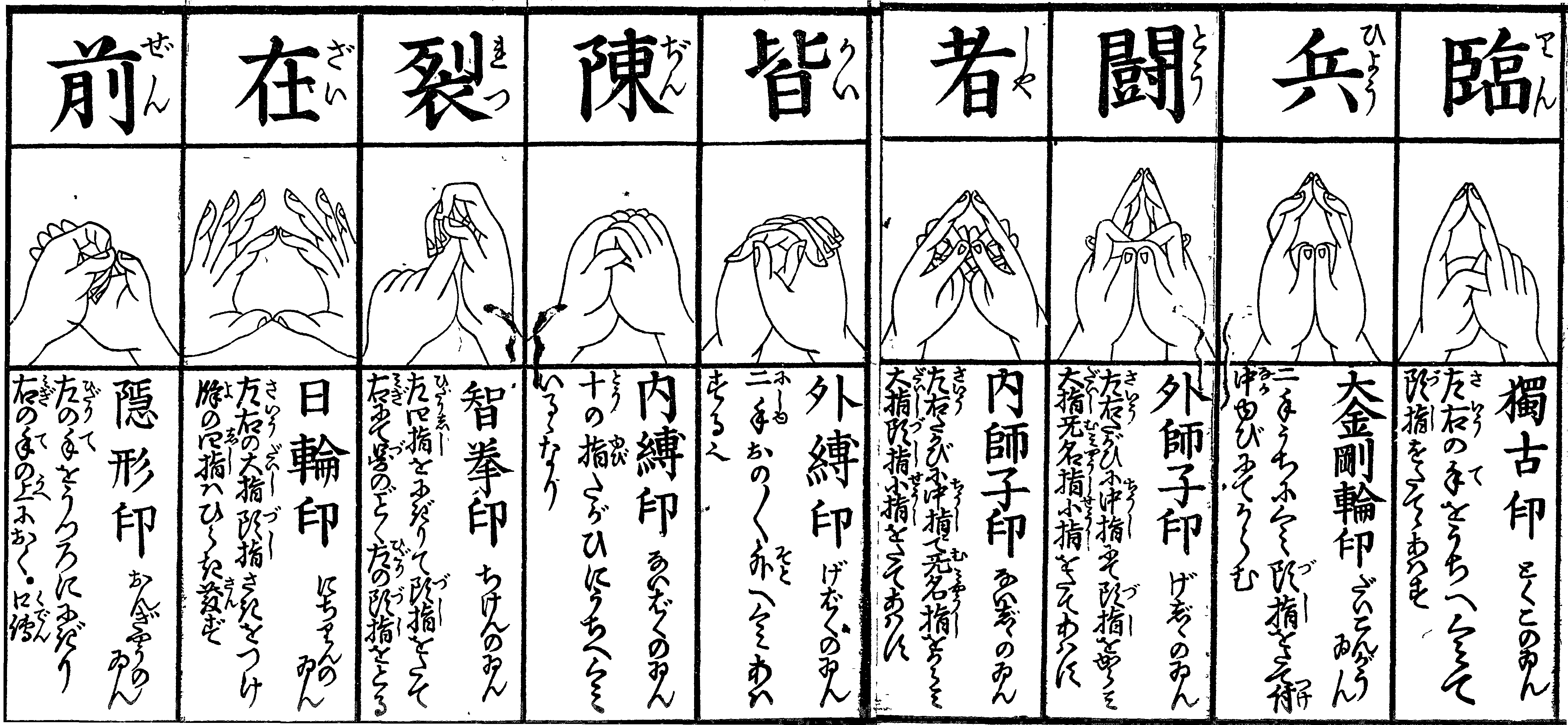
Unlocking the Kuji-kiri: The Nine Symbolic Cuts
If you have ever watched classic ninja movies or popular anime series like Naruto, you have likely seen characters weaving intricate hand signs before unleashing a powerful technique. While often dramatized for entertainment, these gestures are rooted in a very real, historical esoteric practice known as Kuji-kiri (The Nine Symbolic Cuts) and Kuji-in (The Nine Hand Seals).
Far from just being theatrical magic, the Kuji-kiri represents a fascinating convergence of Taoism, Buddhism, and Japanese mountain asceticism. For the cultural traveler, understanding these nine syllables offers a glimpse into the spiritual psyche of the Samurai, the Ninja, and the Yamabushi monks of ancient Japan.
Origins: From Ancient China to Feudal Japan
The roots of the Kuji-kiri are not actually Japanese, but Chinese. The concept originates from Taoism and is first recorded in the Baopuzi (The Master Who Embraces Simplicity), a text written by Ge Hong around 320 CE. The original text stated: “To those who enter the mountains, they must know the secret of the Six-Jia. It is the nine-word mantra.”
The mantra consists of nine characters: Rin, Pyo, Toh, Sha, Kai, Jin, Retsu, Zai, Zen.
When these teachings crossed the sea to Japan, they were absorbed by Shugendo (mountain asceticism) and Mikkyo (Esoteric Buddhism, specifically the Shingon and Tendai sects). Over centuries, the Japanese adapted the pronunciation and attached specific hand gestures (mudras) to each syllable.
The Nine Syllables Decoded
Each syllable corresponds to a specific deity, a mudra, and a distinct energy or intent:
- Rin (临): Power and strength of mind and body.
- Pyo (兵): Energy channeling and direction.
- Toh (斗): Harmony with the universe.
- Sha (者): Healing of self and others.
- Kai (皆): Premonition or sensing of danger.
- Jin (阵): Knowing the thoughts of others.
- Retsu (列): Mastery of time and space.
- Zai (在): Control over the elements of nature.
- Zen (前): Enlightenment.
Legend: The Mystic Shield of the Shinobi
In folklore and legend, the Kuji-kiri was much more than a meditation tool; it was a method of survival. The distinction between Kuji-in and Kuji-kiri is vital here. Kuji-in refers to the weaving of the fingers to channel energy. Kuji-kiri refers to the act of using the hand as a sword to “cut” a grid of nine lines in the air—five horizontal and four vertical.
Legend has it that Ninja (Shinobi) and Samurai would perform this ritual before entering battle or a dangerous infiltration mission. By cutting the grid, they believed they were creating a mystical barrier that repelled evil spirits and protected them from physical harm.
Psychologically, this served as a potent form of self-hypnosis. In the high-stress environment of feudal warfare, performing the ritual allowed the warrior to center their mind, banish fear, and enter a state of heightened awareness often described as “Zanshin” (remaining mind). To the superstitious enemies who witnessed these hand signs, it appeared as though the warrior was invoking demons, adding a layer of psychological warfare to the physical combat.
Modern Culture: From Temples to Anime
Today, the Kuji-kiri has transcended its religious roots to become a staple of global pop culture. The most famous example is the manga and anime franchise Naruto, where the “Jutsu” hand signs are directly inspired by Kuji-in mudras. Similarly, video games like Sekiro: Shadows Die Twice and Tenchu utilize these themes to immerse players in the mysticism of the era.
However, the practice remains alive in its traditional form as well. Martial arts dojos teaching Ninjutsu (such as the Bujinkan) still instruct students in the philosophy behind the Kuji. Furthermore, Shugendo monks still practice these rites during their grueling mountain pilgrimages, viewing them not as magic tricks, but as tools for spiritual fortitude.
Traveler’s Tips: Where to Experience the Kuji Legacy
If you are planning a trip to Japan and wish to explore the history of the Kuji-kiri, here are the best destinations to add to your itinerary:
1. Togakushi Shrine (Nagano Prefecture)
Nestled in the mountains of Nagano, this area is famous for the Togakushi Ninja heritage. The shrine is deeply connected to Shugendo mountain worship. You can visit the Togakure Ninpo Museum to see historical tools and texts related to ninja arts.
2. Iga-Ueno (Mie Prefecture)
Known as the heartland of the Ninja, the Iga-ryu Ninja Museum offers demonstrations. While often theatrical, the historians there can explain the spiritual side of the Shinobi, including their use of mantras.
3. Mount Koya (Wakayama Prefecture)
This is the center of Shingon Buddhism. While not “ninja” specific, staying at a temple lodging (Shukubo) here will introduce you to the esoteric mudras and mantras (Mikkyo) that form the foundation of the Kuji-in.
Travel Etiquette: If you encounter monks performing these rites or see religious statues displaying these mudras, observe respectfully. While it is cool to see the “real life anime moves,” for practitioners, this is a sacred religious act.
Sources & Further Reading
For those interested in diving deeper into the history and texts surrounding the Kuji-kiri, the following historical works are essential:
- The Baopuzi (抱朴子): Written by Ge Hong (Chin Dynasty). This is the primary source for the Taoist origins of the nine syllables.
- The Mahavairocana Tantra: For understanding the Buddhist integration of mudras and mantras brought to Japan by Kobo Daishi.
- Bansenshukai (Myriad Rivers Collect in the Sea): A famous 17th-century Japanese book compiling the knowledge of the ninja, which touches upon the mindset and spiritual preparation of the shinobi.