
O-henro: Walking the Sacred Path of the Shikoku Pilgrimage
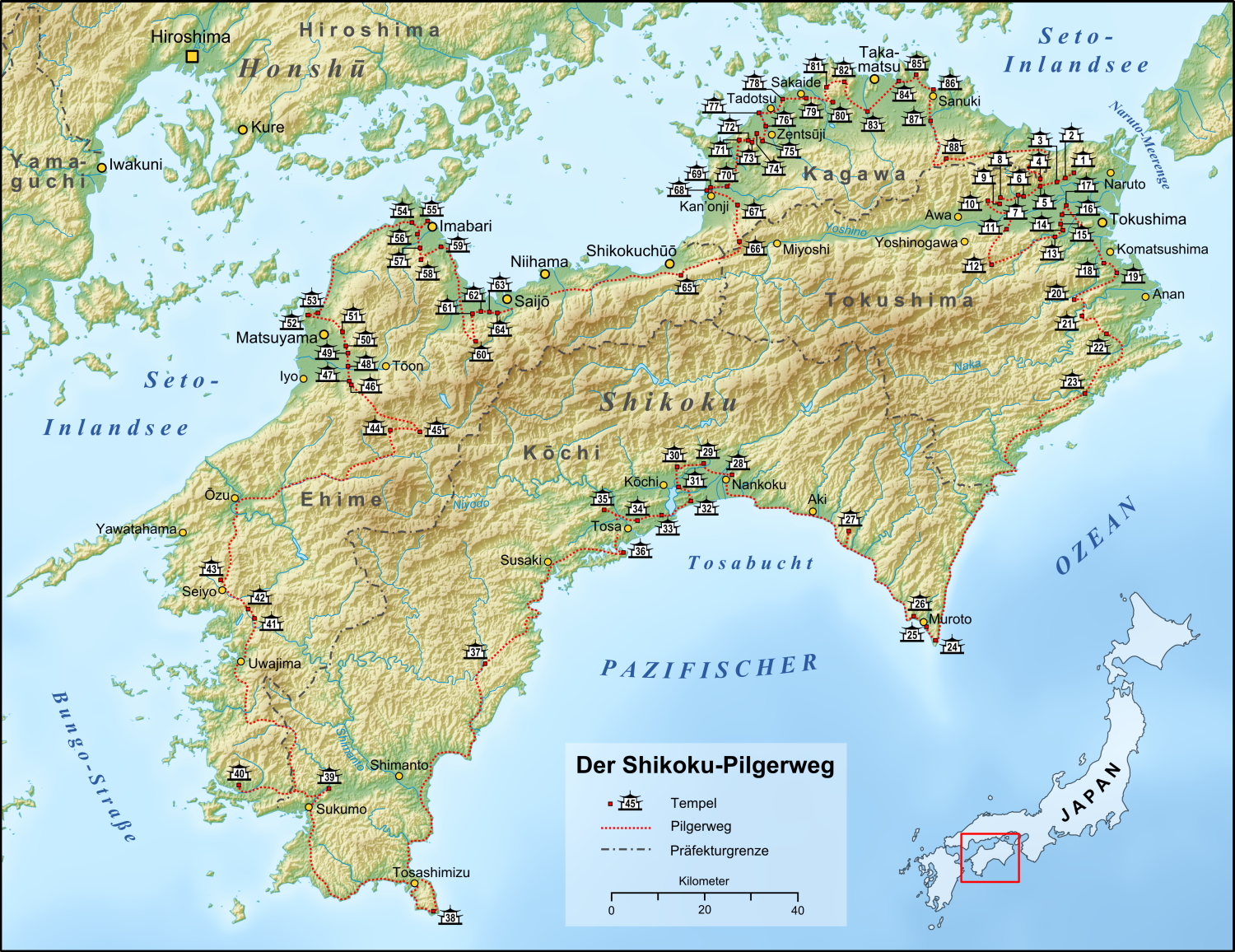
In the mist-shrouded mountains and rugged coastlines of Shikoku, the smallest of Japan’s four main islands, an ancient spiritual journey continues to thrive in the modern world. This is the O-henro, the Shikoku 88 Temple Pilgrimage. Covering a circuit of approximately 1,200 kilometers (750 miles), it is one of the few circular pilgrimages in the world, offering travelers not just a physical challenge, but a profound psychological and spiritual reset.
Unlike trails that lead to a single destination, the O-henro is a loop—a symbol of the eternal cycle of birth, death, and rebirth. Pilgrims, known as henro-san, are easily recognizable in their white vests and conical sedge hats, walking with the belief that they do not travel alone. They are accompanied by the spirit of a great saint in a practice known as Dōgyō Ninin (Two Traveling Together).
Origins of the Sacred Loop
The pilgrimage is centered around the life and legacy of Kobo Daishi (also known as Kukai), a 9th-century Buddhist monk, scholar, and civil servant who founded Shingon Buddhism. Born in Zentsuji, Shikoku, in 774 AD, Kobo Daishi is a towering figure in Japanese history. It is believed that he trained in these mountains, performing ascetic rituals to attain enlightenment.
The route connects 88 official temples associated with the saint. Geographically and spiritually, the journey represents a progression through four stages of enlightenment, corresponding to Shikoku’s four prefectures:
- Tokushima (Temples 1–23): Hosshin (Awakening the Resolve)
- Kochi (Temples 24–39): Shugyo (Ascetic Training)
- Ehime (Temples 40–65): Bodai (Enlightenment)
- Kagawa (Temples 66–88): Nehan (Nirvana)
Historically, the route was formalized in the late Heian or early Kamakura period, evolving from ascetic training grounds for monks into a popular pilgrimage for commoners by the Edo period.
The Legend of Emon Saburo
While Kobo Daishi is the central figure, the folklore of the trail is rich with other characters. The most poignant legend explains why some pilgrims walk the route in reverse (gyaku-uchi).
The story tells of Emon Saburo, a wealthy but greedy man. One day, a begging monk appeared at his door. Saburo, annoyed, knocked the monk’s begging bowl to the ground, shattering it. The monk silently walked away. Soon after, Saburo’s eight sons died one by one. Realizing the monk was Kobo Daishi, a grief-stricken Saburo set out to find him and apologize.
He circled the island twenty times clockwise but never caught the saint. Finally, he decided to walk in reverse to intercept him. On his deathbed, near Temple 12, Kobo Daishi finally appeared, forgave Saburo, and granted him a final wish: to be reborn as a feudal lord who would help others. This legend suggests that walking the route in reverse carries three times the spiritual merit of a standard journey.
Modern Culture and Osettai
Today, the O-henro is a blend of solemn tradition and modern tourism. While many still walk the entire distance—a feat taking 30 to 60 days—the majority of modern pilgrims use tour buses, cars, or a combination of transport modes. This modernization has not diminished the spirit of the journey.
The most heartwarming aspect of the pilgrimage is the culture of Osettai (hospitality). Locals in Shikoku have a centuries-old tradition of supporting pilgrims. As a traveler, you may be gifted oranges, tea, candy, or even money by strangers. They do this not as charity, but as an offering to Kobo Daishi, who is believed to walk beside you. Accepting these gifts with gratitude is an essential part of the pilgrim’s duty.
The attire remains iconic. Modern pilgrims often wear the hakui (white vest) representing purity (and historically, a death shroud, signifying the death of the ego), and carry a kongo-zue (wooden staff), which is treated as the physical embodiment of Kobo Daishi.
Traveler’s Tips for the Pilgrim
If you plan to tackle the O-henro, preparation is key.
- Best Time to Go: Spring (March–May) and Autumn (October–November) are ideal. Shikoku summers are incredibly hot and humid, while winters can see snow in the mountain passes.
- The Nokyo-cho: Buy a pilgrimage stamp book (nokyo-cho) at the first temple. At each site, monks will hand-calligraph the temple’s name and stamp it with red vermilion seals over your book. It becomes a beautiful work of art and a record of your journey.
- Temple Etiquette: Always bow at the main gate. Wash your hands and mouth at the purification fountain. Light incense and a candle, offer a coin, and chant the Heart Sutra (or simply offer a silent prayer) at both the Main Hall and the Daishi Hall.
- Accommodation: You can stay in Minshuku (family inns), Shukubo (temple lodgings), or modern hotels. Temple lodgings offer a unique chance to eat shojin ryori (Buddhist vegetarian cuisine) and join morning prayers.
Sources & Further Reading
To understand the spiritual landscape of Japan before the arrival of Buddhism, one can look to the Kojiki (712 AD) and Nihon Shoki (720 AD). These ancient texts describe the mythological birth of the Japanese archipelago, explicitly naming Shikoku as one of the great islands born of the gods Izanagi and Izanami. This animistic foundation provided the fertile ground upon which Kobo Daishi later established his Buddhist pure land.
For those interested in the specific teachings of the pilgrimage, Kobo Daishi’s own writings, such as Sango Shiiki, provide insight into the Shingon philosophy that permeates the 88 temples.