
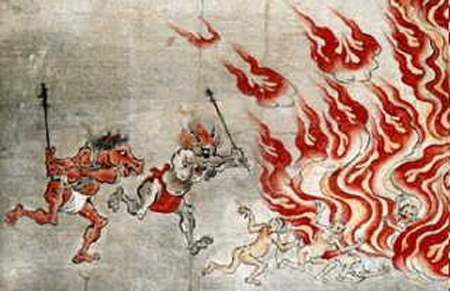
Gozu and Mezu: The Terrifying Guardians of the Japanese Underworld
When travelers imagine Japanese mythology, they often picture the serene torii gates of Shinto shrines or the benevolent statues of Jizo Bosatsu. However, dig a little deeper into the Buddhist lore of the afterlife, and you will encounter a duo far more nightmare-inducing: Gozu (Ox-Head) and Mezu (Horse-Face). As the brutal gatekeepers of Jigoku (Hell), these figures serve as the ultimate enforcers of karmic justice.
Introduction: The Jailers of Hell
In the shadowed realms of the Japanese afterlife, the bureaucracy of judgment is strict and terrifying. Presiding over the dead is the Great King Enma (Yama), the judge who decides the fate of every soul. But King Enma does not work alone. Standing guard at the gates of the underworld and patrolling its fiery pits are his loyal lieutenants, Gozu and Mezu.
Literally translating to “Ox-Head” and “Horse-Face,” these demons are exactly what their names suggest: powerful humanoid bodies topped with the heads of beasts. They are not merely monsters; they are divine servants with a grim purpose. Their job is to escort the newly dead to judgment, ensure no soul escapes the torment they are due, and administer punishments that chill the blood of the living.
Origins: From China to Japan
Like much of Japanese Buddhist iconography, Gozu and Mezu trace their lineage back to China. Known as Niu Tou and Ma Mian in Chinese mythology, they act as psychopomps—spirits who guide the dead. When Buddhism crossed the sea to Japan, these figures were absorbed into Japanese folklore during the Heian period, particularly through the spread of Pure Land Buddhism.
While indigenous Shinto texts like the Kojiki describe a murky underworld called Yomi, it was the introduction of Buddhism that structured the afterlife into specific hells with specific punishments. Gozu and Mezu became the faces of this terrifying bureaucracy. They are often depicted in Emakimono (picture scrolls) dating back to the medieval era, specifically in depictions of the Rokudo (Six Realms of Existence).
The Legend: Duties of the Damned
According to legend, Gozu and Mezu are the first terrifying faces a sinner sees upon entering the underworld. They are famously physically powerful, capable of moving mountains and crushing boulders, making escape for a frail soul impossible.
The Roles of the Duo
- Gozu (The Ox-Head): often depicted wielding a heavy iron club or a pitchfork. He represents raw power and unyielding force.
- Mezu (The Horse-Face): usually carries a spear or a saw. He is often associated with speed, chasing down those who attempt to flee the courts of Hell.
Their cruelty is not malicious in the human sense, but rather a dispassionate fulfillment of duty. In the Jigoku-zoshi (Scroll of Hells), they are seen forcing sinners into cauldrons of boiling oil, flaying skin, or forcing the wicked to climb mountains of needles. They are the ultimate embodiment of the concept that “actions have consequences.”
Modern Culture: Anime and Pop Culture
Despite their gruesome origins, Gozu and Mezu have found a surprising second life in modern Japanese pop culture. The terrifying edge has been softened, and they frequently appear as characters in manga, anime, and video games.
- Dragon Ball Z: Perhaps the most famous cameo for Western audiences, Gozu and Mezu appear as the comedic ogre attendants guarding the check-in station to the Other World.
- YuYu Hakusho: The duo appears as subordinates in the Spirit World bureaucracy.
- Nioh 2: In this dark fantasy video game, they return to their roots as formidable, terrifying boss battles that players must overcome.
These depictions have transformed them from figures of pure dread into recognizable icons of the “spooky” side of Japanese fantasy, often serving as a bridge for younger generations to learn about traditional folklore.
Traveler’s Tips: Where to See Gozu and Mezu
If you are a traveler fascinated by the macabre or the mythological, you can visit several sites in Japan to see depictions of these guardians.
1. Beppu “Blood Pond” Hell (Chinoike Jigoku)
Located in Oita Prefecture, Beppu is famous for its “Hells”—hot springs for viewing rather than bathing. At Chinoike Jigoku, you can find statues and imagery of oni (demons), including references to the guardians of the underworld, set against the backdrop of steaming red water.
2. Osorezan (Mount Osore)
Located in Aomori Prefecture, this is considered one of the three most sacred places in Japan and a literal entrance to the afterlife. The atmosphere is desolate and sulfurous. Statues of Jizo are everywhere, but the Sanzu-no-kawa (River of Three Crossings) bridge area evokes the boundary where Gozu and Mezu would theoretically stand guard.
3. Enma-do Halls
Many Buddhist temples have an Enma-do, a hall dedicated to King Enma. Where there is Enma, Gozu and Mezu are usually nearby. Look for statues flanking the central judge figure. A famous example is found at the Hokkiji Temple in Nara or small shrines in Kamakura.
Sources & Further Reading
For those wishing to delve deeper into the textual history of Japanese mythology and the Buddhist underworld, the following texts are essential:
- Ojo Yoshu (The Essentials of Salvation): Written by the monk Genshin in 985 AD, this text provided the most vivid and influential descriptions of the Buddhist Hells in Japanese history.
- Nihon Shoki (The Chronicles of Japan): While focused on Shinto origins, this classical text helps understand the pre-Buddhist view of the land of the dead (Yomi), providing context for how foreign concepts like Gozu and Mezu were later integrated.
- Jigoku-zoshi (Scroll of Hells): A 12th-century handscroll that provides the visual archetype for how Gozu and Mezu are depicted today.