
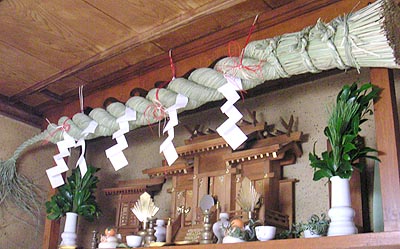
The Kamidana: Bringing the Shrine Home
Introduction
If you step into a traditional Japanese home, a long-established ryokan (inn), or even the back office of a bustling Tokyo corporation, you might notice a small, intricate wooden shelf placed high on the wall near the ceiling. This is the Kamidana (god-shelf), a miniature household altar that serves as the focal point of domestic Shinto worship. While Japan is often viewed through the lens of futuristic technology, the Kamidana is a quiet, omnipresent reminder of the animistic roots that still ground Japanese culture today. It represents a bridge between the mundane world of daily life and the sacred realm of the Kami (spirits or gods).
Origins
The practice of installing a Kamidana is relatively recent in the grand timeline of Japanese history, primarily taking shape during the Edo Period (1603–1867). Before this era, Shinto worship was almost exclusively a communal activity centered around village shrines and sacred natural sites.
However, as the pilgrimage to the Grand Shrine of Ise (Ise Jingu) became a popular spiritual journey for the common people, the desire to maintain a connection to the divine after returning home grew. Pilgrims would bring back Ofuda—consecrated wood or paper amulets infused with the spirit of the Kami. To treat these sacred objects with the necessary reverence, households began building special shelves high above the floor, evolving into the miniature shrine architecture we see today. This allowed families to possess a bunrei (a divided spirit) of the deity within their own walls.
Legend and Mythology
The spiritual logic behind the Kamidana is deeply rooted in the mythology found in Japan’s oldest chronicles. Shinto does not have a single scripture, but its cosmology is defined by the belief that Kami reside in all things—mountains, rivers, rain, and fertility.
According to Shinto lore, the most essential element of the Kamidana is the shinkyo, a sacred circular mirror often placed in the center. In the Kojiki (Records of Ancient Matters), the Sun Goddess Amaterasu Omikami bequeathed a mirror to her grandson, Ninigi-no-Mikoto, before he descended to govern the earth. She instructed him to look upon the mirror and worship it as if he were looking at her soul. Consequently, the Kamidana is not merely a shelf for good luck charms; it is a legendary conduit to the Sun Goddess herself, linking the domestic sphere to the mythological creation of Japan.
Modern Culture and Rituals
In contemporary Japan, the Kamidana remains a vital part of cultural identity, though its usage varies by generation. It is typically placed in a clean, well-lit area, high up on a wall, and usually facing south or east to catch the sunlight, honoring the solar connection to Amaterasu.
Daily worship is simple but disciplined. It usually involves the offering of shinsen (food offerings) to the Kami every morning. The standard offerings include:
- Rice: The staple of life.
- Salt: For purification.
- Water: For cleansing and sustaining life.
- Sake: On special occasions (the 1st and 15th of the month).
These are placed on small white ceramic vessels. Fresh branches of the Sakaki tree (holy evergreen) are often placed in vases on either side. You will also often see a Shimenawa—a twisted rice straw rope with white zigzag paper streamers (shide)—hung above the altar to mark the boundary between the sacred space of the shelf and the profane space of the house.
Traveler’s Tips
For visitors to Japan, the Kamidana offers a fascinating glimpse into the private spiritual life of the locals. Here is how you can engage with this cultural element:
- Where to Look: Keep your eyes raised. You will often see Kamidana in traditional restaurants (izakaya), martial arts dojos, and older shops. They are usually located near the entrance or the main counter.
- Shopping: If you are interested in the craftsmanship, you can visit a Butsudan (Buddhist altar) shop or specialized shrine goods stores near major shrines. However, remember that a Kamidana is meant to house a spirit; buying one as a mere souvenir is sometimes seen as spiritually empty unless you intend to care for it.
- Etiquette: Never touch a Kamidana in someone’s home or business. It is a sacred space. If you are staying in a traditional Minshuku or Ryokan that has one, simply observing it respectfully is the best approach.
Sources & Further Reading
To deepen your understanding of the mythology and history supporting the Kamidana, the following texts are essential:
- The Kojiki (Records of Ancient Matters): For the origin stories of Amaterasu and the significance of the sacred mirror.
- The Nihon Shoki (The Chronicles of Japan): For historical context on the lineage of the Imperial family and Shinto rituals.
- The Engishiki: An ancient book of laws and regulations that details early Shinto rites and prayers (Norito).
By understanding the Kamidana, you understand that for the Japanese, the divine is not a distant concept, but a presence that dwells within the home, watching over the family from a small wooden shelf.