
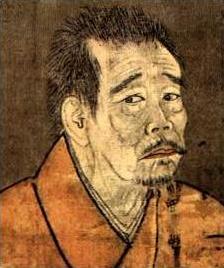
Ikkyu Sojun: The Mad Monk Who Changed Zen Forever
When most people in Japan hear the name “Ikkyu,” they immediately picture a cute, witty child monk from a popular 1970s anime, outsmarting adults with clever riddles. However, the historical reality of Ikkyu Sojun (1394–1481) is far more complex, radical, and fascinating. He was a Zen master who drank sake, frequented brothels, and openly mocked the hypocrisy of the religious establishment. Known as the “Crazy Cloud,” Ikkyu remains one of the most eccentric and beloved figures in Japanese cultural history.
Introduction
Ikkyu Sojun was a Rinzai Zen Buddhist monk who lived during the turbulent Muromachi period. Unlike the stoic, silent monks often associated with Zen, Ikkyu was loud, iconoclastic, and profoundly human. He rejected the rigid hierarchies of the temple systems, arguing that true enlightenment was found in the dirt and passion of the real world, not in the gilded halls of corruption. For travelers and culture enthusiasts, understanding Ikkyu offers a glimpse into the rebellious soul of Japan—a counter-culture spirit that values authenticity over formality.
Origins: The Imperial Bastard
Ikkyu’s life began in the shadow of political danger. He was born in 1394 near Kyoto, allegedly the unrecognized son of Emperor Go-Komatsu. Because his mother belonged to a rival court lineage during the era of the Northern and Southern Courts, Ikkyu was seen as a potential political threat.
To protect him from assassination and remove him from the line of succession, he was sent to a Zen monastery at the tender age of five. He was given the name Sojun and subjected to rigorous discipline. Despite the harsh environment, he displayed a prodigal talent for Chinese poetry and scripture. However, even as a teenager, he began to resent the corruption he saw among high-ranking monks who curried favor with samurai lords and obsessed over titles rather than the Dharma.
Legend: The Crazy Cloud
Ikkyu is most famous for his wandering years. He adopted the pseudonym Kyoun (“Crazy Cloud”), signifying a life that drifts freely without attachment. His legends are numerous and often shocking to the sensibilities of orthodox Buddhism.
The Skeleton Parade
One of the most enduring stories involves New Year’s festivities. While others celebrated with decorations and feasts, Ikkyu marched through the streets carrying a human skull mounted on a bamboo stick. He shouted to the revelers, “Beware, beware!” reminding them that death (impermanence) awaits everyone, regardless of their wealth or joy in the moment. It was a stark, performance-art style of preaching that cut through societal illusions.
Red Thread Zen
Ikkyu openly engaged in relationships with women, most notably a blind singer named Mori in his later years. He celebrated their physical intimacy in his poetry, claiming that sexual passion was not a hindrance to enlightenment but a natural expression of it. He called this “Red Thread Zen,” suggesting that the red thread of passion and the gold thread of Buddha were interwoven.
The Bridge Koan
A popular tale, often attributed to his childhood (and heavily featured in the anime), involves a bridge with a sign saying, “Do not cross this bridge” (Hashi wo wataru bekarazu). The pun lies in the word Hashi, which can mean “bridge” or “edge.” Ikkyu walked right down the middle of the bridge, claiming he was not walking on the “edge.”
Modern Culture: From Zen to Anime
Ikkyu’s legacy has permeated modern Japanese culture in surprising ways.
The Anime Icon
Toei Animation’s Ikkyu-san, which aired from 1975 to 1982, transformed the radical monk into a mischievous but brilliant child novice. This show was a massive hit across Asia and is responsible for the character’s enduring popularity, even if it sanitized his adult exploits.
Tea Ceremony and Calligraphy
On a more serious note, Ikkyu had a profound influence on the Tea Ceremony. He was a mentor to Murata Juko, the man credited with founding the wabi-cha style of tea, which emphasizes simplicity and rusticity. Ikkyu’s calligraphy is also highly prized today for its bold, uninhibited style, reflecting his “Crazy Cloud” nature.
Traveler’s Tips: Walking in Ikkyu’s Footsteps
If you are visiting the Kansai region, you can physically connect with the history of this fascinating monk.
Shuon-an (Ikkyu-ji Temple)
Located in Kyotanabe, Kyoto, this is the temple where Ikkyu spent his final years and is buried.
- Highlights: The temple features stunning rock gardens, a statue of the young Ikkyu, and his actual grave.
- Culinary History: The temple is famous for Daitokuji Natto (fermented soybeans). Ikkyu is said to have passed down the recipe for these salty, preserved beans, which are quite different from the sticky natto usually eaten at breakfast. They are sold at the temple as a souvenir.
Daitoku-ji Temple
Located in northern Kyoto, this massive temple complex is the headquarters of the Rinzai school. Ikkyu briefly served as the head abbot here, primarily to help restore it after a war. However, he famously hated the administrative duties and left quickly, preferring to live in a small hermitage. The complex is home to beautiful sub-temples and Zen gardens.
Sources & Further Reading
For those interested in diving deeper into Japanese history and Zen literature, the following texts are essential:
- Kyounshu (Crazy Cloud Anthology): This is the primary source of Ikkyu’s own voice, containing his poetry which ranges from deep religious insight to erotic verses about his lover, Mori.
- Historical Context: While ancient texts like the Kojiki or Nihon Shoki cover the mythological origins of Japan (712–720 AD), Ikkyu’s life is recorded in the later chronicles of the Muromachi period. To understand the lineage of the Emperors Ikkyu descended from, the Nihon Shoki provides the foundational genealogy of the Imperial family.
- “Ikkyu and the Crazy Cloud Anthology” by Sonja Arntzen: An excellent English translation and analysis for academic readers.