
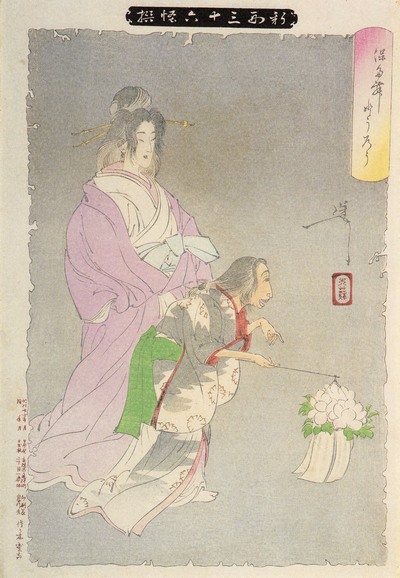
Botan Doro: The Haunting Romance of the Peony Lantern
When summer arrives in Japan, the humidity rises, the cicadas buzz, and a peculiar chill descends upon the cultural landscape. This is the season of kaidan—traditional ghost stories told to cool the spirit through fright. Among the myriad of specters and supernatural tales, few are as beloved, tragic, and terrifying as Botan Doro (The Peony Lantern).
Regarded as one of Japan’s San-dai Kaidan (Three Great Ghost Stories), alongside Yotsuya Kaidan and Bancho Sarayashiki, Botan Doro is more than a simple horror story. It is a tale of undying devotion, fatal desire, and the thin veil separating the living from the dead. For travelers and culture enthusiasts, understanding this legend offers a profound glimpse into the Japanese psyche regarding death and romance.
The Origins: From Chinese Fiction to Edo Rakugo
While Botan Doro is quintessentially Japanese today, its roots trace back to Ming Dynasty China. The story was originally adapted from the collection Jiandeng Xinhua (New Tales for the Trimmed Lamp) written by Qu You. It arrived in Japan during the Edo period, a time of flourishing arts and isolationist peace.
The version most Japanese people recognize today was crafted by the legendary rakugo (comic storytelling) master Sanyutei Encho I in the late 19th century. Encho took the skeletal framework of the Chinese tale and fleshed it out with the intricate social dynamics, realistic dialogue, and atmospheric tension of Edo-era Tokyo. His oral performance was so compelling that it was transcribed into written text, cementing its place in literary history.
The Legend of the Peony Lantern
The narrative centers on a young, widowed samurai named Hagiwara Shinzaburo. Living a quiet, reclusive life, he catches the eye of Otsuyu, the beautiful daughter of a profound master, during a chance encounter. They fall deeply in love, but circumstances force them apart. Shinzaburo is eventually told that Otsuyu has died of lovesickness.
However, on the night of the Bon Festival—when spirits are said to return to the earthly realm—Shinzaburo hears the distinct kara-koron sound of wooden geta sandals approaching his home. To his astonishment, Otsuyu appears, accompanied by her maid servant, who carries a lantern shaped like a peony flower (botan).
Believing the news of her death was a mistake, Shinzaburo joyfully reunites with her. For several nights, she visits him, always departing before dawn. The neighbors, suspicious of the nightly noises, eventually peek into Shinzaburo’s room. They are struck with horror: Shinzaburo is not holding a beautiful woman, but embracing a rotting skeleton.
The Betrayal
A priest warns Shinzaburo that his life energy is being drained by the spirit. Terrified, the samurai covers his home with ofuda (holy protection charms) to keep Otsuyu out. The ghost, unable to enter, wails outside the walls, her sorrow palpable.
In a tragic twist of human greed, Shinzaburo’s servant is bribed by the desperate spirit (or in some versions, by a rival) to remove the charms. The protection gone, Otsuyu enters one last time. The next morning, Shinzaburo is found dead, his body entwined with a skeleton, a peony lantern lying nearby.
Modern Culture and Adaptations
The legacy of Botan Doro pervades modern Japanese media. It established the archetype of the “ghostly lover” found in contemporary anime and J-Horror films. The image of the soft, glowing peony lantern bobbing in the dark remains a visual shorthand for the eerie beauty of the afterlife.
Every summer, theaters across Japan stage adaptations of the story. Kabuki performances emphasize the stylized, dramatic elements of the betrayal, while modern stage plays often focus on the psychological horror of Shinzaburo. In film, the story has been remade numerous times, ranging from classic black-and-white cinema to gruesome horror interpretations.
Traveler’s Tips: Experiencing the Legend
If you are visiting Japan, specifically Tokyo, there are several ways to immerse yourself in the world of Botan Doro:
- The Season of Obon: Plan your trip for mid-August during Obon. This is prime ghost story season. Look for “Kaidan” events at shrines or community centers.
- Rakugo Performances: Visit the Suzumoto Engeijo in Ueno or other yose (storytelling theaters). While performances are in Japanese, some special events offer English subtitles or guides, especially for famous stories like Botan Doro.
- Zensho-an Temple (Yanaka): This temple houses the grave of Sanyutei Encho. Every August, the temple displays Encho’s personal collection of yurei-ga (ghost paintings). It is a rare and spine-tingling opportunity to see Edo-period depictions of spirits, including imagery related to the Peony Lantern.
- Kabuki-za Theatre: Check the schedule at the Kabuki-za in Ginza. If Botan Doro is on the bill, you can rent an English audio guide which provides excellent context and translation in real-time.
Sources & Further Reading
For those wishing to delve deeper into Japanese folklore and the literary history behind this tale, the following texts are essential:
- “The Peony Lantern” by Sanyutei Encho (Various English translations available, often found in anthologies of Japanese literature).
- “Tales of the Peony Lantern” – A translation of the adaptation by Asai Ryoi in his work Ukiyo Monogatari.
- Jiandeng Xinhua by Qu You – The original Chinese source material.
- Kwaidan: Stories and Studies of Strange Things by Lafcadio Hearn – While Hearn is famous for Yuki-onna and Hoichi the Earless, his writings provide the essential atmospheric context for understanding Japanese ghost stories.