
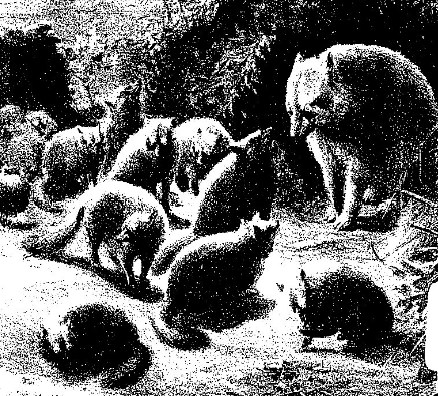
Inugami Gyobu: The Legendary Tanuki Lord of Matsuyama
Japan is a land deeply intertwined with folklore, where the line between the physical world and the spiritual realm often blurs. Among the myriad of yokai (supernatural entities) that populate these stories, the tanuki (Japanese raccoon dog) holds a special place. They are mischievous, shapeshifting tricksters, yet often lovable. However, not all tanuki are mere pranksters. Some are powerful, god-like spirits capable of influencing history. Standing tall among them is Inugami Gyobu, the supreme commander of the 808 Tanuki of Shikoku.
Origins: The Guardian of Shikoku
In the hierarchy of Japanese folklore, Inugami Gyobu (also known as Gyobu-danuki) is considered one of the “Three Famous Tanuki of Japan,” alongside Danzaburou of Sado Island and Hage of Yashima. While the mainland of Japan often features stories of foxes (kitsune), the island of Shikoku is famously devoid of foxes in its lore, leaving the tanuki to rule the supernatural landscape unchallenged.
Inugami Gyobu is not an ordinary animal spirit. He is depicted as an ancient, powerful entity residing in the caves beneath Matsuyama Castle in Ehime Prefecture. According to local belief, he and his ancestors served as the guardians of the castle for centuries, commanding a massive legion of 808 subservient tanuki. His origin is tied deeply to the geography of Mt. Katsuyama, where the castle stands, grounding the supernatural legend in a very real, physical location.
The Legend of the 808 Tanuki
The most famous tale involving Inugami Gyobu is known as the “Matsuyama Disturbance of the 808 Tanuki” (Matsuyama Sodo Happyakuya-danuki Monogatari). This story, often adapted into Kabuki theater, dates back to the Edo period.
The Rebellion
According to the legend, a succession dispute arose within the Matsuyama feudal clan. Inugami Gyobu, who had watched over the castle lords for generations, decided to intervene. Siding with a faction within the castle, the tanuki lord used his immense spiritual power to aid them. He and his 808 followers created supernatural phenomena, hauntings, and illusions to terrorize the opposing faction.
The Defeat
However, the tanuki’s interference did not go unchallenged. A brave warrior named Ino Heitaro was tasked with stopping the chaos. Unlike others who fled in fear, Heitaro was unfazed by the tanuki’s illusions. Legend says he entered the haunted areas carrying a wooden mallet (sometimes depicted as a religious icon or a charm received from a high priest).
Through bravery and spiritual fortitude, Heitaro managed to defeat Inugami Gyobu. As punishment for meddling in human affairs and causing chaos, the great tanuki and his 808 followers were sealed inside a cave in the 久谷 (Kutan) area, seemingly ending their reign.
In Modern Culture
While the Edo period solidified his legend, modern pop culture has introduced Inugami Gyobu to a global audience. His most notable appearance is in Studio Ghibli’s masterpiece “Pom Poko” (Heisei Tanuki Gassen Ponpoko). In the film, Gyobu is depicted as a wizened, powerful elder from Shikoku who arrives to help the Tokyo tanuki fight against human urban development. His character represents the dying magic of the old world, demanding respect and awe.
He also appears in various anime and video games, such as Nura: Rise of the Yokai Clan and the Genshin Impact universe (where tanuki lore is heavily utilized), symbolizing the archetype of the “Boss Tanuki.”
Traveler’s Tips: Seeking the Legend in Matsuyama
For travelers visiting Japan, Shikoku offers a quieter, more mystical alternative to the Golden Route of Tokyo and Kyoto. If you want to walk in the footsteps of Inugami Gyobu, here is how to find him:
1. Visit Matsuyama Castle
The primary setting of the legend, Matsuyama Castle, is one of Japan’s twelve original surviving castles. As you take the ropeway or chairlift up Mt. Katsuyama, keep an eye out for tanuki statues. The castle grounds are beautiful, offering panoramic views of the Seto Inland Sea.
2. The Yamaguchi Reisha Shrine
Located near the castle, this small shrine is dedicated to the spirits of the tanuki. It is said that after the seal was broken or to appease the spirits to prevent further curses, this shrine was maintained. It is a quiet spot for those wishing to pay respects to the 808 tanuki.
3. Dogo Onsen
While in Matsuyama, you cannot miss Dogo Onsen, one of Japan’s oldest hot springs. It is steeped in legend itself and provides the perfect atmosphere to read up on local ghost stories after a soak.
Sources & Further Reading
To deepen your understanding of Japanese folklore and the context of the Inugami Gyobu legend, the following resources are recommended:
- The Nihon Shoki (Chronicles of Japan): While Inugami Gyobu is an Edo-period figure, this ancient text (dating to 720 AD) provides the earliest mentions of shapeshifting animals and the spiritual landscape of early Japan.
- Matsuyama Sodo Happyakuya-danuki Monogatari: The specific Kodan (traditional oral storytelling) transcript that popularized the revolt of the 808 tanuki.
- Essays in Idleness (Tsurezuregusa): Written by Yoshida Kenko, offering insights into the medieval Japanese view of spirits and impermanence.
- Yokai Attack! The Japanese Monster Survival Guide: A modern, accessible guide to understanding the characteristics of creatures like the Tanuki.
Inugami Gyobu remains a fascinating symbol of nature’s resistance and the enduring power of local storytelling. Whether viewed as a trickster or a tragic guardian, his spirit lives on in the lush mountains of Shikoku.