
Amefuri-kozo: The Legend of the Rainfall Priest Boy
When traveling through Japan during Tsuyu (the rainy season in June and July), the atmosphere transforms. The neon lights of Tokyo reflect off wet pavement, and the moss in Kyoto’s ancient gardens turns a vibrant, electric green. In Western culture, rain is often seen as a gloomy inconvenience, but in Japanese folklore, it is the playground of the Amefuri-kozo (雨降り小僧), a peculiar and beloved spirit.
As a travel and culture enthusiast, diving into the world of yokai (supernatural monsters and spirits) offers a fascinating window into the Japanese psyche. Today, we peel back the layers of history to meet the Amefuri-kozo, the “Rainfall Priest Boy,” a character who embodies the playful, uncontrollable nature of the weather.
Introduction to the Rain Spirit
The Amefuri-kozo is a minor deity or spirit in the vast pantheon of Japanese folklore. Unlike the terrifying Oni or the deceptive Kitsune, the Amefuri-kozo is generally considered benign, albeit a bit mischievous.
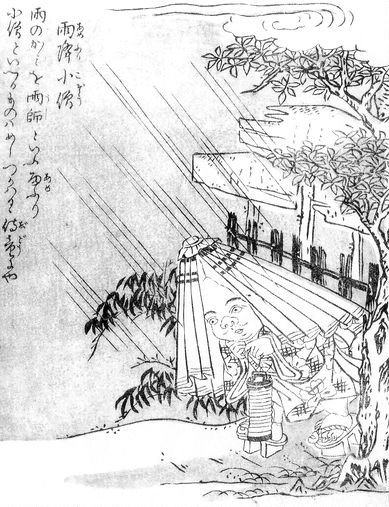
Visually, he is depicted as a young boy, often looking like a child monk in training. He wears a mino (a traditional straw raincoat) and clatters around in wooden sandals. However, his most distinguishing feature is the broken umbrella he wears on his head like a hat, or the paper lantern he carries to light his way through the stormy nights. He is the spirit that delights in sudden showers and plays among the falling droplets.
Origins of the Entity
To understand the Amefuri-kozo, we must look back to the Edo period. While oral traditions of rain spirits existed for centuries, the specific characterization of the Amefuri-kozo was cemented by Toriyama Sekien, the legendary ukiyo-e artist and folklorist.
He first appeared in Sekien’s 1779 illustration collection, Konjaku Gazu Zoku Hyakki (The Illustrated One Hundred Demons from the Present and the Past). Sekien depicted the spirit holding a lantern and examining it with a childish curiosity.
The name itself breaks down into simple components: Ame (rain), Furi (falling), and Kozo (a young Buddhist priest or boy). In the context of the Edo period, “kozo” was often used affectionately (or pejoratively) for young boys, similar to calling someone a “rascal” or “kid.”
The Legend and Lore
According to folklore, the Amefuri-kozo serves a specific master: Ushi-tora, the Chinese rain god. While Ushi-tora commands the weather, the Amefuri-kozo acts as a page or servant, ensuring the rain falls where it is intended—and sometimes where it isn’t.
The Umbrella Thief
One of the most charming legends involves the spirit’s fascination with umbrellas. It is said that if you walk alone on a rainy night holding a paper umbrella, the Amefuri-kozo might try to snatch it from you. He doesn’t want to hurt you; he simply wants to wear the umbrella on his head as a hat. This explains why he is almost always depicted wearing a tattered umbrella; it is likely a trophy from a prank played on a traveler long ago.
The Fox’s Wedding
The Amefuri-kozo is also associated with Kitsune-no-yomeiri (The Fox’s Wedding), a phenomenon known in English as a “sun shower” (when it rains while the sun is shining). It is believed that the Amefuri-kozo helps facilitate the rain during these auspicious, supernatural events to keep humans indoors so the foxes can conduct their wedding processions in secret.
Modern Culture and Media
In contemporary Japan, the scary edge of yokai has been softened, turning them into mascots of cultural heritage. The Amefuri-kozo has transitioned from a figure of superstition to a character of pop culture.
- Manga and Anime: The spirit was popularized in the modern era by Shigeru Mizuki, the creator of GeGeGe no Kitaro. Mizuki’s portrayal of Amefuri-kozo as a shy, rain-loving friend helped cement the yokai’s status in the modern imagination.
- Video Games: In the Yo-kai Watch series and the Megami Tensei franchise, Amefuri-kozo appears as a collectible character, introducing the legend to a global audience of gamers.
- Weather Symbolism: Today, illustrations of the character are often used playfully during the rainy season to warn children to carry their umbrellas.
Traveler’s Tips: Experiencing Yokai Culture
If you are fascinated by the legend of the Amefuri-kozo, here is how you can incorporate this folklore into your next trip to Japan:
- Visit Sakaiminato (Tottori Prefecture): This is the hometown of Shigeru Mizuki. The famous “Mizuki Shigeru Road” is lined with over 170 bronze statues of yokai, including the Amefuri-kozo. It is the ultimate pilgrimage for folklore fans.
- Travel During Tsuyu (June-July): While most tourists avoid the rainy season, seeing the hydrangeas (ajisai) bloom at temples in Kamakura under a gentle drizzle provides the perfect atmospheric backdrop to imagine a small boy in a straw raincoat running past.
- Souvenir Hunting: Look for Tenugui (hand towels) or charms featuring the Amefuri-kozo in traditional craft shops in Kyoto or Asakusa. They make for unique gifts that carry a story.
Sources & Further Reading
For those wishing to delve deeper into the historical texts that frame these legends, consider exploring the following:
- Konjaku Gazu Zoku Hyakki by Toriyama Sekien (1779) – The primary visual source for the Amefuri-kozo.
- Shigeru Mizuki’s Yokai Showon – For a modern encyclopedic look at these spirits.
- The Kojiki and Nihon Shoki – While these ancient texts focus on major Shinto kami, they provide the animistic foundation necessary to understand how nature spirits like Amefuri-kozo came to exist in the Japanese consciousness.