
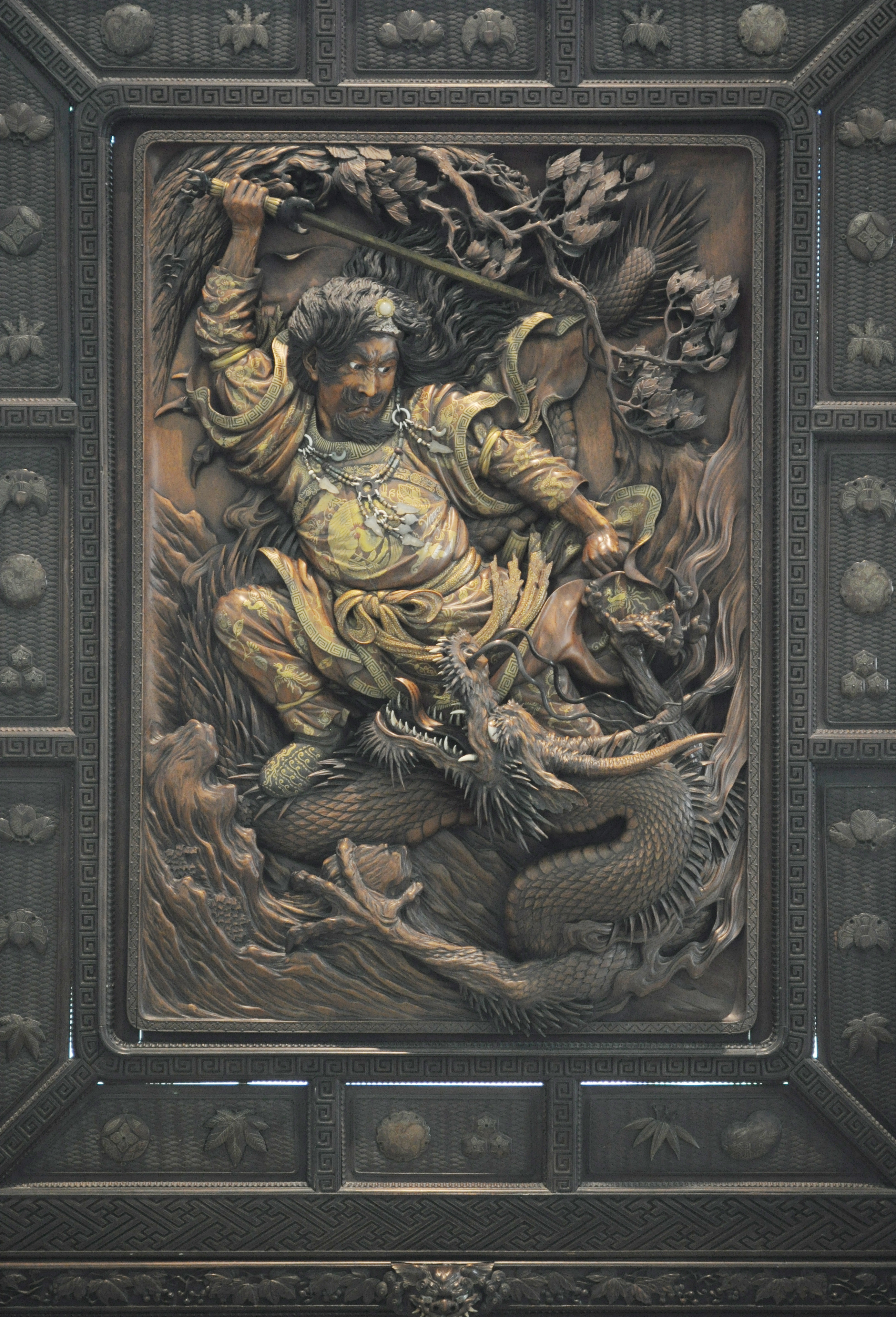
Unveiling Kuniyuzuri: Japan’s Myth of Land Transfer
Japan is a destination where the line between history and mythology is often beautifully blurred. For the cultural traveler, understanding the stories etched into the landscape is as vital as visiting the sites themselves. Among the most pivotal of these ancient narratives is the Kuniyuzuri (国譲り), or the “Transfer of the Land.”
This myth does not just tell a story of gods and warriors; it explains the very spiritual foundation of Japan, defining the relationship between the Imperial family and the ancient deities of the earth. Join us as we journey to Shimane Prefecture to uncover a legend of negotiation, divine power, and the origins of the Great Shrine of Izumo.
The Origins of the Myth
To understand the Kuniyuzuri, one must look to Japan’s oldest historical chronicles: the Kojiki (Records of Ancient Matters, 712 CE) and the Nihon Shoki (The Chronicles of Japan, 720 CE). These texts were compiled to legitimize the rule of the Imperial court by tracing their lineage back to the heavens.
The cosmos in Shinto mythology is generally divided into two realms: Takamagahara (The Plain of High Heaven), ruled by the Sun Goddess Amaterasu, and Ashihara no Nakatsukuni (The Central Land of Reed Plains—ancient Japan), ruled by the earthly deity Okuninushi.
The Kuniyuzuri myth is the bridge between the Age of the Gods and the Age of Men. It details the dramatic political shift where the earthly gods (Kunitsukami) ceded sovereignty to the heavenly gods (Amatsukami), paving the way for Amaterasu’s grandson, Ninigi-no-Mikoto, to descend and establish the Imperial line.
The Legend of Kuniyuzuri
As the story goes, Amaterasu looked down from the High Heaven and decided that the chaotic earthly realm needed to be pacified and ruled by her own progeny. However, the land was currently under the stewardship of Okuninushi, a powerful and benevolent deity who had built the nation through agriculture and medicine.
Amaterasu sent several envoys to negotiate with Okuninushi, but they all failed—some were distracted by earthly pleasures, while others defected. Finally, she sent the mighty warrior god Takemikazuchi.
The Confrontation at Inasa Beach
Takemikazuchi descended to Inasa Beach in the province of Izumo. In a display of intimidating power, he drew his ten-span sword, planted it hilt-down into the crest of a wave, and sat cross-legged upon its point. From this precarious perch, he demanded that Okuninushi turn over control of the land.
Okuninushi deferred the decision to his two sons. The first son, Kotoshironushi, accepted the decree immediately and withdrew into invisibility. The second son, Takeminakata, was defiant. He challenged the heavenly envoy to a test of strength. Takemikazuchi crushed the son’s hand as if it were a reed, forcing Takeminakata to flee to Suwa (modern-day Nagano) and surrender.
The Great Compromise
With his sons defeated or compliant, Okuninushi agreed to cede the land. However, he had one condition. He requested a palace as grand as the heavenly abodes, where he could reside in peace. Amaterasu accepted, and a magnificent shrine was built for him. Okuninushi withdrew from the “visible world” of politics to rule the “invisible world” of spirits and human connections (en-musubi).
Modern Culture and Significance
The echoes of the Kuniyuzuri myth permeate modern Japanese culture in fascinating ways.
The Origins of Sumo
The battle between the heavenly envoy Takemikazuchi and the defiant son Takeminakata is widely considered the mythological origin of Sumo wrestling. The feats of strength displayed during their negotiation established the reverence for physical power and ritual combat that defines the sport today.
The Dual Sovereignty
The myth created a unique separation of power that defines Japanese spirituality. While the Emperor (descendant of Amaterasu) rules the political and visible world, Okuninushi rules the spiritual realm. This is why Izumo Taisha, dedicated to Okuninushi, remains one of the most important shrines in Japan, second only to Ise Jingu (dedicated to Amaterasu).
Traveler’s Tips: Walking the Myth in Izumo
For travelers, the Kuniyuzuri myth transforms a visit to Shimane Prefecture into a pilgrimage. Here is how to experience the legend:
- Visit Inasa Beach: Start where the myth happened. Located about 1 km west of Izumo Taisha, this beach features the iconic Bentenjima rock. It is said to be the very spot where the negotiations took place. Sunset here is magical.
- Explore Izumo Taisha: This is the massive shrine built as part of the “land transfer” deal. Marvel at the shimenawa (sacred straw rope), which is one of the largest in the world, symbolizing the boundary between the sacred and profane.
- Kamiari Month: In the traditional lunar calendar, October is called Kannazuki (Month of No Gods) everywhere in Japan except Izumo, where it is called Kamiarizuki (Month of the Gods). It is believed that all 8 million gods flock to Izumo during this time to hold meetings on human destiny, hosted by Okuninushi.
- Local Cuisine: Don’t leave without trying Izumo Soba. These dark buckwheat noodles are a local specialty often eaten in three stacked lacquerware bowls.
Sources & Further Reading
To deepen your understanding of Japanese mythology, the following texts are essential:
- The Kojiki (Records of Ancient Matters): Translated by Basil Hall Chamberlain or Donald L. Philippi.
- The Nihon Shoki (The Chronicles of Japan): Translated by W.G. Aston.
- Shinto: The Kami Way by Sokyo Ono (for a general understanding of Shinto philosophy).
The Kuniyuzuri is more than an ancient text; it is a living narrative that explains the sanctity of the Japanese landscape. When you stand before the grand shrine of Izumo, remember: you are looking at the price paid for the unification of Japan.