
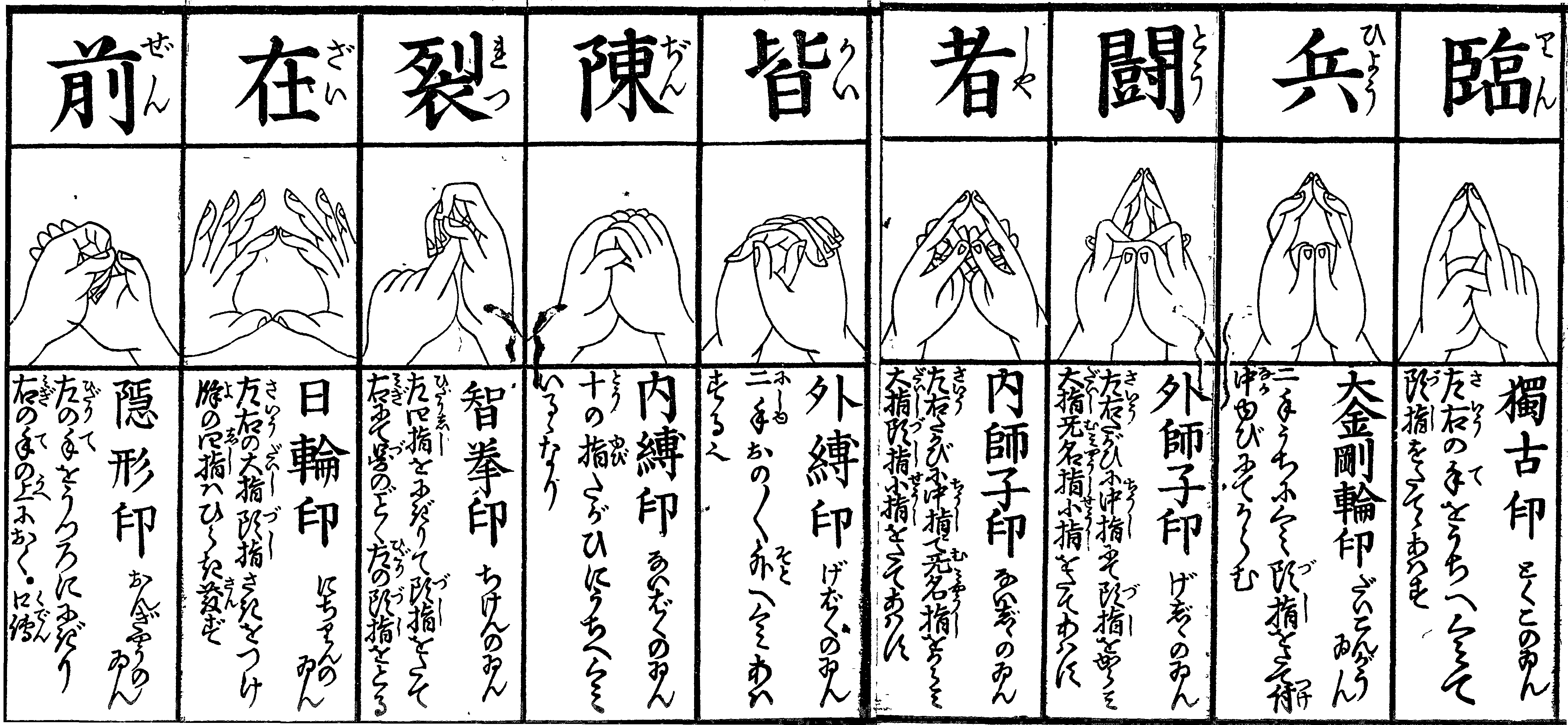
Kuji-kiri: Unlocking the Secrets of Ninja Hand Signs
When most people think of the mysterious figures of feudal Japan—the ninja—they often visualize a shadowed warrior weaving intricate hand gestures before vanishing into a cloud of smoke. These hand signs are not merely Hollywood theatrics; they are rooted in a genuine, ancient spiritual practice known as Kuji-kiri (九字切り), or the “Nine Syllable Cuts.”
While popularized by martial arts films and anime, Kuji-kiri is a profound ritual involving meditation, gesture, and chant, historically used by samurai, ninja, and monks alike to induce mental focus and invoke spiritual protection. But what exactly do these signs mean, and where do they come from?
Origins: From Taoist China to Esoteric Japan
The roots of Kuji-kiri extend far deeper than the ninja clans of the Iga and Koga provinces. The practice actually originates from ancient Taoism in China. It was first recorded in the Baopuzi (The Master Who Embraces Simplicity), a text written by the scholar Ge Hong around 320 CE. The original intent was to provide travelers with protection against demons and evil spirits when entering the mountains.
As these teachings crossed the sea to Japan, they were absorbed and adapted by Shugendo (mountain asceticism) and Mikkyo (Esoteric Buddhism), specifically the Shingon and Tendai sects. In Japan, the practice evolved into two distinct parts:
- Kuji-in: The weaving of nine specific hand seals (mudras).
- Kuji-kiri: The act of “cutting” a grid in the air to create a protective barrier.
By the time of the warring states period, these rituals had become integral to the mental conditioning of warriors, providing a psychological anchor in the chaos of battle.
The Legend of the Nine Syllables
The core of the practice revolves around nine specific syllables. In the Japanese reading, they are: Rin, Pyo, Toh, Sha, Kai, Jin, Retsu, Zai, Zen. When chanted while performing the corresponding hand seal, they are believed to channel specific energies.
The Meanings
While translations vary depending on the sect, the general meanings of the nine characters are:
- Rin: Power and strength of mind and body.
- Pyo: Channeling energy and direction.
- Toh: Harmony with the universe.
- Sha: Healing of self and others.
- Kai: Premonition or sensing danger.
- Jin: Knowing the thoughts of others.
- Retsu: Mastery over time and space.
- Zai: Control over the elements.
- Zen: Enlightenment.
In the full Kuji-kiri ritual, the practitioner does not just make hand signs. They use their hand as a sword (sword finger) to slash a grid of five horizontal and four vertical lines in the air. This grid symbolizes a barrier against evil influences, protecting the ninja or monk from malevolent spirits or physical danger.
Modern Culture: From Temples to Anime
Today, Kuji-kiri is most recognized globally through pop culture. If you have ever watched the anime series Naruto, you have seen a stylized version of Kuji-in. The characters weave rapid hand signs to activate their “jutsu” (techniques). While the show takes creative liberties, the concept of channeling energy (chakra) through hand seals is directly inspired by these real-world esoteric practices.
Beyond anime, the practice survives in traditional Japanese martial arts schools (Koryu) and religious ceremonies. It serves as a fascinating bridge between the tangible world of combat and the intangible world of the spirit, illustrating how Japanese culture often blends the practical with the mystical.
Traveler’s Tips: Experiencing the Mystic
For travelers visiting Japan who want to look past the neon lights and experience this spiritual heritage, there are specific destinations to add to your itinerary:
- Iga and Koka: Visit the Iga-ryu Ninja Museum in Mie Prefecture or the Koka Ninja Village in Shiga. These museums offer a historical look at ninjutsu, including the spiritual aspects like Kuji-kiri.
- Mount Koya (Koya-san): As the headquarters of Shingon Buddhism, this mountain settlement is the perfect place to witness Esoteric rituals. You may see monks performing mudras during the fire ceremonies (Goma).
- Togakushi: Located in Nagano, this area is famous for its Togakushi Shrine and its connection to the Togakure-ryu ninja lineage. The towering cedars and mist-covered mountains provide the perfect atmospheric backdrop to understand why mountain ascetics developed these protective rites.
Note on Etiquette: If you witness a monk performing these rituals, maintain respectful silence. It is a form of prayer, not a performance.
Sources & Further Reading
To dive deeper into the spiritual and historical context of these practices, consider consulting the following texts:
- The Baopuzi (Master Who Embraces Simplicity): For the Taoist origins of the nine syllables.
- The Kojiki (Records of Ancient Matters) & Nihon Shoki: While these texts focus on the creation myths and the Shinto pantheon, reading them provides the necessary context for understanding the animistic worldview of ancient Japan that allowed rituals like Kuji-kiri to flourish.
- Shugendo: The Way of the Mountain Monks: For an understanding of the syncretic religion that preserved these hand seals.
Understanding Kuji-kiri offers a glimpse into the mindset of the ancient Japanese warrior—a world where mental fortitude was just as sharp a weapon as the katana.