
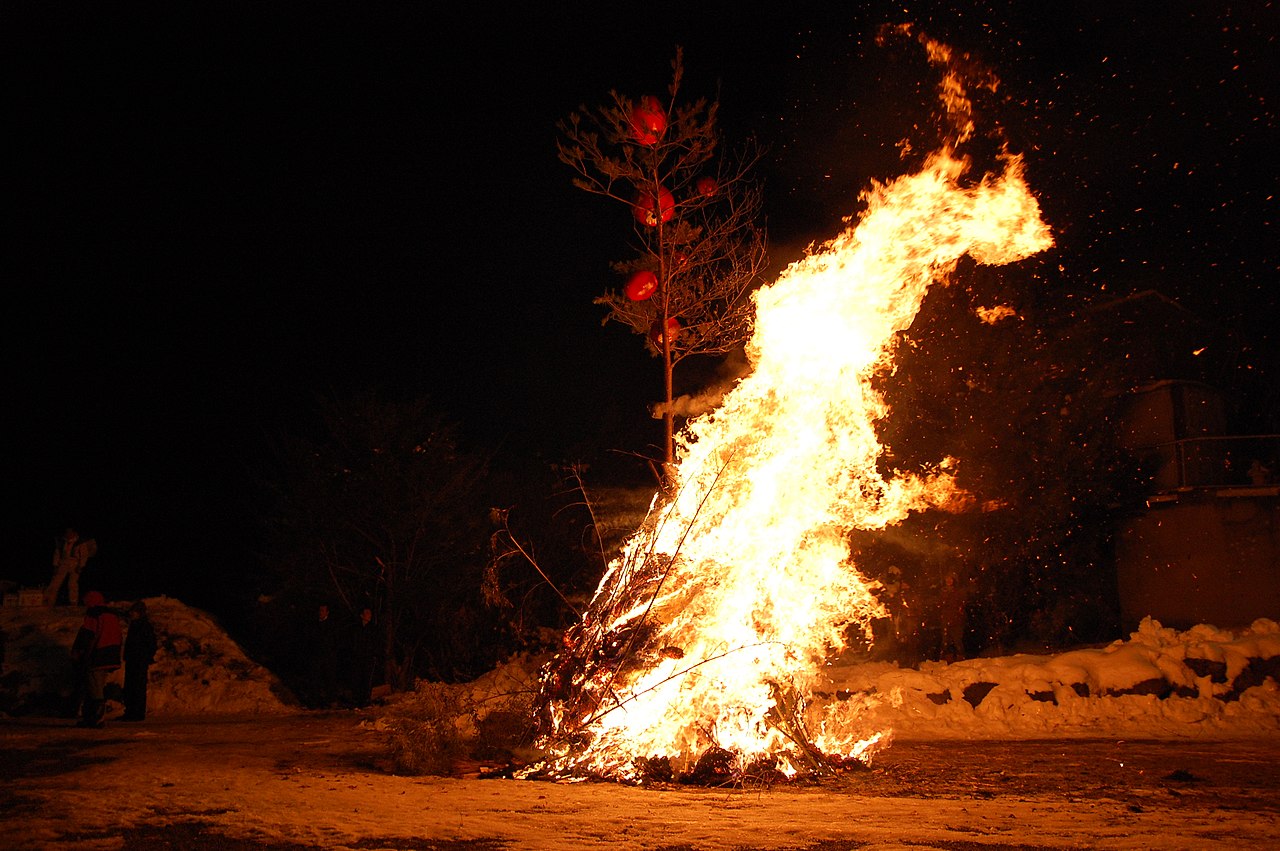
Himatsuri: A Guide to Japan’s Spectacular Fire Festivals
Japan is often viewed as a land of serene temples, quiet gardens, and polite social conduct. However, this image is dramatically shattered the moment you step into the chaotic, vibrant, and searing heat of a Himatsuri, or Fire Festival. From the snow-covered mountains of Nagano to the spiritual forests of Wakayama, fire festivals are an integral, adrenaline-fueled part of Japanese culture that dates back millennia.
For the intrepid traveler, attending a Himatsuri offers a rare glimpse into the primal and spiritual heart of Japan, where fire is not just a source of heat, but a divine tool for purification and renewal.
The Origins of Holy Fire
The roots of the Himatsuri lie deep within the syncretic blend of Shintoism and Buddhism that defines Japanese spirituality. In Shinto belief, fire (hi) is possessed of kami (spirit) and has the power to cleanse kegare (spiritual pollution or impurity). It is a medium that connects the human realm to the divine.
Historically, these festivals were agrarian in nature. Many take place in January or February, coinciding with the Lunar New Year or the period known as Setsubun (the beginning of spring). Farmers would burn the dead grass of winter to encourage new growth, a practice that evolved into ritualistic burnings of New Year’s decorations (known as Dondo Yaki) to send the spirits of the New Year back to the heavens. Over centuries, these local rituals expanded into massive spectacles involving giant torches, burning shrines, and dangerous feats of bravery intended to secure a bountiful harvest and ward off evil spirits for the coming year.
Legend: The Goddess of the Volcano
While each specific festival has its own local lore, the spiritual significance of fire in Japan is heavily influenced by the mythology found in ancient texts. One of the most famous legends connected to fire festivals—specifically the Yoshida Fire Festival at the base of Mount Fuji—concerns the deity Konohanasakuya-hime.
According to the legend, when Konohanasakuya-hime became pregnant after only one night with her husband, the god Ninigi-no-Mikoto, he doubted the child was his. To prove her fidelity and the divine lineage of the child, she entered a windowless hut and set it on fire. She declared that if the child belonged to another, they would perish in the flames, but if the child was the true son of the heavenly grandchild, they would be unharmed.
Amidst the roaring inferno, she gave birth to three healthy sons. Today, the burning of massive torches in Fujiyoshida is a reenactment of this divine fire, soothing the spirit of the goddess to prevent Mount Fuji from erupting and celebrating safe childbirth and family prosperity.
Modern Culture: Spectacle and Spirit
In modern Japan, Himatsuri serve as a vital community binder. In an era of urbanization where rural populations are shrinking, these festivals bring generations together. They are loud, boisterous, and often involve ample consumption of sake.
Three distinct festivals highlight the variety of modern Himatsuri culture:
1. Nozawa Onsen Dosojin Matsuri (Nagano)
Held every January, this is perhaps the most famous fierce battle festival. It involves a massive wooden shrine constructed by villagers. The 25-year-old men defend the base, and the 42-year-old men sit atop the structure (both ages are considered unlucky years, or yakudoshi). Other villagers charge with burning torches, attempting to set the shrine on fire. It is a literal battle of flame and will, ending only when the shrine is finally consumed by the blaze.
2. Nachi no Ogi Matsuri (Wakayama)
Held in July at the sacred Kumano Nachi Taisha, this festival is more solemn but visually stunning. Twelve massive pine torches, weighing 50kg each, are carried up the stone steps of the shrine to purify the path for the spirits. The sight of these flames against the backdrop of the Nachi Waterfall is one of Japan’s most iconic images.
3. Kurama Fire Festival (Kyoto)
In October, the quiet village of Kurama transforms. To guide the deities through the dark, nearly every home lights a bonfire, and men carry massive torches through the narrow streets, chanting “Sairya, Sairya!” The heat, the smoke, and the chanting create a trance-like atmosphere that transports visitors back to the Heian period.
Traveler’s Tips for the Fire Festival
Attending a Himatsuri is an unforgettable experience, but it requires preparation. These events are raw and often lack the safety barriers common in Western events.
- Dress Appropriately: Do not wear synthetic fabrics like nylon or polyester, which can melt if a stray spark lands on you. Wear cotton or wool (natural fibers). Wear old clothes that you don’t mind smelling like smoke for days.
- Book Accommodation Early: For popular festivals like Nozawa Onsen, lodging books up to a year in advance. Plan accordingly.
- Respect the Locals: While it is a spectacle, it is primarily a religious ceremony for the locals. Do not cross roped-off areas and be mindful of your photography.
- Protect Your Eyes: The smoke can be intense. If you have sensitive eyes, bring drops or wear glasses instead of contacts.
Sources & Further Reading
For those interested in the mythological and historical foundations of these rituals, the following texts provide essential context:
- The Kojiki (Records of Ancient Matters): Translated by Basil Hall Chamberlain. Contains the original myths of Izanami and the birth of the fire god, as well as the story of Konohanasakuya-hime.
- The Nihon Shoki (The Chronicles of Japan): Provides parallel historical accounts of early Shinto rituals.
- Japan National Tourism Organization (JNTO): Provides up-to-date schedules for seasonal fire festivals across the archipelago.