
Akita Kanto Festival: Japan’s Lantern Pole Spectacle
Imagine a summer night where the dark sky is illuminated not by fireworks, but by thousands of glowing paper lanterns swaying rhythmically to the beat of taiko drums. This is the Akita Kanto Festival (Kanto Matsuri), a breathtaking display of balance, strength, and spiritual devotion. Held annually in Akita City, this event is designated as an Important Intangible Folk Cultural Property and stands proudly as one of the three great festivals of the Tohoku region.
Introduction
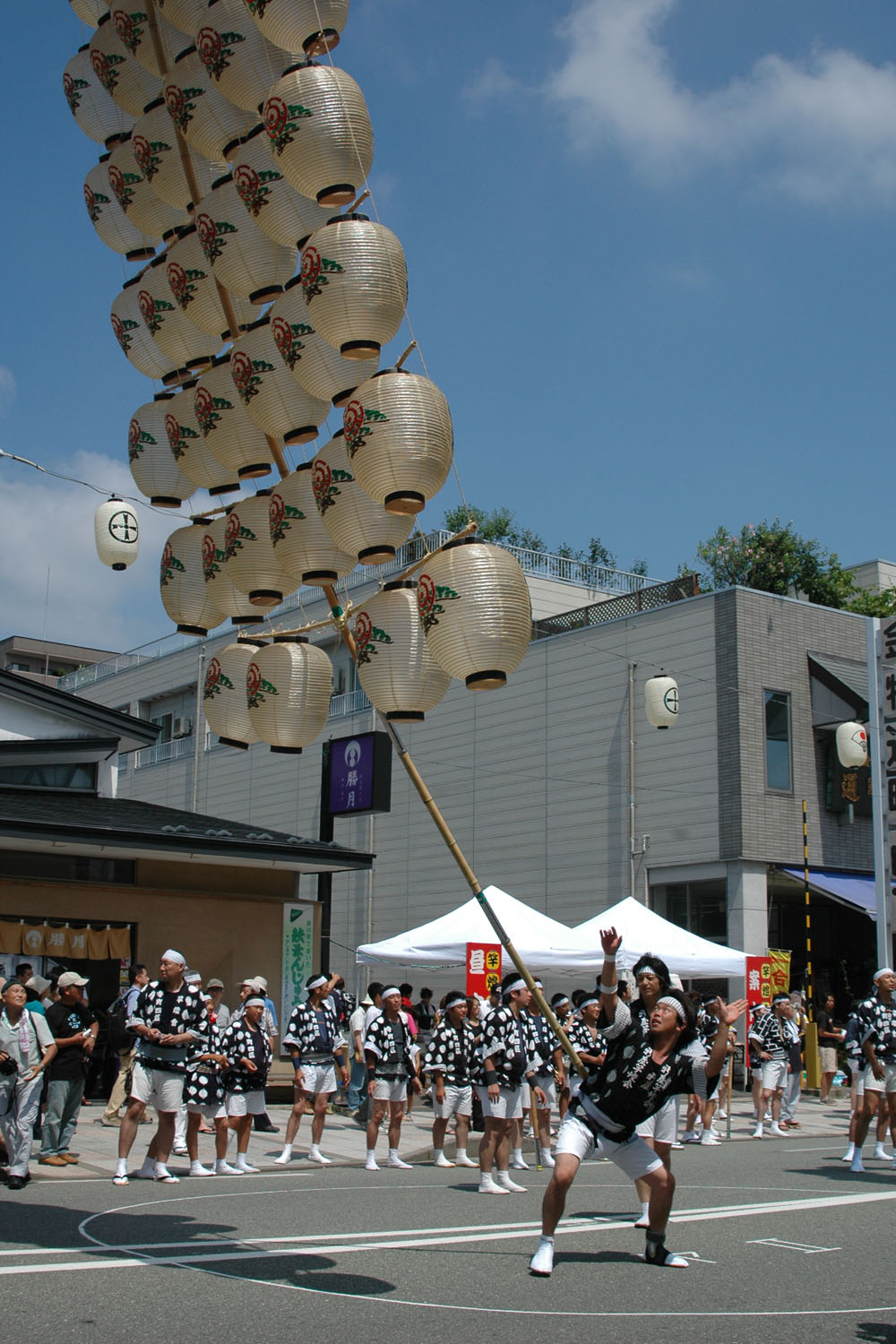
The Kanto Festival creates a mesmerizing tunnel of light along Chuo Dori street, where skillful performers balance massive bamboo poles laden with lanterns on their foreheads, hips, and shoulders. These poles, known as kanto, can weigh up to 50 kilograms and reach heights of 12 meters. More than just a parade, it is a fervent prayer for a bountiful harvest, transforming the city into a golden sea of swaying lights that resemble ears of heavy rice plants bending in the wind.
Origins of the Festival
The roots of the Kanto Festival can be traced back to the Horeki period (1751–1764). It originated from an older tradition called Neburi Nagashi, a ritual intended to wash away summer fatigue and malicious spirits (often personified as drowsiness) before the busy harvest season. In the sweltering heat of Japanese summer, falling ill or succumbing to laziness was a threat to the community’s survival.
Originally, villagers would float lanterns down rivers to carry away this bad luck. Over time, influenced by the Tanabata star festival and candle-lighting traditions, the ritual moved from the water to the land. The lanterns were attached to bamboo structures, evolving into the acrobatic feats of strength we see today. What began as a purification rite has blossomed into a grand celebration of agrarian life and community resilience.
The Legend: Rice Ears and Grain Sacks
While many Japanese festivals have specific mythological tales involving gods and monsters, the “legend” of the Kanto Festival is deeply visual and symbolic. The structure of the kanto itself is the central character of the story.
According to local lore and agricultural tradition, the entire apparatus is a metaphor for rice cultivation—the staple of Japanese life. The tall bamboo pole represents the stalk of the rice plant. The 46 paper lanterns arranged in tiers symbolize the heavy, golden grains of rice ready for harvest. The paper strips (gohei) at the very top represent Shinto offerings to the deities.
When the performers (known as sashite) balance these swaying poles, the arc of the bamboo mimics the shape of rice plants bowing under the weight of a plentiful crop. By performing this act, the sashite are not merely showing off; they are physically enacting a prayer to the gods, inviting the divine spirit to bless the land with the same abundance depicted by the lanterns.
Modern Culture and The Art of Balance
Today, the festival is a fusion of solemn tradition and high-energy competition. The atmosphere is electric, filled with the sounds of Japanese flutes and the rhythmic chanting of “Dokkoisho! Dokkoisho!” (Heave-ho!).
The Techniques
The highlight of the festival is the incredible skill of the sashite. There are five distinct techniques used to balance the massive poles, all performed without using hands to grip the pole once it is hoisted:
- Nagashi (Grip): The base technique, holding the pole at the base.
- Hirate (Palm): Balancing the heavy pole on the flat palm of the hand, lifting it high.
- Hitai (Forehead): Placing the pole on the forehead, requiring immense neck strength.
- Kata (Shoulder): Resting the pole on the shoulder, often used to switch between techniques.
- Koshi (Hip): Balancing the pole on the lower back/hip, a favorite among spectators for its difficulty.
The festival is divided into two parts: the Night Parade, which focuses on the beauty and atmosphere of the illuminated lanterns, and the Daytime Kanto, which is a competitive event where teams are judged on their technical precision and form.
Traveler’s Tips
If you are planning to witness this spectacle, here is what you need to know to make the most of your trip.
- Dates: The festival takes place annually from August 3rd to August 6th. These dates are fixed, regardless of the day of the week.
- Location: The main events occur on Chuo Dori street in Akita City, a short walk from JR Akita Station.
- Seating: While you can watch from the sidewalk for free, it gets incredibly crowded. It is highly recommended to purchase reserved seating tickets in advance (usually available from May) to guarantee a good view of the performances.
- Photography: Bring a lens with a wide aperture (f/1.8 or f/2.8) for low-light photography. The lanterns move constantly, so a fast shutter speed is necessary to capture sharp images.
- Food: Don’t leave without trying Kiritanpo (mashed rice skewers grilled with miso) and Inaniwa Udon, local delicacies that define Akita’s culinary scene.
- Weather: Akita in August is hot and humid. Dress in light, breathable clothing and stay hydrated.
Sources & Further Reading
For those interested in the deeper spiritual context of Japanese harvest rituals and purification ceremonies (misogi), the following historical texts provide the foundational mythology for Shinto practices:
- The Kojiki (Records of Ancient Matters): For understanding the origins of agrarian worship and the relationship between the Japanese people and the land.
- The Nihon Shoki (The Chronicles of Japan): Provides further context on the development of early Japanese rituals and court ceremonies.
- Akita City Folk Performing Arts Heritage documentation.
The Akita Kanto Festival is more than a summer party; it is a living museum of Japanese spirit, resilience, and gratitude towards nature. Whether you are a culture enthusiast or a casual traveler, the sight of the golden “rice ears” swaying against the night sky is a memory that will last a lifetime.