
Japan’s Lucky Direction: Unlocking the Secret of Eho
If you find yourself in Japan during early February, you might witness a curious sight: people standing silently, holding thick sushi rolls, and staring intently at a compass. They are not lost; they are engaging in a centuries-old practice of aligning themselves with the Eho (恵方), or the “Lucky Direction.” While most travelers associate Japanese New Year with January 1st, the spiritual calendar has another pivotal moment: Setsubun, the day before the beginning of spring.
Understanding Eho offers a fascinating glimpse into the blend of ancient cosmology, superstition, and modern commerce that defines Japanese culture today. It is more than just a compass point; it is a direct line to the divine.
The Origins of Directional Luck
The concept of Eho is deeply rooted in Onmyodo (The Way of Yin and Yang), a traditional Japanese esoteric cosmology based on ancient Chinese philosophies of the Five Elements and Yin-Yang. Historically, directions were not merely coordinates for navigation; they possessed spiritual characteristics. Some directions were considered auspicious, while others were guarded by fierce demons (such as the Kimon or Demon Gate in the northeast).
The Lucky Direction changes annually based on the Jikkan (The Ten Celestial Stems) of the year’s zodiac. There are technically only four axes for Eho: North-North-West, East-North-East, South-South-East, and West-South-West. The cycle rotates through these four, dictating where the blessings for the coming year reside.
The Legend of Toshitoku-jin
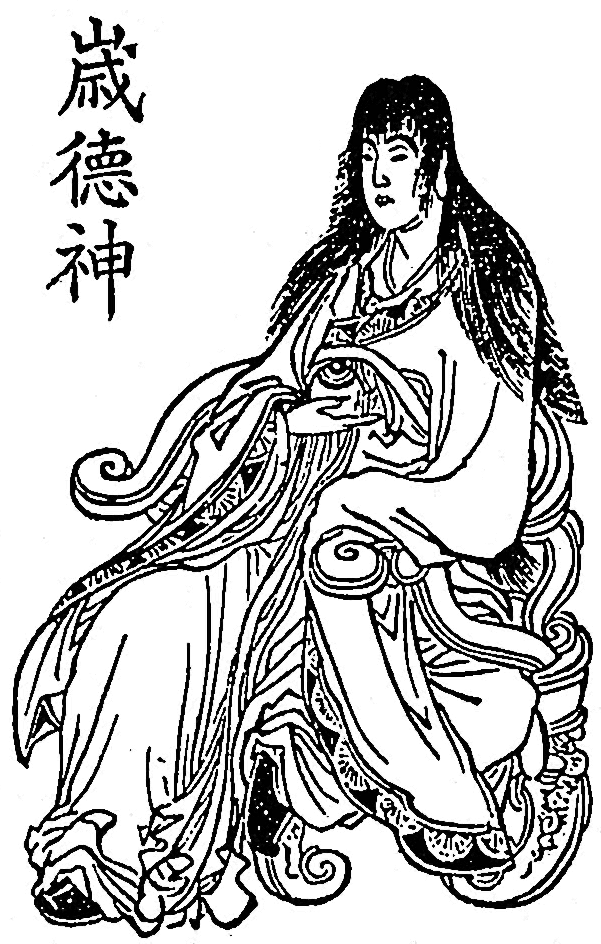
Why is one specific direction lucky? According to legend, the Eho is the dwelling place of Toshitoku-jin (歳徳神), the God of the Year. Also known as the deity of auspicious directions, Toshitoku-jin is believed to control the fortune and virtue of the entire year.
Unlike many Shinto Kami who reside permanently in specific shrines, Toshitoku-jin is a mobile deity who shifts residence annually. In the complex pantheon of Onmyodo deities, he is often contrasted with Konjin, a wandering deity associated with metallic energy who brings misfortune from specific directions. By facing the Eho, one turns their back on bad luck and faces the source of prosperity, health, and happiness. While Toshitoku-jin is an Onmyodo figure, syncretism in Japanese history has occasionally linked him to Susa-no-o no Mikoto from the Kojiki, emphasizing his powerful, protective nature.
Modern Culture: The Ehomaki Phenomenon
While the concept of the Lucky Direction is ancient, the most visible modern tradition associated with it is the eating of Ehomaki (lucky direction rolls). This is a relatively recent cultural explosion, originating from merchant customs in Osaka during the late Edo or early Meiji period.
The tradition involves eating a whole, uncut makizushi (rolled sushi) containing seven ingredients—representing the Seven Lucky Gods—while facing the year’s Eho. The rules are strict and religiously followed by millions:
- Do Not Cut: The roll must be eaten whole to symbolize that you are not “cutting” your ties with good fortune or relationships.
- Silence is Golden: You must eat the entire roll without speaking. It is believed that talking allows the good luck to escape your mouth.
- Face the Eho: You must face the specific lucky direction determined for that year throughout the duration of the meal.
What was once a regional custom in Osaka went national in the late 20th century, largely due to marketing campaigns by convenience store giants like 7-Eleven in 1989. Today, it is a nationwide event, with everything from premium seafood rolls to roll-cake desserts being sold for the occasion.
Traveler’s Tips
If you are visiting Japan around February 3rd (Setsubun), here is how you can participate in this unique cultural moment:
- Find the Direction: You don’t need an ancient astrolabe. During Setsubun, almost every map app and specialized “Eho Compass” apps on the Japanese App Store will highlight the year’s lucky direction. Convenience stores often display the direction on posters.
- Buy Early: Ehomaki sell out fast. You can find them at conbini (convenience stores), supermarkets, and department store food halls (depachika). For a high-end experience, visit a depachika in Ginza or Shinjuku.
- Visit a Shrine: Many shrines hold Setsubun festivals where the Eho is marked. The atmosphere is lively, often featuring the Mamemaki (bean throwing) ceremony to banish demons before the silent eating begins.
Sources & Further Reading
To deepen your understanding of the cosmological roots of Eho, consider exploring the following historical contexts:
- Nihon Shoki (The Chronicles of Japan): While Ehomaki is modern, the Nihon Shoki details the introduction of the Chinese calendar system and Yin-Yang divination (Onmyodo) to the Japanese court in the 6th and 7th centuries, which serves as the foundation for determining lucky directions.
- The Kojiki (Records of Ancient Matters): For background on the syncretic nature of Japanese deities and the lineage of gods like Susa-no-o, who are often conflated with directional deities in folk belief.
- Onmyodo Texts: Historical studies on Abe no Seimei and the Bureau of Onmyo reveal the complex charts used to track deities like Toshitoku-jin.