
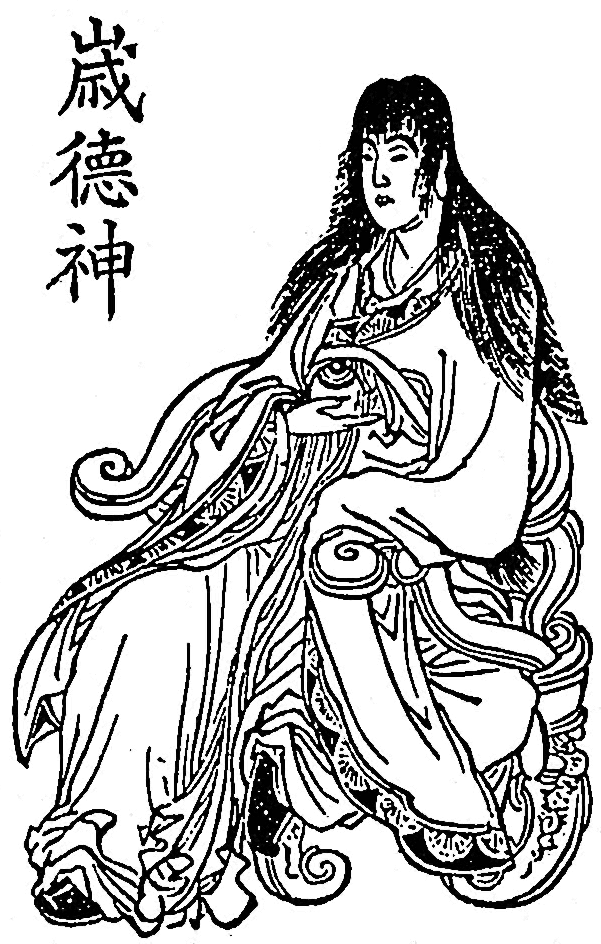
Toshitokujin: Unveiling Japan’s Deity of the New Year
If you have ever visited Japan during early February, specifically around the time of Setsubun (the day before the beginning of spring), you may have witnessed a peculiar phenomenon. Millions of people buy thick sushi rolls and eat them in silence while facing a very specific, seemingly random compass direction. They are facing the Eho (favorable direction), and the entity they are honoring—whether they know it or not—is Toshitokujin.
Also known as the God of the Year or the Deity of Virtue, Toshitokujin is a fascinating figure in Japanese spiritualism. Unlike the static deities enshrined permanently in temples, Toshitokujin is a wanderer, shifting positions annually to bring fortune to those who align themselves correctly.
The Origins: A Blend of Shinto and Onmyodo
To understand Toshitokujin, one must look beyond standard Shinto traditions and delve into Onmyodo, traditional Japanese cosmology and divination based on the Chinese philosophies of Yin and Yang and the Five Elements.
Toshitokujin is not purely a character from the oldest Japanese creation myths but rather a product of the complex astrological systems that governed the Heian period court. In the hierarchy of the Rekichu (calendar annotations), various deities were assigned to directions and days. Toshitokujin is considered the most auspicious of these directional deities.
While the modern Japanese calendar is Westernized, the spiritual calendar remains deeply tied to these ancient directional beliefs. Toshitokujin is believed to reside in a specific cardinal direction determined by the zodiac sign of the current year. This direction is considered the “Way of Heaven,” where no evil can encroach.
Legend and Identity
The identity of Toshitokujin is somewhat fluid, which is common in Japanese mythology where deities (kami) often merge or share characteristics.
In many traditions, Toshitokujin is identified as a female kami named Harinayasu-hime (sometimes Harisaijo). According to the Kojiki (Records of Ancient Matters), Harinayasu-hime is a deity of clay and earth, born from Izanami just before her death. This connects the God of the Year to the grounding, fertile forces of the earth, essential for agriculture and the coming harvest.
Another legend posits that Toshitokujin is the consort of Susanoo-no-Mikoto (the storm god) or is related to Sagara-no-ryu-o (a Dragon King). Regardless of the specific genealogical interpretation, the deity is universally regarded as a gentle, benevolent spirit. Unlike the fearsome Konjin (a directional god of metal who brings misfortune and must be avoided), Toshitokujin brings nothing but prosperity.
Modern Culture: The Ehomaki Tradition
While Toshitokujin was historically consulted for everything from travel plans to construction projects, the deity’s presence today is most visibly felt during Setsubun.
Setsubun, celebrated annually on February 3rd or 4th, marks the division of seasons. While the most famous ritual involves throwing soybeans to scare away demons (oni), the secondary tradition involves the Ehomaki (lucky direction roll).
The Ehomaki is an uncut sushi roll containing seven ingredients (representing the Seven Lucky Gods). To receive Toshitokujin’s blessing, one must:
- Determine the Eho (the direction where Toshitokujin resides for that year).
- Eat the entire roll without stopping.
- Maintain complete silence while eating to keep the luck from escaping.
This tradition, once local to Osaka, has spread nationwide, fueled by convenience store marketing and a renewed interest in traditional astrology.
Traveler’s Tips: Finding Fortune
For travelers interested in Japanese culture, engaging with the lore of Toshitokujin offers a unique way to experience the New Year season.
- Visit a Shrine: During the New Year (Shogatsu) and Setsubun, look for a compass board at Shinto shrines. These boards often have a spoon-shaped arrow pointing to the lucky direction of the year.
- Get an Eho App: If you are in Japan during Setsubun, download a compass app. Many Japanese developers release specific “Eho Compass” apps that automatically point to Toshitokujin’s current location based on the year.
- Respect the Direction: Even outside of Setsubun, traditional Ryokans or tea ceremony masters may orient seating or significant objects to align with the year’s favorable direction. Being aware of this adds a layer of depth to your cultural observation.
Sources & Further Reading
To deepen your understanding of the deities mentioned, the following historical texts and frameworks are essential:
- The Kojiki (Records of Ancient Matters): For the origin story of Harinayasu-hime and the foundational myths of Shinto kami.
- The Nihon Shoki (Chronicles of Japan): Provides parallel accounts of the creation myths and the lineage of the gods.
- Onmyodo Texts: Study the Senji Ryakketsu (Summary of Judgements of Divinations) for insight into how Abe no Seimei and other masters calculated directional fortunes.