
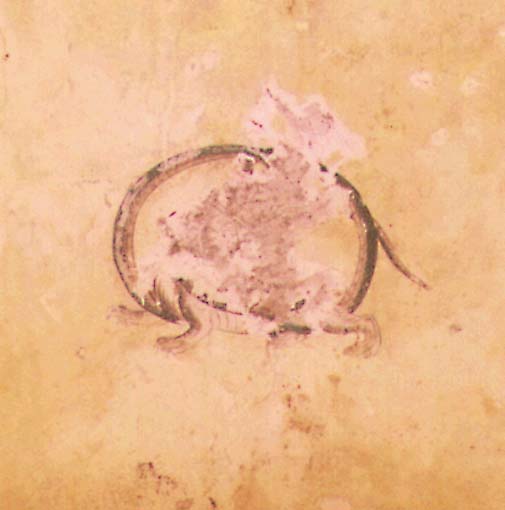
Genbu: The Divine Black Tortoise & Guardian of the North
When travelers wander through the historic streets of Kyoto or gaze at the ancient murals of Nara, they are walking upon land shaped by invisible, celestial forces. In the tapestry of East Asian mythology, four divine beasts guard the cardinal directions. While the Azure Dragon rules the East and the Vermilion Bird the South, the North is watched over by a stoic, mysterious figure: Genbu (玄武), the Black Tortoise.
Often depicted as a tortoise entwined with a snake, Genbu is more than a mere mythological creature; he represents winter, the element of water, and the enduring wisdom of the cosmos. For culture enthusiasts and travelers alike, understanding Genbu unlocks a deeper appreciation of Japanese architecture, spirituality, and pop culture.
Origins: From the Stars to the Soil
The concept of Genbu originated in ancient China, where it is known as Xuanwu. In the cosmology of the Han Dynasty, the sky was divided into four quadrants, each containing seven constellations (or “mansions”). The seven northern constellations formed the shape of a tortoise and snake, giving birth to the legend.
These beliefs traveled to Japan via the Korean Peninsula roughly around the 7th century, deeply influencing the Asuka and Nara periods. Genbu is one of the Shijin (Four Symbols), alongside Seiryu (Dragon), Suzaku (Bird), and Byakko (Tiger).
In the philosophy of Feng Shui (known as Fusui in Japan), the topography of a city must align with these beasts to ensure prosperity. The North is associated with high mountains to block cold winds, representing the sturdy back of the tortoise. This geomantic requirement was a primary reason why Emperor Kanmu selected the location for Heian-kyo (modern-day Kyoto) in 794 AD, with Mount Funaoka acting as the symbolic Genbu.
The Legend and Symbolism
At first glance, Genbu appears as a peculiar hybrid: a large turtle wrapped in the coils of a serpent. This iconography is rich with dualism.
- Longevity and Immortality: Both tortoises and snakes were believed to live for centuries. Together, they symbolize eternal life and the preservation of the spirit.
- Yin and Yang: In some interpretations, the tortoise represents the female principle (Yin) and the snake the male principle (Yang). Their intertwining represents the perfect balance of the universe.
- The Warrior Deity: The name “Genbu” roughly translates to “Mysterious Warrior” or “Dark Warrior.” Unlike the fiery passion of the Vermilion Bird, Genbu represents the quiet, darker, and more introspective power of winter and deep water.
In later Taoist evolutions in China, Xuanwu anthropomorphized into a powerful warrior god with bare feet and flowing hair. However, in Japan, Genbu largely retained its beast-like form in artistic depictions, serving primarily as a guardian of direction rather than a standalone deity of worship.
Genbu in Modern Culture
Even if you are new to mythology, you have likely encountered Genbu in Japan’s massive pop culture exports. The Four Symbols are a staple trope in anime and video games.
- Video Games: In the Final Fantasy series, Genbu often appears as a high-level boss or summon. In the Pokémon franchise, the interplay of legendary beasts often draws from this lore.
- Anime: Series like Fushigi Yugi and YuYu Hakusho explicitly feature the Four Saint Beasts, with Genbu characters usually depicted as calm, defensive, and resilient.
- Beyblade: The “Draciel” beyblade is based on the Black Tortoise, emphasizing defense and stability.
This modern persistence proves that the Black Tortoise is not a relic of the past but a living archetype in the Japanese imagination.
Traveler’s Tips: Where to Find Genbu
If you are planning a trip to Japan and want to trace the footsteps of the Black Tortoise, add these locations to your itinerary:
1. Kitora Tomb (Asuka, Nara)
This is perhaps the most significant archeological site regarding the Four Symbols. The Kitora Tumulus features ancient murals (dating back to the 7th or 8th century) on its interior walls. The mural of Genbu on the north wall is hauntingly beautiful. While the tomb is sealed, the Kitora Tumulus Mural Museum nearby offers high-definition replicas and deep dives into the celestial maps found there.
2. Heian Jingu Shrine (Kyoto)
While the shrine itself is a 19th-century replica of the ancient palace, it perfectly embodies the Shijin architecture. During the Jidai Matsuri (Festival of the Ages), banners depicting Genbu and the other beasts are paraded through the streets.
3. Myoken Bodhisattva Temples
Through religious syncretism, Genbu became associated with Myoken Bosatsu, the deification of the North Star. Temples dedicated to Myoken, such as the Nose Myoken-zan in Osaka/Hyogo, often feature tortoise and snake imagery in their statues and crests.
4. Mount Funaoka (Kyoto)
For the adventurous hiker, a climb up Mount Funaoka (near Kinkaku-ji) places you on the physical embodiment of Genbu that protects the city of Kyoto. It is a spiritual center point for the city’s northern defense.
Sources & Further Reading
For those wishing to delve deeper into the classical texts and astronomy behind the legend, the following resources provide excellent context:
- The Nihon Shoki (Chronicles of Japan): Offers context on the introduction of Chinese cosmology to the Japanese court.
- The Kitora Tumulus Star Charts: Studies on the oldest astronomical charts found in Japan.
- Fusui (Feng Shui) Texts: Historical analysis of Heian-kyo’s urban planning.
Genbu reminds us that in travel, as in life, we must look to the North—to the cold and the quiet—to find the stability and wisdom required to endure.