
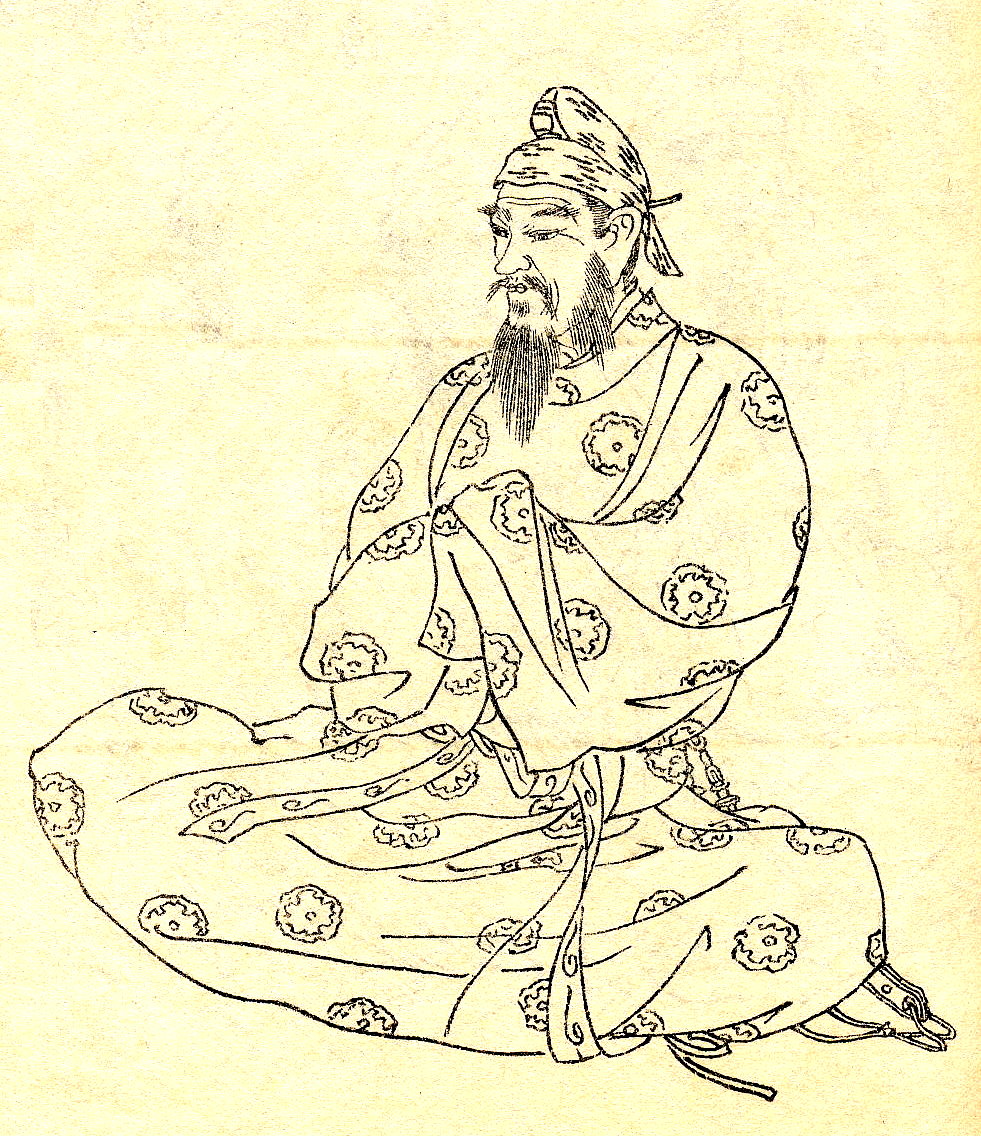
Fujiwara no Fuhito: The Architect Behind Japan’s Golden Age
When travelers wander through the deer-filled parks of Nara or gaze up at the towering pagodas of Kofukuji, they are walking in the shadow of one of Japanese history’s most astute politicians: Fujiwara no Fuhito (659–720). While emperors sat on the throne, it was often Fuhito and his descendants who held the reins of power. As the true founder of the Fujiwara clan’s dominance, his legacy is not just written in history books but is carved into the very landscape of Japan’s ancient capital.
Origins: Rising from the Shadow of Reform
Fujiwara no Fuhito was born into a period of immense transition. He was the second son of Nakatomi no Kamatari (later Fujiwara no Kamatari), the statesman who helped orchestrate the Taika Reform of 645, which centralized imperial power. While his father laid the foundation, Fuhito built the house.
Fuhito was instrumental in the establishment of the Ritsuryo system—a legal code based on Confucian principles that defined the Japanese government structure for centuries. Specifically, he was a primary editor of the Taiho Code (701) and the Yoro Code (718). These laws replaced the clan-based traditions of the past with a centralized bureaucracy.
Perhaps his greatest logistical achievement was the relocation of the capital to Heijo-kyo (modern-day Nara) in 710. This move signaled the beginning of the Nara Period, a time of flourishing Buddhism and art. Fuhito understood that power required proximity to the throne; by marrying his daughters to Emperors, he established the precedent of the Fujiwara clan acting as regents—a strategy that would make his family the de facto rulers of Japan during the subsequent Heian Period.
Legend: The Impossible Quest
Beyond politics, Fuhito occupies a fascinating space in Japanese folklore. Many literary scholars believe he is the inspiration for a key antagonist in Japan’s oldest narrative, The Tale of the Bamboo Cutter (Taketori Monogatari).
In the story, the moon princess Kaguya-hime is courted by five wealthy suitors. She gives them impossible tasks to prove their love. One of these suitors, Prince Kuramochi, is tasked with finding the “Jeweled Branch of Horai.” Instead of finding it, he hires craftsmen to forge a fake branch, only to be humiliated when the craftsmen arrive demanding payment for the forgery.
Prince Kuramochi is widely believed to be a caricature of Fujiwara no Fuhito. The satire suggests that despite his immense political power, wealth, and ability to manufacture “truth” (laws), there were some things—like the celestial beauty of Kaguya or genuine immortality—that even the great Fuhito could not buy or legislate.
Modern Culture: The Four Houses
Fuhito’s influence on modern Japanese culture is inextricably linked to the survival of the imperial court system and the preservation of Nara’s temples. He had four sons: Muchimaro, Fusasaki, Umakai, and Maro. These four brothers established the four main branches (houses) of the Fujiwara clan: the Southern, Northern, Ceremonial, and Capital houses.
The Northern House (Hokke) eventually became the most powerful, producing the regents who defined the courtly elegance of the Heian period—the era of The Tale of Genji. Today, the surname “Fujiwara” (and its variations like Sato, Ito, and Kato, which often denote lineage connections) remains incredibly common in Japan, serving as a living linguistic link to Fuhito.
Furthermore, the layout of Nara itself reflects his vision. The grid structure of the city, modeled after Chang’an in Tang China, was a testament to his desire to project Japan as a civilized, law-abiding empire.
Traveler’s Tips: Tracing Fuhito’s Footsteps in Nara
For history buffs and culture seekers, Fuhito’s presence is best felt in the eastern part of Nara Park. Here is how to experience his legacy:
1. Kofukuji Temple
This was the tutelary temple of the Fujiwara clan. Fuhito moved the temple from the previous capital to its current location in Nara in 710. The Hoku’endo (Northern Round Hall) at Kofukuji is particularly significant; it was built in 721 by Empress Genmei to pray for the repose of Fuhito’s soul one year after his death. It is considered one of the finest octagonal halls in Japan.
2. Kasuga Taisha Shrine
While Kofukuji dealt with Buddhist rites, Kasuga Taisha was the Shinto shrine protecting the Fujiwara clan. Established shortly after Fuhito’s death, it enshrines deities invited from Kashima (associated with his father, Kamatari). The thousands of lanterns here create a mystical atmosphere that transports you back to the Fujiwara era. Visit during the Mantoro festivals (February and August) to see them all lit.
3. The Nara National Museum
Located nearby, this museum frequently houses statues and scrolls from the Nara period, offering a glimpse into the artistic explosion funded by the wealth Fuhito and his family accumulated.
Sources & Further Reading
To deepen your understanding of this era, consider exploring the following historical texts:
- Shoku Nihongi: An imperial history text that covers the Nara period, providing primary details on Fuhito’s political maneuvers and the implementation of the Taiho Code.
- The Tale of the Bamboo Cutter (Taketori Monogatari): For the satirical literary connection.
- Manyoshu: Japan’s oldest anthology of poetry, which captures the emotional landscape of the court during Fuhito’s time.