
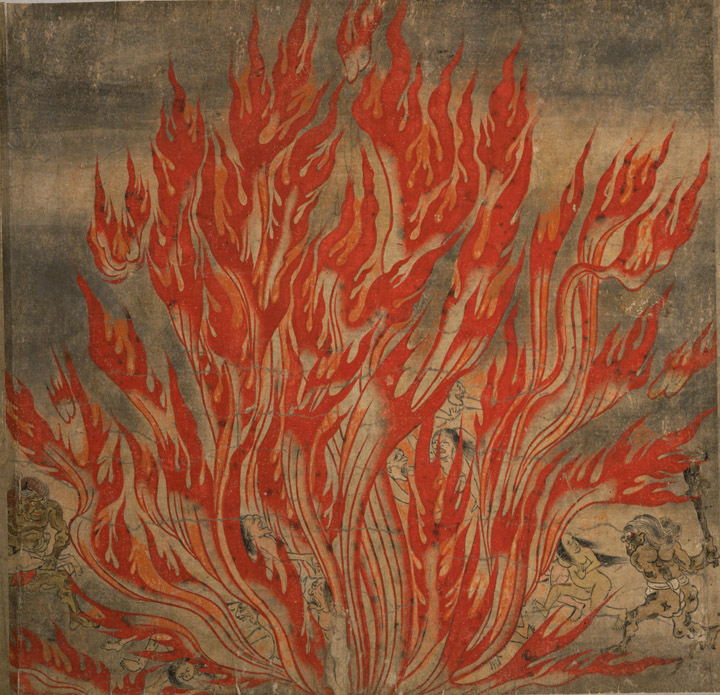
Exploring Jigoku-zoshi: Japan’s Ancient Hell Scrolls
When travelers imagine traditional Japanese art, they often visualize serene ink wash paintings of mountains, delicate cherry blossoms, or the stoic portraits of shoguns. However, lurking within the archives of Japan’s National Treasures is a genre of art that stands in stark contrast to this tranquility: the Jigoku-zoshi, or “Hell Scrolls.”
These 12th-century masterpieces offer a vivid, terrifying, and fascinating glimpse into the medieval Japanese imagination and the Buddhist concept of the afterlife. For culture lovers and history buffs, understanding these scrolls unlocks a deeper appreciation of Japanese morality, storytelling, and the roots of modern J-Horror.
Origins: Fear and Faith in the Heian Period
The Jigoku-zoshi dates back to the late Heian (794–1185) and early Kamakura (1185–1333) periods. This was a tumultuous time in Japanese history, marked by civil war, famine, and social unrest. It coincided with the widespread belief in Mappo (the Latter Day of the Law), a Buddhist prophecy predicting a dark age where enlightenment would become nearly impossible to attain.
In this climate of anxiety, Pure Land Buddhism gained popularity. Monks sought to encourage piety not just by promising the paradise of the Pure Land, but by vividly illustrating the alternative: the Eight Great Hells and their sixteen subsidiary hells. The primary textual inspiration for these paintings was the Ojoyoshu (The Essentials of Rebirth in the Pure Land), written by the monk Genshin in 985. The Jigoku-zoshi served as visual cautionary tales, translating Genshin’s gruesome text into graphic imagery intended to scare the viewer onto the righteous path.
Legend: A Tour of the Underworld
The Jigoku-zoshi does not depict a generic fire-and-brimstone underworld. Instead, it illustrates a highly bureaucratic and specific system of karmic retribution. The scrolls are fragmented today, but the surviving sections depict various “Lesser Hells” designed for specific sinners.
The Specifics of Suffering
One famous scene depicts the Hell of the Iron Mortar. Here, individuals who committed theft are ground into a bloody pulp by a demon using a massive iron pestle, only to be revived by a cold wind so the torture can begin anew. Another section illustrates the Hell of Measures, intended for merchants who cheated customers using false weights; they are forced to carry red-hot iron chests that burn through their flesh.
Perhaps the most grotesque is the Hell of Excrement, filled with a boiling river of filth. It is said to be the destination for monks who violated their vows by drinking alcohol or eating meat. In these scrolls, the demons are painted with dynamic, grotesque energy, while the sinners are depicted in pathetic, pale, and contorted forms, emphasizing the fragility of human life against cosmic justice.
Modern Culture: From Scrolls to Screen
The legacy of the Jigoku-zoshi is surprisingly vibrant in modern Japanese pop culture. The visual language established in these scrolls—horned oni (demons), rivers of blood, and iron clubs—forms the backbone of the yokai (supernatural monster) genre.
Fans of anime and manga will recognize these themes in series like Hozuki’s Coolheadedness (Hozuki no Reitetsu), a dark comedy about the bureaucracy of Hell, and Demon Slayer (Kimetsu no Yaiba), which draws heavily on Buddhist demonology. Even the psychological horror found in modern Japanese cinema often traces its roots back to the visceral, body-horror elements first popularized in these medieval scrolls. The concept that specific sins yield specific, ironic punishments remains a staple trope in Japanese storytelling.
Traveler’s Tips: Viewing the Scrolls
Seeing the Jigoku-zoshi in person is a rare treat. Because they are designated National Treasures and are over 800 years old, they are extremely fragile and sensitive to light. They are not on permanent display.
- Tokyo National Museum: One of the most famous versions of the Hell Scroll is housed here. Check their “Regular Exhibition” schedule in the Honkan (Japanese Gallery), as they rotate National Treasures seasonally.
- Nara National Museum: Another significant version resides here. This museum is particularly excellent for Buddhist art. The scrolls are most likely to be displayed during the autumn Shosoin exhibition or special Buddhist art retrospectives.
- Digital Archives: If you cannot time your trip with an exhibition, both the Tokyo and Nara National Museums offer high-resolution digital archives online (e-Museum), allowing you to zoom in on the gruesome details that might be hard to see through a glass case.
Sources & Further Reading
To fully understand the context of the Japanese afterlife, one must look at the evolution of the concept from indigenous Shinto beliefs to imported Buddhism.
- Ojoyoshu (The Essentials of Rebirth in the Pure Land) by Genshin: The primary source text for the imagery found in the Hell Scrolls.
- Kojiki (Records of Ancient Matters) & Nihon Shoki (The Chronicles of Japan): While these 8th-century texts focus on the Shinto creation myths, they introduce Yomi, the shadowy land of the dead. Reading the account of Izanagi’s descent into Yomi provides a fascinating contrast to the later, more structured Buddhist hells of the Jigoku-zoshi.
- Japanese Pure Land Buddhism: For historical context on the era that produced these scrolls.