
The Legend of Yuki-onna: Japan’s Beautiful Snow Ghost
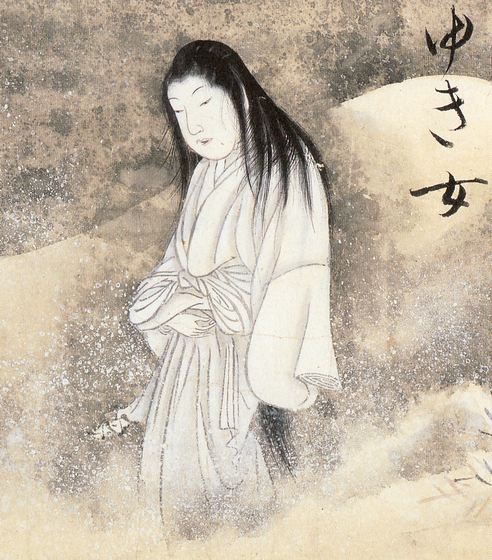
In the hush of a deep winter storm, when the wind howls through the mountain passes of Japan, folklore speaks of a presence far colder than the frost itself. She is the Yuki-onna (Snow Woman), one of the most famous and enduring figures in Japanese mythology. A yōkai (spirit) associated with winter, snow, and death, she appears as a stunningly beautiful woman with pale skin, long black hair, and a kimono as white as the drifts she walks upon. For culture lovers and travelers heading to Japan’s snowy regions, understanding the Yuki-onna offers a fascinating glimpse into the country’s relationship with nature and the supernatural.
Origins of the Snow Woman
The origins of the Yuki-onna are ancient, rooted in the eras when winter was a brutal, often fatal season for the people of Japan. Unlike the whimsical spirits found in some folklore, the Yuki-onna is the personification of the winter storm itself—beautiful but deadly.
While yōkai appear in ancient texts like the Kojiki and Nihon Shoki, the Yuki-onna specifically gained literary prominence later. The earliest known written description appears in the Sogi Shokoku Monogatari from the Muromachi period (1336–1573). The author, a renga poet named Sogi, writes of seeing a mysterious woman in his garden during a heavy snowstorm. Rather than a monster, she was described as a spirit of the snow, fading away as the morning sun rose.
Over the centuries, her characterization has shifted. In some regions like Niigata, she was feared as a vampire-like spirit who drained the life force (ki) of travelers. In others, she was a tragic figure, a celestial being forced to visit the mortal realm on snowy nights.
The Legend of Minokichi
While there are countless regional variations, the most famous story of the Yuki-onna was recorded by the writer Lafcadio Hearn in his 1904 collection, Kwaidan: Stories and Studies of Strange Things. This tale defines the modern perception of the spirit.
The Encounter
According to the legend, two woodcutters—an old man named Mosaku and his young apprentice, Minokichi—were trapped in a blizzard on a mountain. They took shelter in a small ferryman’s hut. During the night, the door blew open, and a woman in white entered. She blew her icy breath on the old man, freezing him to death instantly.
She then turned to Minokichi. Struck by his youth and handsome face, she decided to spare him, but on one condition: He must never tell a soul about what he saw that night. If he broke this promise, she would return to kill him.
The Broken Promise
Years passed. Minokichi met a beautiful young woman named O-Yuki (meaning “Snow”). They married, had children, and lived happily. O-Yuki was a wonderful wife, though strangely, she never seemed to age. One winter night, while the children slept, Minokichi looked at his wife in the lamplight. Reminded of the terrifying night from his youth, he confessed the secret to her, describing the Snow Woman he had met years ago.
Suddenly, O-Yuki stood up. Her face transformed into the pale, icy visage of the spirit. She revealed that she was the Yuki-onna. Because he had broken his promise, she ought to kill him. However, for the sake of their sleeping children, she spared his life once more, dissolving into mist and vanishing through the roof smoke-hole, never to be seen again.
Yuki-onna in Modern Culture
The Yuki-onna has successfully migrated from oral tradition to modern pop culture. She is a staple in Japanese horror and fantasy genres, appearing in anime, manga, and video games.
- Anime & Manga: Characters like the ice-wielding Yukina in Yu Yu Hakusho or the tragic snow spirits in Natsume’s Book of Friends draw directly from this lore.
- Video Games: In the Pokémon franchise, the creature Froslass (known as Yukimenoko in Japanese) is directly inspired by the Yuki-onna, typed as Ice/Ghost and described as freezing its prey.
- Cinema: The 1964 film Kwaidan features a hauntingly beautiful adaptation of Hearn’s story, visually cementing the Yuki-onna’s aesthetic—black hair against white snow—for international audiences.
Traveler’s Tips: Seeking the Snow Spirit
If you are traveling to Japan and want to experience the atmosphere that gave birth to the Yuki-onna legend, consider these destinations:
- Ome, Tokyo: The setting of Lafcadio Hearn’s version of the legend is widely believed to be the Ome area in Western Tokyo. There is even a “Yuki-onna Monument” near the Chofu Bridge.
- Tohoku Region: The northern part of Honshu (Aomori, Akita, Iwate) experiences heavy snowfall. Staying in a traditional ryokan with an outdoor onsen (hot spring) while snow falls around you is the perfect way to contemplate the beauty and cold of the Yuki-onna.
- Sapporo Snow Festival: Held in Hokkaido every February, this festival features massive snow sculptures. You will almost always find artistic depictions of the Yuki-onna among the statues.
Sources & Further Reading
To dive deeper into the world of Japanese folklore, the following texts are essential:
- Kwaidan: Stories and Studies of Strange Things by Lafcadio Hearn – For the definitive English translation of the classic legend.
- The Sogi Shokoku Monogatari – For the earliest literary account of the spirit.
- Japandemonium Illustrated by Toriyama Sekien – A classic encyclopedia of yōkai from the Edo period.
- The Kojiki (Records of Ancient Matters) – While not featuring the Yuki-onna specifically, this text provides the foundational context for Japanese animism and spirit worship.