
Discover Dewa Sanzan: Japan’s Path to Spiritual Rebirth
Deep within the ancient cedar forests of Yamagata Prefecture lies a spiritual journey that transcends mere hiking. This is the Dewa Sanzan (The Three Mountains of Dewa), a center of mountain worship that has drawn pilgrims for over 1,400 years. Comprising Mount Haguro, Mount Gassan, and Mount Yudono, these peaks represent a metaphorical journey through death and rebirth.
For the modern traveler, Dewa Sanzan offers more than just scenic vistas; it provides a rare glimpse into Shugendo, a unique syncretism of Japanese religious beliefs, and a chance to walk a path tread by ascetics for centuries.
Origins: The Way of Shugendo
Dewa Sanzan is a stronghold of Shugendo, a highly ascetic religion that blends elements of Shinto (Japan’s indigenous spirituality), Buddhism, and Taoism. The practitioners, known as Yamabushi (literally “those who lie in the mountains”), believe that enlightenment is attained through a close physical relationship with the natural world.
The core philosophy of the Dewa Sanzan pilgrimage is the concept of “Journey of Rebirth.” Visiting the three mountains is interpreted as traversing three distinct timelines of existence:
- Mt. Haguro: Represents the Present (Worldly desires and current existence).
- Mt. Gassan: Represents the Past (The realm of spirits and death).
- Mt. Yudono: Represents the Future (Rebirth and resurrection).
By completing this pilgrimage, a devotee symbolically dies to their past self and is reborn spiritually renewed.
The Legend of Prince Hachiko
The spiritual history of Dewa Sanzan is deeply intertwined with Japanese imperial history. According to tradition, the mountains were opened as a religious site in 593 AD by Prince Hachiko, the son of the 32nd Emperor, Sushun.
Following the assassination of his father, Prince Hachiko fled the capital to escape political persecution. Legend holds that he was guided north by a mystical three-legged crow, or Yatagarasu, a divine messenger in Shinto mythology. The crow led him to the Shonai region of Yamagata, where he undertook severe ascetic practices.
After enduring days of penance and meditation, he claimed to see an avatar of the Buddha, prompting him to establish the shrines on these three peaks. His grave remains on top of Mount Haguro to this day, making it one of the few imperial tombs located in the Tohoku region.
Walking the Path: The Three Mountains
Mt. Haguro (The Present)
Often the starting point, Mt. Haguro is the most accessible of the three. It is famous for its stone stairway of 2,446 steps that wind through a forest of towering cedars, some over 600 years old. Along the path stands the Five-Story Pagoda, a designated National Treasure constructed entirely without nails. Reaching the summit signifies praying for happiness in the present life.
Mt. Gassan (The Past)
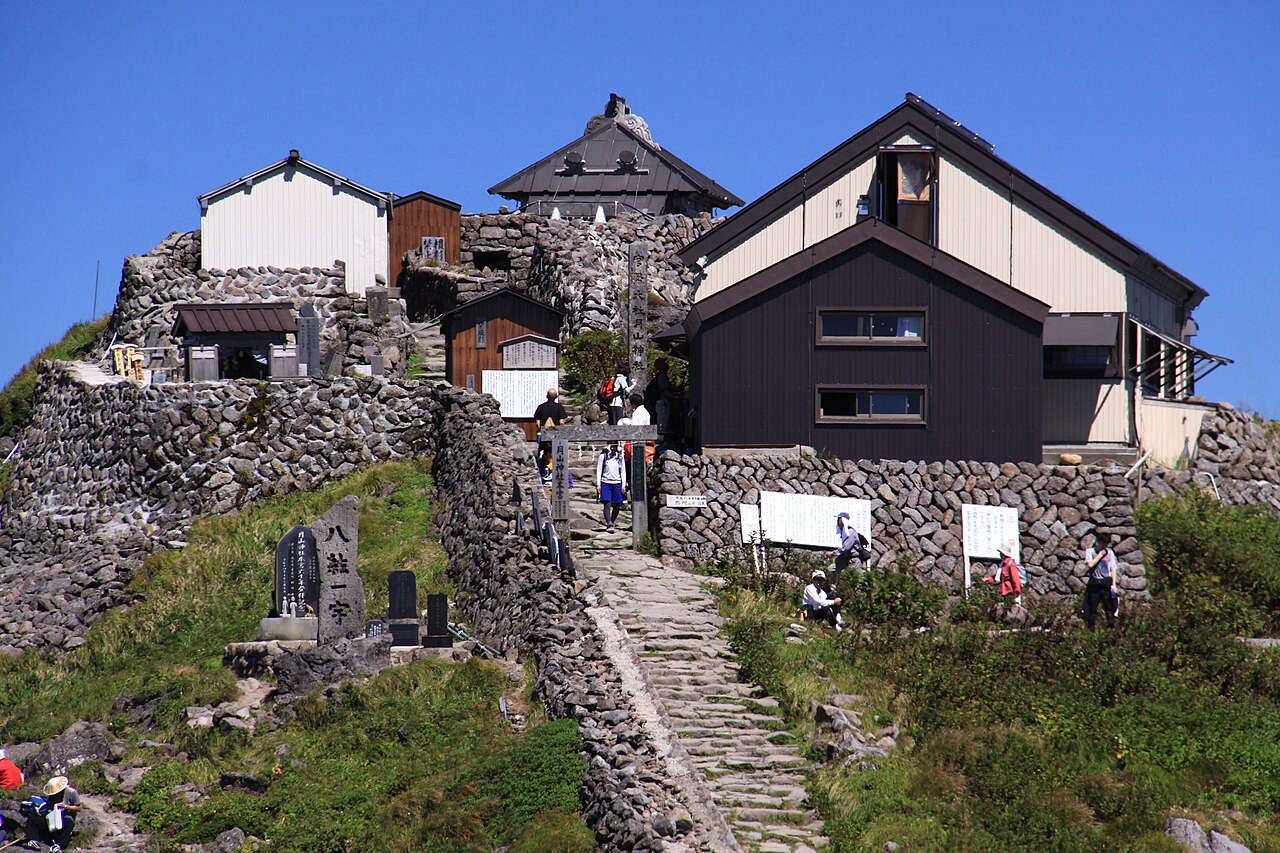
As the highest peak (1,984 meters), Mt. Gassan is considered the abode of ancestors and spirits. The hike here is more arduous, featuring alpine flora and sweeping cloud-level views. The shrine at the summit has no main hall; instead, it is a primitive worship site where pilgrims pray for the peaceful repose of the deceased and the purification of the past.
Mt. Yudono (The Future)
Considered the “inner sanctum” and the most sacred of the three, Mt. Yudono is the site of rebirth. Traditionally, what happens at Yudono stays at Yudono; it is strictly forbidden to speak of what one sees there. However, it is known that the object of worship is not a building, but a massive, thermal rock formation spewing hot spring water—a visceral symbol of the earth’s life force.
Modern Culture and the Yamabushi
Today, the culture of Dewa Sanzan is vibrant and welcoming. While historically restricted to men in certain eras, the mountains are now open to all. You will likely encounter Yamabushi blowing conch shells (horagai) to ward off evil spirits and signal their presence to the gods.
A significant part of the modern experience is Shojin Ryori (ascetic cuisine). The lodges (Shukubo) at the base of Mt. Haguro serve meals made entirely from local mountain vegetables and wild plants. This food is critical to the purification process, utilizing ingredients like bamboo shoots, mushrooms, and sansho (Japanese pepper) to cleanse the body.
Traveler’s Tips
- Best Time to Visit: While Mt. Haguro is accessible year-round (though snowy in winter), Mt. Gassan and Mt. Yudono are only open from July to mid-September due to heavy snowfall. The best time for the full pilgrimage is August.
- Attire: You do not need to be a priest to hike, but sturdy hiking boots are essential, especially for Gassan. Many pilgrims choose to wear a white happi coat or specialized stole (kesa) to show respect, which can be purchased locally.
- Etiquette: Photography is generally permitted on Haguro and Gassan, but it is strictly prohibited at the main sanctuary of Mt. Yudono. Travelers must remove their shoes and purify their feet before entering the sacred rock area.
- Access: The gateway city is Tsuruoka. From Tsuruoka Station, buses run regularly to the base of Mt. Haguro.
Sources & Further Reading
For those interested in the historical context of the imperial line and the era of Prince Hachiko, the Nihon Shoki (The Chronicles of Japan) provides the background on the political turmoil of the Asuka period. Additionally, local records from the Ideha Shrine offer detailed accounts of the syncretic traditions that survived the Meiji Restoration’s separation of Shinto and Buddhism.
- The Nihon Shoki (Chronicles of Japan)
- Earhart, H. Byron. “A Religious Study of the Mount Haguro Sect of Shugendo.”
- Local archives of the Dewa Sanzan Shrine Historical Museum